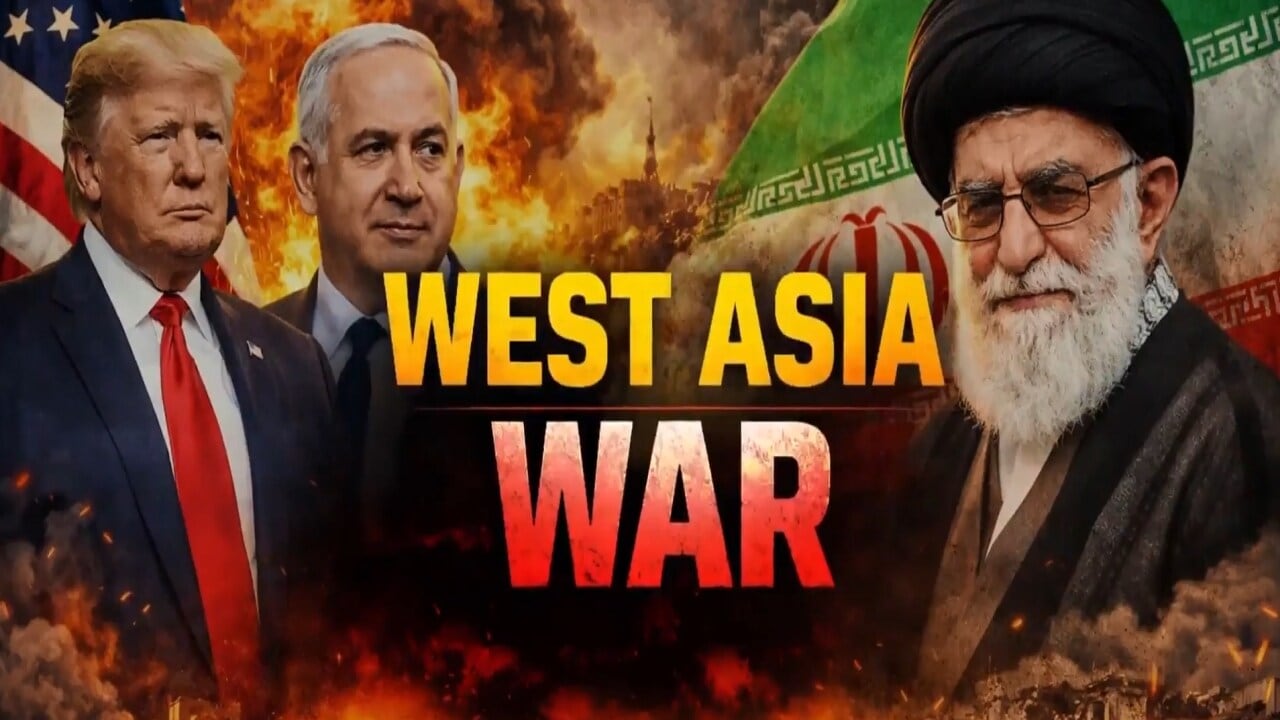
Whispers of a secret meeting in Islamabad between American officials and Iranian intermediaries have sent a tremor through the diplomatic circuits of South Asia. While the official line remains one of silence or standard denials, the choice of Pakistan’s capital as a theater for high-stakes de-escalation is neither accidental nor merely convenient. It represents a desperate search for a neutral floor in a region where such spaces are vanishing.
The core premise of these talks centers on a frantic attempt to contain a regional wildfire. Washington needs a way to pull back from the brink of a direct confrontation that neither its domestic politics nor its treasury can currently afford. Tehran, squeezed by internal dissent and the weight of an ossified economy, views a potential shift in US administration as a closing window of opportunity to secure some form of breathing room. Islamabad, often seen as a troubled partner by both, is the only player with the unique geographical and military proximity to both actors to facilitate such a high-risk handshake.
The Geography of Necessity
Pakistan has spent decades perfecting the art of the balancing act. Sharing a 560-mile border with Iran and maintaining a complex, often strained military dependency on the United States, Islamabad is uniquely positioned. This isn't about friendship. It is about survival. For the Americans, using a Gulf intermediary like Qatar or Oman has become predictable and, in some ways, too public. Islamabad offers a different kind of shadows.
The Pakistani intelligence apparatus, the ISI, has maintained channels with the Iranian Revolutionary Guard Corps (IRGC) that Western agencies simply cannot replicate. When a message needs to be delivered without the polish of a diplomatic cable, it goes through these back channels. The current movement suggests that the "technical discussions" often cited in public reports are actually foundational negotiations regarding maritime security in the Red Sea and the specific limits of proxy engagement in the Levant.
Why the Gulf is Stepping Back
Historically, Muscat or Doha would be the first choice for such an encounter. However, the current climate has shifted. Saudi Arabia’s own fragile detente with Iran has made the Gulf monarchies wary of hosting talks that might force them to take a side if the negotiations turn sour. They want the results of a deal, but they no longer want the fingerprints of the process on their hands.
Islamabad, conversely, is hungry for the geopolitical relevance. By hosting these meetings, the Pakistani leadership signals to the IMF and Washington that they are an "indispensable" regional pivot, even as their internal economy teeters. It is a play for leverage. They are selling their ability to keep a secret in exchange for a seat at the table where their own debts are often the silent topic of conversation.
The Atomic Shadow and the Proxy Problem
The agenda in Islamabad is reportedly split into two distinct tracks. The first is the immediate "firefighting" track. This involves the cessation of attacks on shipping lanes and a mutual understanding of "red lines" regarding military personnel in Iraq and Syria. The second, more terrifying track, is the nuclear one.
We are no longer in the era of the JCPOA. That ship has not only sailed; it has been dismantled for scrap. The current reality is one of "management." The US is not looking for a grand bargain; it is looking for a freeze. Tehran knows this. Every cent of unfrozen assets or every shipment of oil that the US chooses to overlook is a win for the Iranian hardliners who need to prove that their "Look to the East" policy can still extract concessions from the West.
- The Drone Factor: Iranian-made hardware is now a global commodity, showing up in theaters far beyond the Middle East. This has changed the leverage.
- The Enrichment Ceiling: Tehran is hovering at enrichment levels that make a breakout a matter of weeks, not months. This is the ticking clock behind the Islamabad meeting.
- The Succession Question: With leadership cycles in both countries approaching critical junctions, any agreement reached now is built on sand.
The Internal Risks for the Hosts
For Pakistan, hosting these meetings is a double-edged sword. There is a significant risk of blowback from domestic hardline elements who view any cooperation with the United States as a betrayal. Simultaneously, there is the risk of alienating the Sunni bloc if the talks are perceived as being too favorable to the Shia powerhouse next door.
The Pakistani military, which remains the ultimate arbiter of the country’s foreign policy, is betting that the benefits of being a "facilitator" outweigh these risks. They are banking on the idea that the US will be less likely to apply pressure on internal Pakistani political matters if they are providing the venue for a breakthrough with Iran. It is a cynical calculation, but in the world of high-stakes espionage and diplomacy, cynicism is the only reliable currency.
The Failure of Traditional Diplomacy
The move to Islamabad highlights the total collapse of traditional European mediation. The "E3" (France, Germany, and the UK) have largely been sidelined. Their influence has waned as the conflict has moved from legalistic disputes over treaty text to raw military posturing. The actors now prefer "frontier diplomacy"—meetings in places where the rules are flexible and the oversight is minimal.
This shift tells us everything we need to know about the state of global order. When the world's most powerful democracy and one of its most persistent autocracies meet in a city like Islamabad, they aren't looking for a lasting peace. They are looking for a way to manage a rivalry that has become too expensive to settle on the battlefield.
The Economic Undercurrents
You cannot talk about US-Iran relations without talking about the black market. Sanctions have created a shadow economy that spans from the ports of Karachi to the exchanges in Dubai. Part of the Islamabad dialogue likely involves the "gray zones" of trade. There are reports that the discussions include specific carve-outs for humanitarian goods and a "look the other way" policy on certain energy exports in exchange for Iranian restraint in the Persian Gulf.
For the American consumer, this might seem distant. But the price of a gallon of gas or the cost of shipping a container from Shanghai to New York is tied directly to whether a mid-level Iranian commander decides to seize a tanker. The Islamabad meetings are, in a very real sense, a negotiation over the cost of living in the West.
The Spoiler Effect
There are multiple parties who do not want these talks to succeed. Inside Iran, the ultra-hardline factions view any talk with "The Great Satan" as an admission of weakness. In Washington, a divided Congress is ready to pounce on any hint of "appeasement." And then there is the regional wild card: Israel.
The Israeli intelligence community views any back-channel talk in Islamabad with extreme suspicion. From their perspective, a "freeze" is just a way for Iran to consolidate its gains and wait for a better time to strike. If the Islamabad talks move toward a concrete "understanding," expect a sharp increase in "accidental" explosions or cyber-attacks targeting the very infrastructure being discussed.
The Logistics of a Ghost Meeting
How do you hide a meeting of this magnitude? You don't. You simply surround it with so much noise that the signal is lost. Official delegations arrive for "trade summits" or "regional security forums." They stay in high-security compounds in the diplomatic enclave, away from the prying eyes of the international press. The actual conversations happen in the late hours, often in residences owned by the military or the intelligence services.
The participants aren't the household names. They are the deputies, the "special envoys," and the career officers who have known each other across the table for twenty years. They speak the language of "what if" and "if then."
- Scenario A: Iran pulls back its support for specific militias; the US allows a specific bank in South Asia to process a transaction.
- Scenario B: The US halts a planned naval exercise; Iran ensures no drones are launched from a specific coordinate for thirty days.
This is not a grand strategy. It is a series of transactions. It is a bazaar, and Islamabad is the perfect marketplace.
The Illusion of Control
The danger of the Islamabad back channel is the illusion of control it provides. Both sides leave the table thinking they have successfully manipulated the other into a corner. But the reality is that the forces they are trying to manage—religious fervor, economic desperation, and the raw ambition of regional commanders—are not easily contained by a handshake in a Pakistani villa.
If these talks fail, the fallback isn't a return to the status quo. It is a rapid escalation. Without the Islamabad safety valve, the next misunderstanding in the Strait of Hormuz won't be settled with a phone call. It will be settled with a missile.
The US is betting that Pakistan can keep both sides talking long enough to get through an election cycle. Iran is betting that they can extract enough economic relief to keep their regime stable for another decade. Pakistan is betting that they can make themselves so useful that their own internal failings will be ignored by the international community.
It is a pyramid of bets, and the foundation is crumbling.
Watch the flight paths into Islamabad over the next forty-eight hours. Don't look at the official manifests. Look at the unmarked Gulfstreams and the sudden, unexplained "technical delays" at the international airport. That is where the real history is being written. The world is waiting to see if the Islamabad back channel can hold, or if we are simply watching the final, quiet moments before a storm that no one is truly prepared to weather.
Check the latest reports on regional maritime insurance rates; if they don't drop after this week, you’ll know the Islamabad meeting was a total bust.