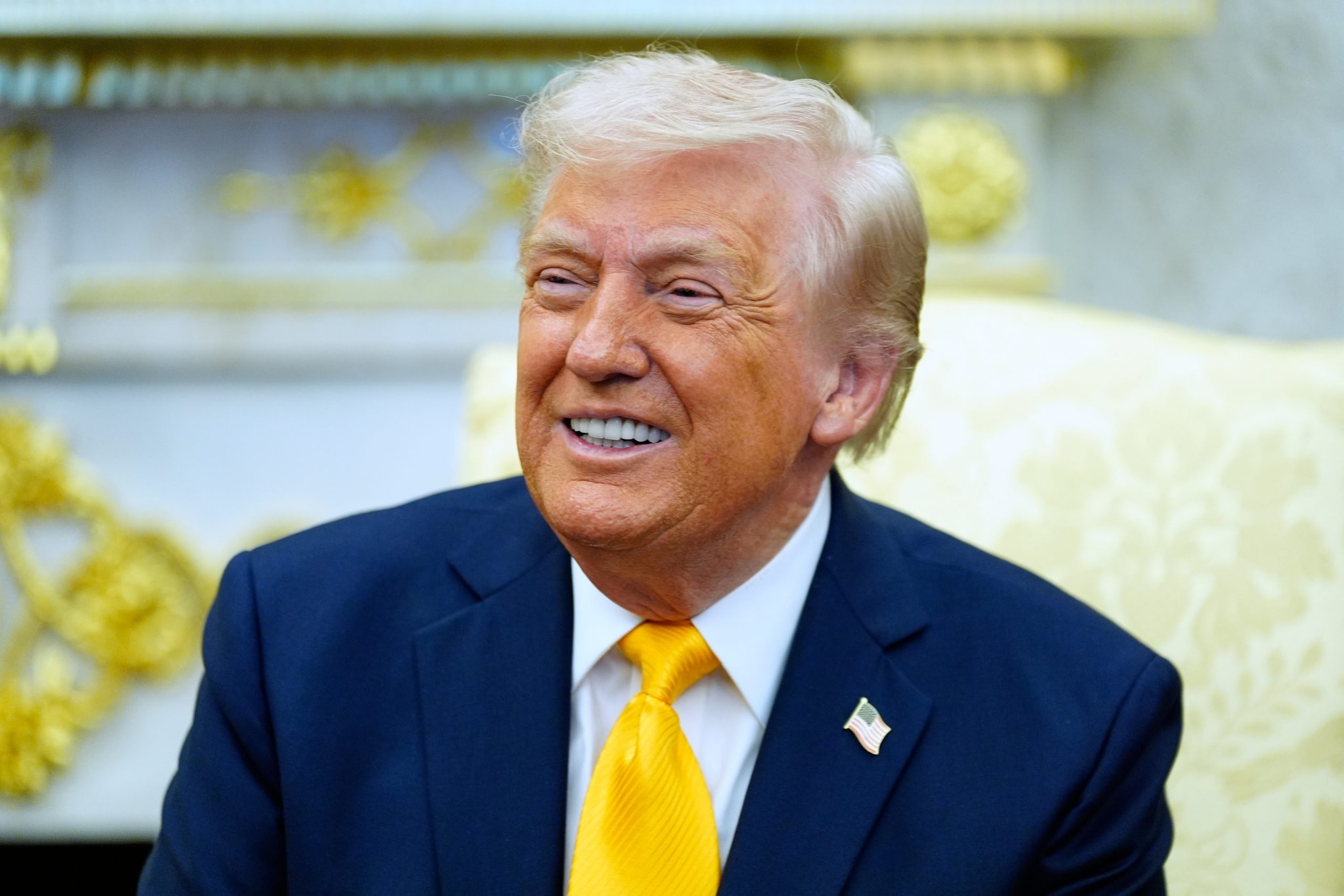
The mainstream media is currently obsessed with a "denial." Tehran says no talks happened. Donald Trump says the talks were "very good" and that Iran "means business." The pundits are laughing. They see a classic case of a politician hallucinating a win.
They are wrong. They are missing the structural reality of 2026. Meanwhile, you can find related developments here: The Cold Truth About Russias Crumbling Power Grid.
In the world of high-stakes geopolitics, a public denial from a regime like Iran is not a refutation of facts. It is a mandatory price of entry for a domestic audience that has been fed a diet of "Death to America" for decades. When the legacy press reports these denials as "proof" that Trump is spinning yarns, they aren't practicing journalism. They are showing a fundamental lack of understanding of how shadow diplomacy actually functions.
I’ve spent years watching trade negotiations stall because one side couldn't stop performing for their home crowd. If you wait for a formal joint press release to believe a deal is moving, you’ve already lost the trade. To understand the bigger picture, check out the recent report by The Washington Post.
The Mirage of the Official Statement
Let’s dismantle the "Tehran Denied It" argument first.
Official state media in an autocracy is a tool for stability, not a source of truth. If the Iranian leadership admitted to "very good" talks with Trump before the ink was dry on a lifting of sanctions, they would face an immediate internal revolt from their own hardline Revolutionary Guard.
The "lazy consensus" suggests that if both sides aren't shaking hands in front of a flag, nothing is happening. Real diplomacy—the kind that actually moves markets and prevents regional wars—happens in windowless rooms in Muscat or Geneva. It happens via encrypted signals and third-party intermediaries.
When Trump says they "mean business," he isn't describing a polite chat over tea. He is describing a shift in the economic gravity affecting the Iranian rial.
- The Rial Reality: Iran’s currency has been in a tailspin.
- The Oil Factor: Despite "ghost fleets" selling to China, the margins are thinning.
- The Demographic Pressure: A young population doesn't care about 1979 slogans; they want high-speed internet and stable prices for bread.
Trump isn't being "duped" by Tehran. He is recognizing that for the first time in a decade, the Iranian leadership is staring at an existential ledger that doesn't balance. They "mean business" because the alternative is a total systemic collapse.
Why "No Talks" is the Best Sign of Progress
Counter-intuitively, the more aggressively a regime denies a meeting, the more likely that meeting was substantive.
Think about it. If the talks were a failure or a mere formality, Tehran would ignore them. By issuing a frantic, high-level denial, they are signaling to their base—and their proxies—that nothing has changed, precisely because everything is about to change.
I’ve seen this play out in corporate mergers. The CEO denies the "rumors of a sale" on Monday, calls it "categorically false" on Wednesday, and signs the Term Sheet on Friday. The denial is a defensive crouch. It’s a way to maintain leverage until the final concessions are locked in.
The media treats diplomacy like a high school dating rumor. They want "yes" or "no." But the adults in the room understand the "Maybe" that looks like a "No."
The "Art of the Deal" vs. The Bureaucracy of the State
The Washington establishment hates Trump's approach because it bypasses the traditional, agonizingly slow process of "working groups."
Standard diplomacy works like this:
- Junior staffers meet for six months to discuss the shape of the table.
- Mid-level bureaucrats spend a year debating the definition of "enrichment."
- The Secretary of State holds a photo op that results in a non-binding memorandum.
Trump’s approach is a direct assault on this inefficiency. By declaring the talks "very good" publicly, he is forcing the Iranians to either walk away and face more "Maximum Pressure" or continue the secret path he has opened. It is a psychological pincer movement.
The Calculus of "Maximum Pressure" 2.0
Let's look at the math. In 2026, the global energy map has shifted. We aren't in 2015 anymore. The U.S. is a net exporter. The Abraham Accords have created a regional security architecture that didn't exist when the original JCPOA was signed.
If you are an Iranian negotiator, your hand is historically weak.
- Your primary proxy, Hezbollah, is stretched thin.
- Your secondary proxy, the Houthis, are inviting direct Western intervention in your backyard.
- Your ally in Moscow is busy burning through its own resources in a war of attrition.
When Trump says they "mean business," he is observing a player who has run out of chips.
The Punditry’s Fatal Flaw
Most analysts ask: "Is he telling the truth?"
The better question is: "Does the truth matter more than the result?"
If Trump's "lie" about talks creates a vacuum where talks actually happen because the market starts pricing in a thaw, he has won. This is a concept known as "reflexivity," popularized by George Soros. The perception of an event can actually cause the event to occur.
By signaling that Iran is ready to deal, Trump creates a permission structure for other nations to stop hedging. It signals to the markets that the "Iran Risk" might be overvalued.
Stop Asking if They Met
People keep asking: "Did the meeting happen at the UN?" or "Was there a secret flight to Doha?"
You’re asking the wrong question.
The question you should be asking is: "Can Iran survive another four years of 100% enforcement of oil sanctions?"
The answer is a resounding no. Therefore, the talks—whether they happened yesterday in a hotel suite or last week via a Swiss courier—are an inevitability. Trump is simply the only one bold enough to say the quiet part out loud while the "experts" wait for a formal invite.
The Hidden Cost of "Traditional" Diplomacy
The competitor article suggests Trump’s claims are "dangerous" or "unsubstantiated."
What’s actually dangerous is the status quo. The status quo is a "frozen conflict" that consumes billions in defense spending and keeps global oil markets on a knife-edge. If "unsubstantiated" claims lead to a breakthrough that the "substantiated" bureaucrats couldn't achieve in forty years, who is the real fool?
I’ve seen this skepticism before. I saw it during the lead-up to the Singapore Summit with North Korea. The "experts" said it was a disaster. Then they realized that for the first time in decades, the missiles stopped flying over Japan for a significant window.
Was it a perfect, permanent peace? No. But it was a disruption of a failing cycle.
The Reality of the "Denial"
Let’s look at the specific language of the Iranian denial. It’s always "No official meetings occurred."
Note the word official.
In the world of the "Sharp Insider," that word is doing all the heavy lifting. "Unofficial" meetings are where the real work gets done. "Informal" exchanges are where the concessions are traded. "Third-party" communications are where the deal is built.
The media reports the "No official meetings" part and ignores the gaping hole the word "official" leaves behind.
The Next Move for Investors
If you are waiting for the New York Times to confirm a deal, you are going to miss the rally.
- Watch the Rial: If the black market rate for the Iranian Rial starts to stabilize despite the "denials," the talks are real.
- Watch the Shipping Insurance: If the cost of insuring tankers in the Strait of Hormuz dips, the "very good" talks are real.
- Watch the Rhetoric: When the Iranian Supreme Leader starts talking about "heroic flexibility" again (a term he used before the 2015 deal), the deal is done.
Stop listening to what state spokespeople say. Start watching what the money does.
The "experts" want you to believe that diplomacy is a sacred rite performed by people with Ivy League degrees. It isn't. It’s a bazaar. And right now, the biggest merchant in the bazaar is telling you the other side is ready to sell.
You can believe the person who wants to keep their job at a think tank, or you can believe the person who has been reading the "tells" of desperate sellers for fifty years.
Iran is denying the talks because they have to. Trump is announcing them because he can.
The noise is for the public. The business is for the players.
Place your bets accordingly.