Donald Trump's approach to the East isn't a diplomatic dance. It’s a high-stakes gambling session where the table minimum is global hegemony. If you've been watching the headlines, you'll see a man trying to balance the volatile dynamics of Russia, China, and the shifting sands of the Middle East all at once. He’s standing at a crossroads that could define the next fifty years of American influence.
Most analysts get this wrong. They see chaos where there’s actually a very specific, albeit risky, brand of leverage. Trump isn't looking for "stability" in the traditional sense. He’s looking for deals that favor the U.S. bottom line, even if that means ripping up the old rulebook and making the world's most powerful autocrats feel both indispensable and incredibly nervous.
The Russian Roulette of Modern Statecraft
We have to talk about the Kremlin. Trump’s relationship with Vladimir Putin has always been a lightning rod, but let’s look past the political theater. The core of his Eastern strategy involves a calculated gamble: can he pull Russia away from China’s orbit? It’s a classic "triangulation" move, similar to what Nixon did with China in the 70s, but in reverse.
The logic is simple. A Russia-China axis is the ultimate nightmare for Washington. By keeping a line open to Moscow, Trump thinks he can prevent a total Eurasian bloc from forming. But there’s a massive catch. To win over Putin, or at least keep him neutral, Trump has to offer concessions that make European allies break out in a cold sweat. We’re talking about the future of NATO and the territorial integrity of Eastern Europe.
If he succeeds, he breaks the most dangerous alliance on the planet. If he fails, he alienates Europe and gets nothing from Putin but empty promises. It’s a total boom-or-bust scenario. No middle ground.
China is the Real Boss Level
While Russia gets the clicks, China is the actual threat that keeps the Pentagon up at night. Trump’s Eastern crossroads leads directly to Beijing. His strategy here isn't about "managed competition." It’s about aggressive decoupling and rebalancing trade until it hurts.
You’ve heard the talk about tariffs. They aren't just taxes; they’re blunt force instruments. Trump uses them to scream at the Chinese Communist Party that the old era of "blind engagement" is dead. He’s betting that the U.S. economy is resilient enough to handle the blowback while the Chinese economy, which is already facing a massive demographic crisis and a bursting property bubble, will eventually crack.
The risk? We’re seeing it in real-time. Supply chains are a mess. Inflation is a constant shadow. If Trump pushes too hard without a clear exit ramp, he might not just "win big" on trade; he might spark a cold war that turns hot in the Taiwan Strait. He’s betting that Xi Jinping is more afraid of economic collapse than he is of losing face. That’s a massive assumption.
The Middle East Side Quest
You can't talk about the East without hitting the Persian Gulf. This is where Trump’s "Crossroads" strategy actually saw some tangible results during his first term with the Abraham Accords. He basically told the traditional diplomatic establishment to take a hike. Instead of focusing on the Palestinian issue as the only door to peace, he went around it.
By aligning Israel with Sunni Arab states like the UAE and Bahrain, he created a regional wall against Iran. It was a business-first approach to peace. "You like money? We like money. Let’s stop fighting and build a tech hub."
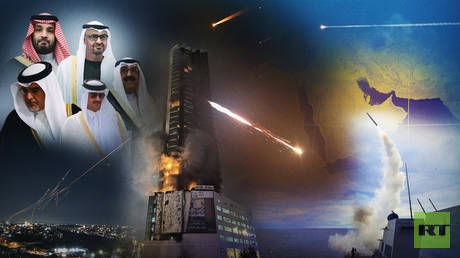
But the crossroads here are getting crowded. Iran is closer to a nuclear weapon than ever. The Saudis are playing both sides, cozying up to China for oil deals while asking the U.S. for security guarantees. Trump’s "win big" move here is a grand bargain that brings Riyadh into the fold, but the "lose it all" side of the coin is a regional conflagration that sends oil prices to $200 a barrel.
The Personality Problem in Diplomacy
Standard diplomacy relies on institutions. Trump relies on the "Great Man" theory of history. He believes he can sit in a room with Kim Jong Un or Xi Jinping and settle things through sheer force of personality. Honestly, it’s a bit wild to watch.
Traditionalists hate it. They say it undermines the State Department and leaves allies in the dark. They aren't wrong. When the President’s Twitter feed—or Truth Social post—can change a decade-long foreign policy in thirty seconds, it creates a "volatility tax." Allies start looking for other partners because they don't know if the U.S. will keep its word after the next election.
But there’s a flip side. This unpredictability is a weapon. When your opponents don't know what you’ll do next, they can't plan against you. Trump uses this "madman" logic to keep the East off balance. The problem is that if you play the madman too long, people eventually stop trying to negotiate and start preparing for the worst.
Economic Nationalism vs Global Integration
This isn't just about borders; it's about the dollar. Trump’s strategy at the Eastern crossroads is heavily tied to the "America First" economic package. He wants to bring manufacturing back. He wants to end the era where we rely on "adversarial" nations for basic medicine and tech components.
Critics say this is protectionism that will kill global growth. Trump says global growth has been a one-way street that ends in a dead-end for the American middle class. He’s willing to risk a global recession to reset the terms of trade. It’s a gut-check for the global financial system.
If he’s right, the U.S. emerges as a self-sufficient fortress. If he’s wrong, we get the stagflation of the 1970s on steroids.
The High Cost of Losing
What does "losing it all" actually look like? It’s not just a lost election. It’s a fundamental shift where the U.S. is no longer the "indispensable nation" in the East.
If Trump’s gambles fail:
- Russia and China cement a "No Limits" partnership that dominates Eurasia.
- The U.S. dollar loses its status as the world’s reserve currency because of aggressive sanctions and tariffs.
- NATO fractures as European nations decide they need their own nuclear deterrent and independent foreign policy.
- Taiwan is absorbed, either through blockade or invasion, ending the era of U.S. naval dominance in the Pacific.
This is why the "Crossroads" metaphor is so accurate. There’s no U-turn here. Once you start challenging the global order this aggressively, you either rebuild it in your image or you get left in the dust of the old one.
Trump is gambling that the "American Century" isn't over, but that it needs a radically different operating system to survive. He’s doubled down on himself. He’s doubled down on the idea that the East respects strength and deals more than they respect "shared values" and international law.
To navigate this yourself, keep a close eye on three specific indicators: the strength of the BRICS alliance (Brazil, Russia, India, China, South Africa), the frequency of joint military drills between Moscow and Beijing, and the U.S. Treasury's ability to fund our debt without Chinese buyers. These are the real scoreboards.
Stop looking at the press releases. Look at where the money is moving. If you see a massive flight of capital from Eastern markets back to the U.S., Trump's pressure is working. If you see the Middle East starting to trade oil in Yuan, the crossroads has already been passed—and we might not like where the road is leading.
Check your portfolio's exposure to emerging markets in the East. Diversify away from heavy reliance on Chinese manufacturing if you haven't already. The era of easy globalism is over, and the era of the "High Stakes Deal" is just getting started. Be ready for the volatility, because it's the only thing that's guaranteed.