Brussels is currently gripped by a paralysis that has nothing to do with red tape and everything to do with a suspected mole at the highest levels of European power. While the Hungarian government publicly lashes out at what it calls "fake news" and "senseless conspiracy theories," the reality inside the European Council is far more predatory. The accusations are not just about a difference in political opinion; they are about the functional integrity of Western intelligence sharing.
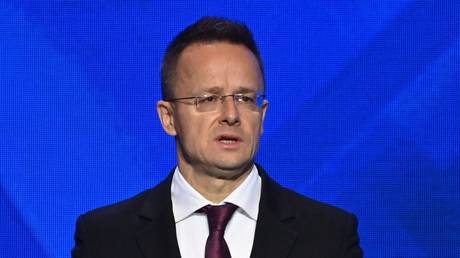
Reports have surfaced alleging that Hungarian Foreign Minister Péter Szijjártó has been operating what essentially amounts to a direct reporting line to Moscow. According to security officials, Szijjártó has allegedly made a habit of stepping out of confidential EU negotiations to brief his Russian counterpart, Sergey Lavrov, on the specific contents of those discussions. This is not just a diplomatic faux pas. It is a structural breach of the "relationship of trust" that holds the 27-member bloc together.
The Mechanism of Obstruction
The timing of these leaks is surgically precise. For months, Budapest has held a €90 billion loan for Ukraine hostage. To the casual observer, this looks like a standard veto used as leverage to unfreeze roughly €17 billion in Hungarian funds currently held by the European Commission over rule-of-law violations. But the investigative trail suggests something deeper. By providing Moscow with real-time updates on EU strategies, Hungary isn't just protecting its own wallet; it is actively degrading the EU's ability to act as a unified geopolitical entity.
The European Commission has officially demanded "clarity" from Budapest, but clarity is the last thing Viktor Orbán’s administration intends to provide. Instead, the Hungarian Prime Minister has pivoted to a classic counter-intelligence play, claiming that any knowledge of these phone calls must be the result of illegal eavesdropping by Western powers. It is a masterful redirection. By framing the scandal as an attack on Hungarian sovereignty rather than a betrayal of European security, Orbán seeks to shore up his base ahead of the April 12 elections.
A Captured State in a Squeeze
Hungary is currently a country where 80% of the media landscape is controlled, directly or indirectly, by the ruling Fidesz party. This "informational autocracy" allows the government to dismiss serious security allegations as "dollar media" propaganda. However, the economic reality is beginning to bite harder than the rhetoric can soothe.
The European Court of Justice (ECJ) is currently weighing a stinging opinion from its Advocate General, Tamara Ćapeta, which suggests the Commission was legally wrong to release €10.2 billion to Hungary back in 2023. If the court follows this opinion, the EU may be forced to claw back those billions. This comes at a time when the Hungarian economy is struggling with stagnation and a significant budget shortfall.
Key Pressure Points in the EU-Hungary Standoff:
- The €90 Billion Ukraine Loan: The primary chip Orbán is holding to force the EU's hand.
- The 20th Sanctions Package: Currently stalled by Budapest, much to the frustration of the Baltic states and Poland.
- The Sovereignty Protection Office: A new Hungarian agency with sweeping powers to investigate anyone receiving "foreign funding," effectively silencing the last few independent NGOs.
The Illusion of Reform
Brussels has long played a game of "check-the-box" with Budapest. The Commission sets conditions—like judicial independence or anti-corruption measures—Hungary passes a vague law that looks good on paper, and the money starts to flow. But as the latest reports on the Sovereignty Protection Act show, for every step forward in "reform," the Orbán government takes two steps toward centralized control.
The new "Sovereignty" law allows the state to probe journalists and civil society groups without any clear procedural rules or legal remedy. It is, in the words of the Hungarian Helsinki Committee, a "regime defense law." While the EU focuses on the technicalities of judicial appointments, the Hungarian government is busy redefining the very nature of dissent as a threat to the nation.
The Tipping Point
The most significant threat to Orbán’s 16-year tenure isn't coming from Brussels, but from within. The rise of Péter Magyar and his Tisza party has changed the electoral math. For the first time, Fidesz is trailing in the polls. This explains the desperation of the current rhetoric. If the Washington Post report on the Lavrov phone calls is accurate, it represents a gamble that Orbán may have finally overplayed.
Poland’s Donald Tusk recently noted that these allegations "shouldn't come as a surprise to anyone," revealing the depth of the rot in European diplomacy. If a member state is actively feeding intelligence to an adversary during a hot war on the continent, the EU’s "Article 7" procedure—the so-called nuclear option to strip a member of voting rights—is no longer a theoretical exercise. It becomes a matter of survival.
The European Union now faces a brutal choice. It can continue to buy Orbán’s cooperation with multi-billion euro "bribes," effectively funding the very autocracy that seeks to undermine it. Or it can finally acknowledge that the "Hungarian model" is incompatible with the security of the bloc. The April elections will decide if Hungary remains a member of the Western democratic family or if it has already become a satellite of the East.
Would you like me to analyze the specific legal mechanisms the EU could use to claw back the released €10.2 billion?