A single signature on a legal brief in Kuala Lumpur doesn't usually make the floorboards shake in a longhouse in the Sarawakian interior. But it should.
For decades, the relationship between Malaysia’s national oil giant, Petronas, and the state of Sarawak has functioned like a marriage of convenience where one partner holds the keys to the bank vault while the other provides the gold. Now, that vault is being pried open. The Federal Court’s recent decision to allow Petronas to challenge Sarawak’s regional authority over its own natural gas isn't just a dry piece of litigation. It is a seismic shift in who owns the very ground beneath the feet of millions. Recently making news in related news: The Jurisdictional Boundary of Corporate Speech ExxonMobil v Environmentalists and the Mechanics of SLAPP Defense.
The Weight of the Continental Shelf
To understand why a boardroom battle matters to a fisherman in Bintulu, you have to look at the map—not the one with colorful borders, but the one that exists under the waves.
Sarawak sits on a treasure chest. The Central Luconia province off its coast holds some of the most significant gas reserves in Southeast Asia. For half a century, the Petroleum Development Act (PDA) of 1974 acted as the undisputed law of the land. It gave Petronas "entire ownership" of the nation's oil and gas. It was a centralized dream, designed to fuel a rapidly developing Malaysia from a single, powerful engine in the capital. Additional information on this are detailed by CNBC.
But dreams change depending on who is sleeping.
In Kuching, the narrative is different. Sarawak points to the Oil Mining Ordinance of 1958, a law that existed before Malaysia was even a country. They argue that their rights to the resources on their continental shelf were never truly surrendered. They see the PDA not as a unifying force, but as an aging tether. When Sarawak passed its own Control of Supplies (Amendment) Bill, it wasn't just bureaucracy. It was a flag planted in the seabed.
The Invisible Stakes
Imagine a family living in a house built on an ancient orchard. For fifty years, a distant relative has come by, picked all the fruit, sold it in the city, and sent back a small allowance for the family to fix the roof. Eventually, the family decides they want to pick their own fruit, set their own prices, and decide which trees to prune.
The distant relative sues. They claim the original deed gives them the right to every apple until the end of time.
Petronas is that relative. It isn't acting out of malice; it is acting out of a mandate to maintain the status quo of Malaysia’s economy. Petronas contributes billions to the national casket. If Sarawak successfully asserts its right to regulate its own gas through its state-owned entity, Petroleum Sarawak Bhd (Petros), the math for the entire country changes.
The court's decision to grant Petronas "leave" to challenge these state laws is the first crack in a very large dam. It means the judiciary acknowledges that there is a genuine, existential conflict between federal and state powers that cannot be ignored any longer.
A Journey Through the Gas Streams
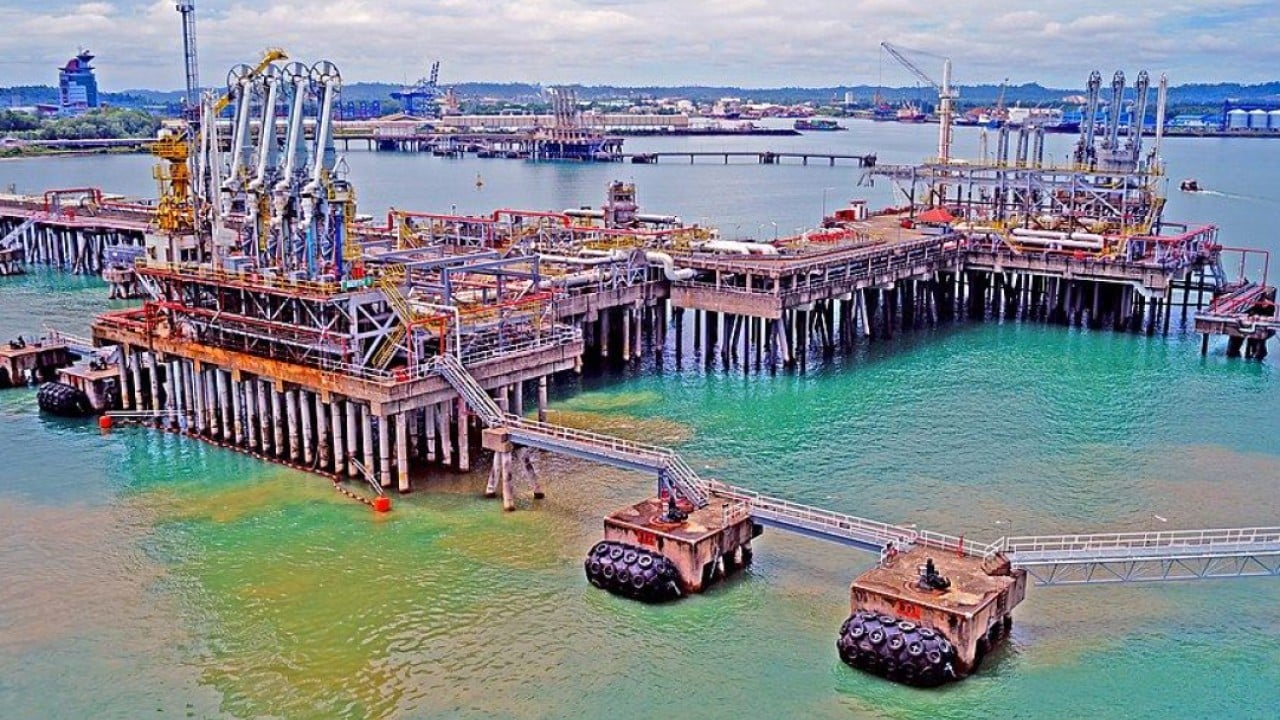
The technical reality of this dispute is a tangled web of pipelines and processing plants. Sarawak wants to be more than a gas station; it wants to be the refinery, the distributor, and the benefactor. By asserting control, the state aims to ensure that a greater portion of the "value chain"—the process of taking raw gas and turning it into electricity or industrial chemicals—stays local.
Consider the hypothetical case of an engineer named Adam in Miri. Under the old system, Adam works for a subcontractor of a multinational firm, which is overseen by Petronas. The profits from the gas he extracts flow to Kuala Lumpur, filtered through federal budgets, and eventually trickle back down in the form of highways or schools.
Under the new vision Sarawak is fighting for, Adam works for a state-regulated ecosystem. The decisions about where that gas goes—whether it is exported to Japan or used to power a new industrial park in Samalaju—are made hours away, not days away. The proximity of power matters. It’s the difference between being a stakeholder and being a spectator.
The Friction of Sovereignty
The legal battle centers on the validity of the Sarawak Land Code and the Oil Mining Ordinance. Petronas argues that these state laws are unconstitutional because they infringe on the federal government's exclusive right to handle "petroleum" matters.
The tension is palpable.
On one side, you have the necessity of a national champion. Petronas has the global standing, the credit rating, and the massive infrastructure to compete with Shell or ExxonMobil. Splintering that authority could, in the eyes of federalists, weaken Malaysia’s hand on the world stage. They fear a "patchwork" of regulations that would make foreign investors nervous. Stability is their primary currency.
On the other side, there is the cry for "MA63"—the Malaysia Agreement of 1963. For many in East Malaysia, this isn't about numbers on a spreadsheet. It’s about a broken promise. They feel that the original terms of the federation guaranteed them a level of autonomy that has been eroded by decades of centralist policy. To them, this court case is a late-stage attempt to reclaim a birthright.
The Sound of the Gavel
When the Federal Court finally hears the merits of this case, the lawyers will speak in the hushed, precise tones of constitutional law. They will cite precedents and statutes. They will argue over the definition of "land" versus "seabed."
But the real argument is happening in the coffee shops of Sibu and the high-rises of Mont Kiara. It is an argument about what it means to be a federation. Can a country truly be united if its states feel like colonies of the center? Or does the survival of the whole depend on the absolute control of its most valuable parts?
The stakes are measured in trillions of cubic feet of gas, but the cost is measured in trust.
If Petronas wins, the centralized model is preserved, but the resentment in East Malaysia may reach a boiling point, fueling political movements that could destabilize the government for a generation. If Sarawak wins, it sets a precedent that could see other states—like Sabah or Terengganu—questioning the federal grip on their own resources.
The court has opened the door. What walks through it will define the next fifty years of the Malaysian experiment.
We often think of laws as static things, carved in stone and tucked away in libraries. They aren't. They are living, breathing boundaries that dictate who gets to eat and who has to wait. As this case moves forward, every person who flips a light switch in Malaysia is connected to the outcome. The gas that generates that power is currently the subject of a tug-of-war that transcends the courtroom.
The silence in the gallery as the judges enter is deceptive. Outside, the wind is picking up over the South China Sea, and the waves are beginning to crest.
The orchard belongs to the family, but the relative has the only ladder. For now, everyone is standing in the rain, waiting to see who gets to climb.
Would you like me to analyze the specific constitutional articles that Petronas is using to build its case against the Sarawakian statutes?