A stack of paper sits on a desk in a government office in Admiralty. It is not just paper. It is a three-bedroom apartment for a family of five currently living in a subdivided unit in Sham Shui Po. It is a laboratory where a scientist might finally crack the code on a new semiconductor. It is a park where a retired couple might walk their dog in ten years.
But right now, it is just a file. And for the last several decades, that file has been trapped in a labyrinth.
Hong Kong has always been a city defined by its verticality and its speed, yet when it comes to the soil beneath our feet, we have moved at a glacial pace. The Northern Metropolis, a sprawling vision intended to rebalance the scales of our city, has long been haunted by a singular, suffocating ghost: the land approval process. Until very recently, taking a piece of raw earth and turning it into a foundation for a home took an average of nine months just for the initial regulatory "streamlining." That was before a single brick was laid. It was before the first shovel hit the dirt.
Nine months is a human gestation period. In the time it took for the government to say "yes" to a land use proposal, a new life could be conceived and born.
Changes are coming. Sources close to the development indicate a radical shift that will slash that nine-month wait down to a mere two. To understand why this matters, we have to stop looking at maps and start looking at the people standing on them.
The Cost of Staying Still
Consider a man we will call Mr. Lam. He is a small-scale developer, the kind of person who doesn't have the infinite cash reserves of the city's titans. He found a plot of land near the border, a neglected patch of brownfield that could easily hold a modest residential complex. He had the funding. He had the vision.
What he didn’t have was a decade to wait.
Under the old system, Mr. Lam would enter a cycle of "departmental ping-pong." He would submit a plan to the Planning Department. They would review it and send it to the Lands Department. The Lands Department would find a minor discrepancy in the drainage proposal and send it to the Drainage Services Department. Each stop on this journey added weeks, then months. By the time the approvals were halfway through, the interest on Mr. Lam’s loans had ballooned. The market had shifted. The project was no longer viable.
He walked away. The land stayed empty. The family in Sham Shui Po stayed in their subdivided unit.
The inefficiency wasn't just a matter of red tape; it was a tax on the future. When we talk about "streamlining," we aren't just talking about digitalizing forms or cutting out a few meetings. We are talking about the removal of an invisible barrier that has kept Hong Kong’s growth stunted in the very areas where it needs to flourish.
The Northern Metropolis is slated to provide housing for 2.5 million people. If we stuck to the old timeline, the children who need those homes today would be middle-aged by the time the keys were handed over.
Collapsing the Timeline
The new proposal seeks to condense the statutory procedures by merging various stages of the land resumption and engineering processes. In the past, these steps were sequential—Step A had to be finished, signed, and stamped before Step B could even be whispered in a hallway.
The new logic is simple: Why not do them at the same time?
By allowing for "parallel processing," the government is essentially admitting that the old way was a relic of a colonial-era bureaucracy that prized caution over results. The shift from nine months to two months represents a 77% reduction in waiting time. It is a declaration of urgency.
But urgency is a frightening thing for a bureaucracy. It requires trust. It requires a departure from the "cover your tracks" mentality that has dominated the civil service for generations. To move this fast, departments have to stop acting like rival kingdoms and start acting like a single, unified machine.
The Quiet Crisis of the "Brownfields"
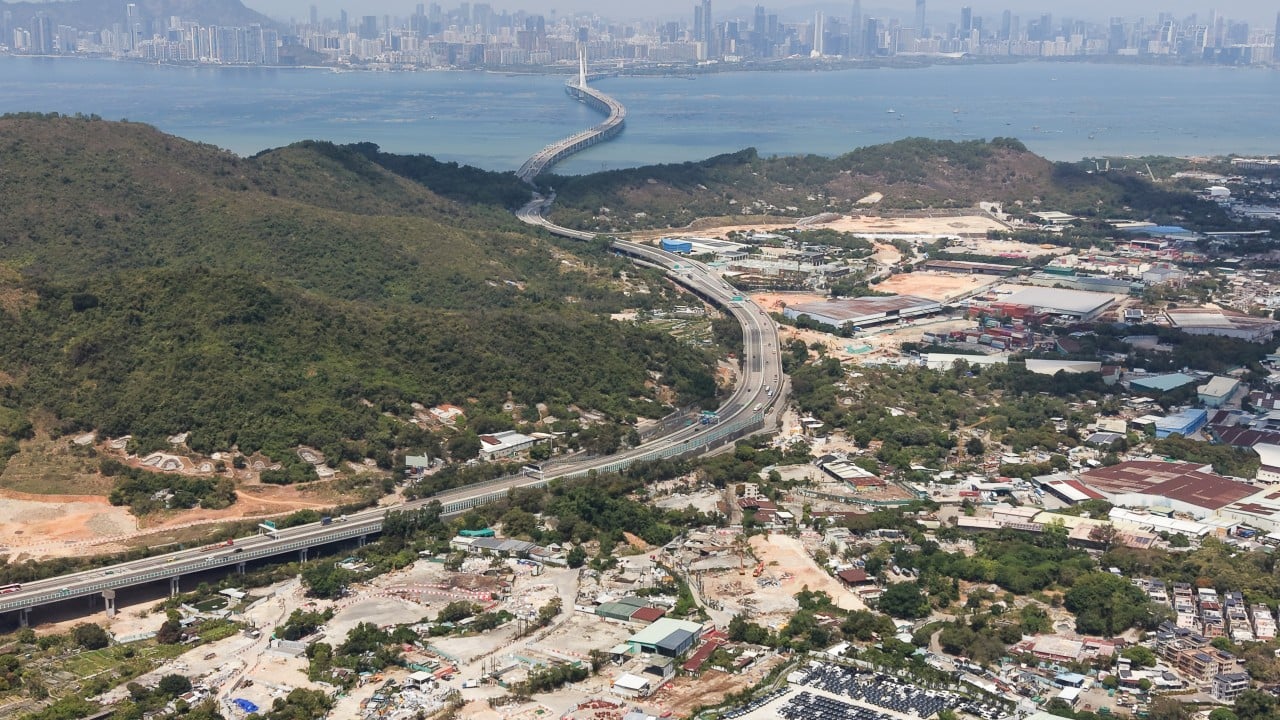
If you drive through the New Territories today, you see them everywhere: "brownfields." These are patches of land used for container storage, car repair shops, or simple dumping grounds. They are the scars of an unplanned past.
For a long time, the government treated these plots like a difficult puzzle they weren't quite ready to solve. The legal complexities of resuming this land were so dense that it was easier to just let them sit there, leaking oil into the groundwater, while the city gasped for space.
The two-month approval window changes the math for these sites. When the path to redevelopment is clear and fast, the incentive to hold onto a stagnant piece of land vanishes. We are seeing the beginning of a Great Reshuffling.
Imagine a young tech entrepreneur looking at the Shenzhen skyline from the Hong Kong side of the border. She sees the glittering towers of Nanshan and wonders why her side of the river looks like a scrap yard. She needs an office. She needs a laboratory. She needs her employees to have somewhere to live that doesn't consume 70% of their salary.
For her, the difference between nine months and two months isn't just a statistic. It’s the difference between building her company in Hong Kong or moving it across the bridge.
The Human Weight of Two Months
Two months is the length of a long summer. It is a timeframe we can wrap our heads around. It is a period that allows for momentum.
When a project can move from an idea to a sanctioned reality in sixty days, the energy of the city changes. Investors who previously looked at the Northern Metropolis as a "twenty-year gamble" are starting to see it as a "five-year certainty."
We often think of land as a static thing—dirt, rocks, grass. But in a city as dense as ours, land is actually time. It is the time a father spends commuting. It is the time a child has to play. It is the time an elderly person waits for a spot in a care home.
By reclaiming seven months from the clutches of the approval process, the government is essentially gifting that time back to the people.
Of course, there are skeptics. There are those who worry that speed will lead to a loss of oversight, that environmental protections will be trampled in the rush to pour concrete. These are valid fears. A city built too fast can be a city built without a soul.
However, the current proposal doesn't suggest removing the rules; it suggests removing the pauses between the rules. It asks that we stop waiting for the sake of waiting.
A City Recalibrated
The Northern Metropolis is not just a housing project. It is an attempt to create a new center of gravity. For a century, Hong Kong has looked inward, huddling around the Victoria Harbour as if the rest of the territory didn't exist. We turned our backs on the north, treating it as a buffer zone or a backyard.
That era is over.
The border is no longer an edge; it is an artery. The two-month approval process is the heartbeat that will pump blood through that artery.
When the first cranes begin to move in the San Tin Technopole, or when the first residents move into the new towers in Kwu Tung North, they won't be thinking about the 1960s-era land ordinances or the bureaucratic hurdles that were cleared to get them there. They will be thinking about the view from their window. They will be thinking about their commute.
They will be living in a space that was once a file on a desk, a file that finally stopped moving in circles and started moving forward.
The paper walls are falling. The labyrinth is being straightened. And for the first time in a generation, the city is moving at the speed of its people.
The dust is finally starting to rise.