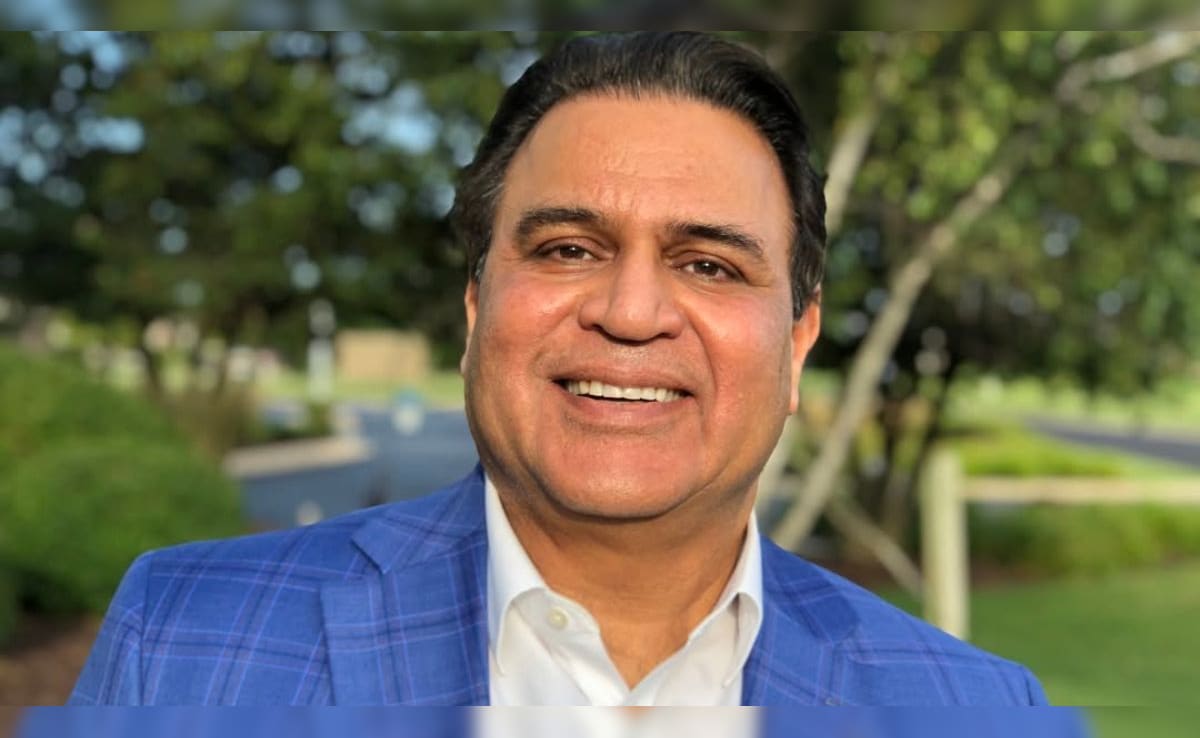
Sunil Puri landed in the United States in 1979 with exactly $150 in his pocket. He wasn't a tech heir or a trust fund kid. He was just another Indian immigrant with a suitcase and a disproportionate amount of ambition. Decades later, the United States Senate took a moment to formally recognize his journey, proving that the gritty, old-school version of the American Dream isn't dead yet. Senator Dick Durbin stood on the floor of the Senate to pay tribute to Puri, not just because he made money, but because of how he spent his influence in Rockford, Illinois.
Most people look at a successful real estate developer and see buildings. If you look closer at Puri’s career, you see a blueprint for how immigrant entrepreneurs actually reshape the rust belt. It’s not about the initial $150. It’s about what happens when that tiny bit of capital meets a relentless refusal to fail.
Why the Senate Tribute Matters for Immigrant Founders
When a body as formal as the US Senate pauses to honor a businessman, it’s usually for one of two reasons. Either the person donated a massive sum to a specific cause, or their life story serves as a needed reminder of national values. For Sunil Puri, it was clearly the latter. Senator Durbin highlighted Puri’s role as the co-founder of First Midwest Group, a real estate firm that basically helped rebuild the commercial landscape of Northern Illinois.
You don't get a Congressional Record shout-out for just being rich. You get it for becoming a pillar of a community that was struggling. Rockford has had its share of economic hits over the years. Puri didn't just build offices there; he stayed. He invested in the Keeling-Puri Peace Memorial. He poured resources into education. He showed that "making it" in America means you eventually have to start holding up the roof for everyone else.
The Reality of the $150 Start
Let’s be honest about that $150 figure. In 1979, that was roughly equivalent to about $650 today. Try moving across the world, paying for a taxi, a meal, and a security deposit with 600 bucks. It’s impossible. That’s the point. The "Hope" mentioned in the Senate tribute title wasn't some fluffy concept. It was a survival mechanism.
Puri attended Rockford University, then known as Rockford College. He worked jobs that most people today would turn their noses up at. He understood a fundamental truth that many modern founders forget: your first decade is for grinding, not for branding. He graduated in 1982 with a degree in accounting, which gave him the mathematical backbone to understand real estate risk. While his peers were looking for safe corporate gigs, he was looking at dirt and seeing potential.
Building First Midwest Group from Scratch
In 1984, just a few years after graduation, he started First Midwest Group. This wasn't a massive conglomerate on day one. It started small. He focused on the Midwest because he saw value where coastal investors saw "flyover country."
His strategy was simple but difficult to execute.
- Buy land in the path of growth.
- Develop it with a focus on long-term tenants.
- Reinvest every single penny back into the next project.
- Don't over-leverage yourself during the boom times.
This conservative yet aggressive approach allowed him to survive multiple recessions that wiped out flashier developers. It’s a lesson in fiscal discipline that’s often missing in today’s "burn rate" culture.
Beyond the Boardroom and Into the Community
Puri’s impact on Rockford goes way beyond square footage. He’s been a massive advocate for education, specifically through his involvement with his alma mater and various local initiatives. He didn't just write checks. He showed up.
One of his most significant non-business contributions is the Keeling-Puri Peace Memorial. It’s a site dedicated to the idea of global harmony, which sounds a bit idealistic until you realize it was built by a man who moved halfway around the world to a place that didn't look like him or pray like him. He wanted to create a physical space that celebrated the diversity he felt helped him succeed.
He also served on the President’s Advisory Commission on Asian Americans and Pacific Islanders under the Obama administration. This put him in the room where policy happens. He used that platform to talk about the hurdles small business owners face, especially those coming from immigrant backgrounds. He wasn't just representing himself; he was representing the guy getting off the plane with $150 today.
What Entrepreneurs Can Learn from the Puri Model
If you're looking at Sunil Puri’s story and thinking it’s just a "nice tale," you're missing the tactical advantages he used. He mastered the art of the local network. In a city like Rockford, reputation is your most valuable asset. If you burn a contractor or lie to a banker, word spreads by lunch. Puri built a brand based on the fact that he was staying put.
He also understood the importance of diversification within a niche. First Midwest Group didn't just do retail. They did office space, industrial, and residential. When one sector took a hit, the others carried the weight. This isn't groundbreaking stuff, but it's the stuff that works.
The Power of the Indian-American Diaspora
Puri is part of a larger trend of Indian-American success that has become a statistical powerhouse in the US. This group has the highest median household income of any ethnic group in the country. Why? It's usually a combination of high education levels, a strong cultural emphasis on entrepreneurship, and a "failure is not an option" mindset. Puri’s recognition in the Senate is a nod to this entire community’s contribution to the American economy.
He didn't try to hide his roots to fit in. He used his unique perspective to identify opportunities that others missed. He saw the potential for trade and connection that a more insular businessman might have overlooked.
Why We Need More Stories Like This
In a time when the national conversation around immigration is often toxic and polarized, Puri’s story acts as a necessary counter-weight. It’s hard to argue with a man who creates thousands of jobs and spends his weekends trying to improve local schools.
The Senate tribute wasn't just a pat on the back for Sunil. It was a signal to the rest of the country that the system still works if you're willing to work the system. It’s a reminder that the best way to "save" a struggling American city isn't through a government handout, but through the sustained investment of people who actually live there and care about the outcome.
Actionable Takeaways for Your Own Venture
You don't need a Senate tribute to validate your work, but you can follow the steps Puri took to build something that lasts.
- Pick a geography and own it. Don't try to be everywhere. Be the person everyone knows in your specific region or niche.
- Accounting is a superpower. Puri’s degree wasn't in "entrepreneurship"—it was in accounting. Know your numbers better than your CFO does.
- Build monuments, not just products. What are you leaving behind that isn't a line item on a P&L? Your community involvement is your insurance policy against irrelevance.
- Stay lean for longer than you think. If you start with $150, don't act like you have $150 million the moment you get your first big contract.
Sunil Puri’s journey from a penniless student to a Senate-honored mogul is a masterclass in persistence. He didn't wait for permission to build. He just started with what he had. If you're waiting for the "perfect" time to start your next project or move to that new city, you're already behind. Stop waiting for the $150 to turn into $15,000 before you move. Just move.