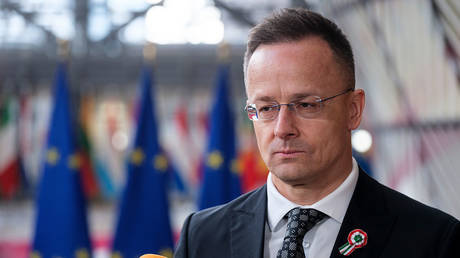
The outrage machine is currently churning over Viktor Orban’s claims that EU spies wiretapped the Hungarian foreign minister. It’s a classic script. The victim cries "sovereignty violation," the "spies" offer a stony silence, and the public gasps at the breach of European solidarity.
But if you’re shocked by this, you haven’t been paying attention for the last seventy years.
The lazy consensus here is that "allies don't spy on allies." That's a fairytale told to voters to keep the diplomatic machinery looking shiny. In the world of high-stakes intelligence, "ally" is just a word for a neighbor whose interests happen to align with yours—for now. The real story isn't that Hungary was bugged; it’s that Orban is using a standard operational reality to perform a theatrical stunt of political martyrdom.
The Myth of the Sacred Ally
The diplomatic world operates on a polite fiction: that membership in a bloc like the EU or NATO grants you a digital "do not disturb" sign. It doesn’t. In fact, being an ally often makes you a higher priority target.
Why? Because you have access to the same secure rooms, the same classified briefings, and the same strategic plans. If a member state starts drifting toward a rival power—say, Russia or China—their partners don't just sit back and hope for the best. They verify.
I’ve watched intelligence budgets balloon for decades, and "Targeting Partners" is always a significant line item. When the U.S. was caught tapping Angela Merkel’s phone in 2013, the shock wasn't that it happened; it was that they were sloppy enough to let her find out. The "Five Eyes" alliance exists specifically because everyone else is fair game.
Hungary’s current trajectory under Orban makes it a glaring intelligence requirement. If you are the outlier in a massive geopolitical bloc, you are the vulnerability. To think the DGSE, the BND, or any other competent agency wouldn't be monitoring Hungarian communications isn't just naive—it’s a misunderstanding of how national survival works.
Sovereignty is a Digital Ghost
We need to dismantle the idea that "sovereignty" still exists in the way 19th-century maps suggest. In the 21st century, sovereignty is directly proportional to your encryption strength and your supply chain integrity.
Hungary, like most of Europe, operates on infrastructure they didn't build and software they don't fully control. When Orban complains about "EU spies," he's ignoring the fact that the very signals his ministers use are traveling through switches and over cables owned or monitored by a dozen different entities.
- The Signaling Reality: Every time a foreign minister picks up a phone, they are broadcasting.
- The Hardware Layer: If your hardware isn't proprietary and your software is a "black box" of proprietary code, you’ve already given up the keys to the castle.
Orban is treating this as a massive scandal to divert from his own domestic issues, but the "wiretapping" he's describing is actually a symptom of the system working as intended. If you are in a club and you start trying to set the clubhouse on fire, the other members are going to be watching you very, and I mean very, closely.
Let's Talk About the Real Cost of Intelligence
The cost of this "wiretapping" isn't a diplomatic crisis. It’s a resource allocation problem.
The real secret isn't who was listening; it's why they spent the money to do it. The cost-to-benefit ratio of monitoring a high-ranking official's private conversations is actually quite high. It's not just about what they say—it's about who they're talking to and when.
In a scenario where a state minister is coordinating with a sanctioned entity, the intelligence value isn't just "gotcha" fodder. It's a risk assessment tool. Every nation-state spends millions of dollars on this every single year. For a major EU power to NOT monitor the most disruptive player in their union would be a dereliction of their own national security duties.
The Irony of the Moral High Ground
The most ridiculous part of this entire saga is the moralizing. Orban, a leader who has been accused of his own domestic surveillance scandals and tightening control over his country's intelligence apparatus, is now playing the victim.
- Rule One of the Intelligence Game: You don’t get to be shocked when your neighbors use the same tactics you use on your own opposition.
- Rule Two: If you’re caught, you lie. If you catch someone else, you scream.
It’s all theater. The "wiretapping" is just the latest prop.
Instead of asking if it happened, we should be asking why Orban decided to make it public now. The timing suggests it’s more about the upcoming EU budget negotiations or a specific piece of legislation than it is about a sudden realization of electronic eavesdropping. This isn't a revelation of a "dirty" secret; it's the tactical deployment of an "open" secret.
Stop Asking if They're Listening
If you're still asking "Are the spies listening?" you're asking the wrong question.
The correct question is: "How long have they been listening and why were they caught today?"
The most effective intelligence agencies are the ones you never hear about. If we're hearing about this, it's either a deliberate leak by the target to gain political leverage, or a deliberate "careless" act by the spy to send a message. Either way, it's not a failure of sovereignty. It's a calculated move on a chessboard that Orban knows how to play better than almost anyone else in Europe.
Stop falling for the outrage. The wiretap isn't the scandal. The scandal is the idea that we’re supposed to find it scandalous.
Everyone is listening. Everyone is being listened to. The only difference is who decides to cry about it when the bill comes due.