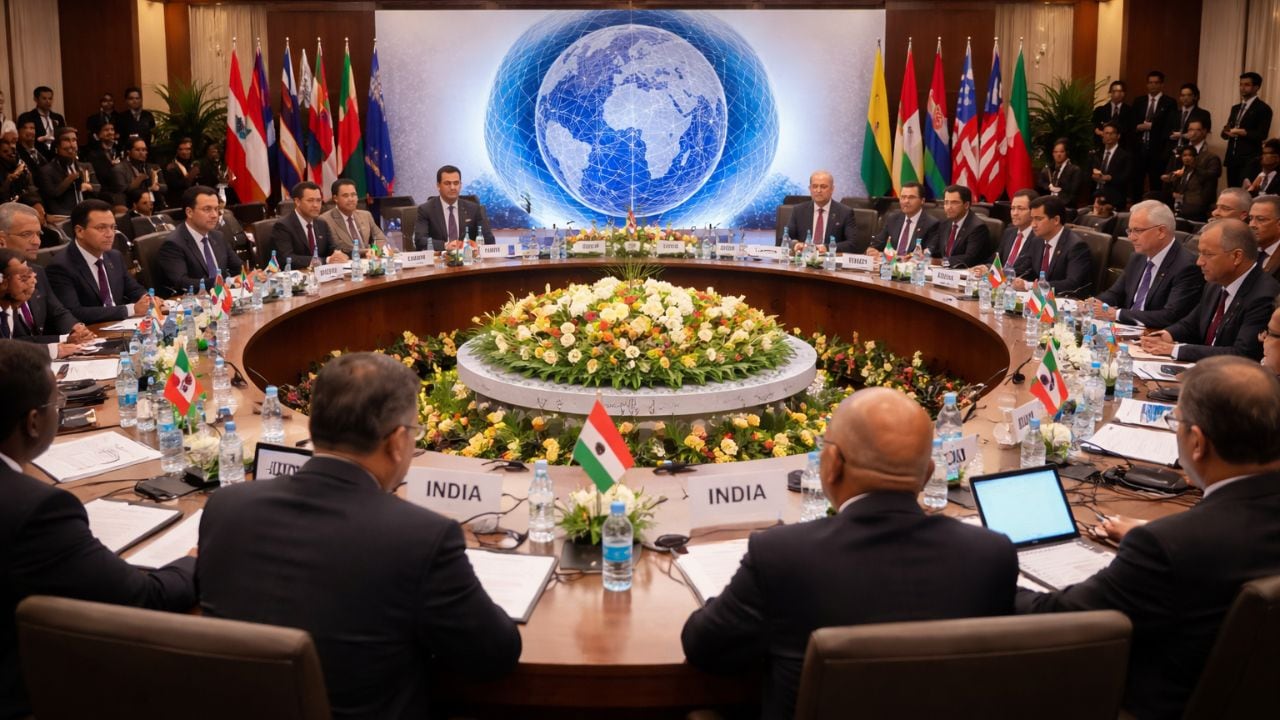
The global financial system currently operates as a high-speed transit network for dirty money, and the brakes are failing. When the GlobE Network gathered in India recently, the official communiqués spoke of "deeper cooperation" and "synergy." Strip away the diplomatic polish, and you find a much grittier reality. India is leading a charge to overhaul a system where it takes minutes to move stolen wealth across a border but decades to get it back. The core problem isn't a lack of desire to catch criminals. It is a fundamental architecture of bureaucratic friction that serves the interest of tax havens and shield-heavy jurisdictions.
At the heart of the GlobE (Global Operational Network of Anti-Corruption Law Enforcement Authorities) initiative is a simple, desperate realization. Formal Mutual Legal Assistance Treaties (MLATs) are dying under the weight of their own complexity. If a state official in New Delhi identifies a suspicious wire transfer to a shell company in a Caribbean outpost, the traditional route for recovery involves months of paperwork, judicial translations, and diplomatic back-channeling. By the time the request is processed, the money has been layered through four more jurisdictions and converted into cryptocurrency or high-end real estate.
India’s presidency of these talks pushed for a shift from formal, slow-motion legal requests to "informal" but high-trust law enforcement channels. This is an attempt to bridge the gap between the speed of crime and the speed of the law.
The Architecture of Impunity
Corruption survives because the world’s financial borders are porous for capital but rigid for investigators. We have built a world where a billionaire can move assets with a thumbprint scan, yet an investigator needs a court order from a foreign judge who might be on the payroll of the very person being investigated.
The GlobE Network was conceived under the G20 framework to bypass this. It functions as a "detectives’ club." Instead of waiting for a formal embassy response, an investigator in Mumbai can theoretically pick up a secure line to a counterpart in London or Singapore. This isn't just about being friendly. It is about establishing a pre-vetted list of contacts who can freeze assets before they vanish into the ether of the shadow banking system.
However, the "why" behind India’s aggressive stance is domestic as much as it is global. For decades, India has watched high-profile economic offenders flee to Europe and the Middle East, leaving behind massive bank defaults. The recovery rate for these assets is abysmal. By positioning itself as the champion of the GlobE Network, India is trying to create a global environment where "safe havens" no longer exist.
Why Asset Recovery Fails Today
The failure of asset recovery isn't an accident. It is a feature of the current global economy. Wealthy nations often benefit from the "inflow" of foreign capital, even if the source is murky. When stolen money from a developing nation enters the London property market or a Swiss bank account, it provides liquidity. There is often a quiet, systemic resistance to returning that money.
- The Sovereignty Shield: Jurisdictions often cite "due process" or "human rights" to protect individuals who have stolen from their home countries. While these protections are vital for political dissidents, they are frequently exploited by financial criminals to delay extradition for decades.
- The High Cost of Litigation: Recovering $100 million can sometimes cost $20 million in legal fees across five different countries. For many developing nations, the math simply doesn't add up.
- The Beneficial Ownership Fog: Many countries still allow companies to be owned by other companies, which are owned by trusts, which are managed by nominees.
India’s push at the GlobE meet focused heavily on Beneficial Ownership Transparency. If you don't know who owns the house, you can't seize it. The push is to make the "real" owner visible to law enforcement in real-time.
The Cryptocurrency Complication
The rise of decentralized finance has thrown a wrench into the already rusted gears of anti-corruption efforts. While the GlobE Network focuses on bank transfers and physical assets, a significant portion of modern graft is moving into the blockchain.
During the meetings in India, there was a hushed acknowledgment that law enforcement is years behind the curve. A corrupt official no longer needs a suitcase of cash or a secret Swiss account. They need a 12-word seed phrase. India’s strategy involves pushing for a standardized global regulatory framework for crypto-assets. Without it, any "asset recovery" initiative is merely chasing the ghost of 20th-century crime.
The investigative reality is that we are moving toward a "darker" financial world. Privacy coins and mixers make the "informal cooperation" of GlobE more difficult. If a transaction cannot be tied to a person, no amount of international friendship will bring the money back.
The Myth of the "Clean" Financial Center
One of the most overlooked factors in these anti-corruption summits is the role of the facilitators. Lawyers, accountants, and trust providers in "clean" Western capitals are the janitors of dirty money. They scrub the stains off the capital before it enters the legitimate stream.
India has been vocal about the need to hold these "gatekeepers" accountable. It is not enough to chase the corrupt politician. You have to go after the London lawyer who set up the trust. This is where the GlobE Network hits its most significant political wall. Taking a hard line on gatekeepers means threatening the business models of some of the world's most powerful financial hubs.
The Road to Actual Recovery
What would a successful anti-corruption framework actually look like? It would require a departure from the "request and wait" model.
First, it needs automatic information exchange that includes non-financial assets like luxury yachts and private jets. Second, it requires a reversal of the burden of proof in certain civil forfeiture cases. If a mid-level bureaucrat owns a $10 million mansion in Dubai, they should be required to explain where the money came from, rather than the state having to prove every cent was stolen.
India is pushing for this "non-conviction-based asset forfeiture." It is a controversial tool. Critics argue it bypasses the presumption of innocence. Supporters argue it is the only way to tackle the "grand corruption" that drains national treasuries.
The Geopolitical Gamble
There is a deeper, more cynical layer to this. International anti-corruption efforts are often used as geopolitical leverage. By leading the GlobE Network, India is signaling that it is no longer just a "rule-taker" in global finance; it is a "rule-maker."
This creates a new friction point with China and other powers who may have different definitions of "transparency." The success of GlobE depends on whether it can remain a technical tool for police or if it becomes a political weapon for states. If it becomes a weapon, the "informal cooperation" will dry up instantly. Trust is the only currency this network has.
The stakes are higher than just bank balances. When billions are siphoned out of a developing economy, the results are measurable in crumbling infrastructure, failing schools, and broken healthcare systems. Corruption is a slow-motion tax on the poor.
The next time you hear about a "landmark agreement" on asset recovery, look past the handshake. Look at the specific protocols for sharing real-time data. Look at whether the "safe havens" signed on. If they didn't, the meeting was just theater. The real test of India’s leadership in this space won't be the number of attendees at a summit, but the amount of actual currency that flows back into the national coffers of victimized states.
The global financial system is currently a maze designed by the people who want to stay lost. India is trying to draw a map. Whether the rest of the world chooses to follow it, or simply hides the pens, remains the defining question of the decade.
Law enforcement needs to stop acting like a library and start acting like a task force. If the GlobE Network doesn't lead to faster "red notices" and immediate asset freezes, the thieves will continue to win by default. The clock is running, and the money is already moving.
Find out if your jurisdiction has joined the GlobE Network and check their public commitment to beneficial ownership transparency.