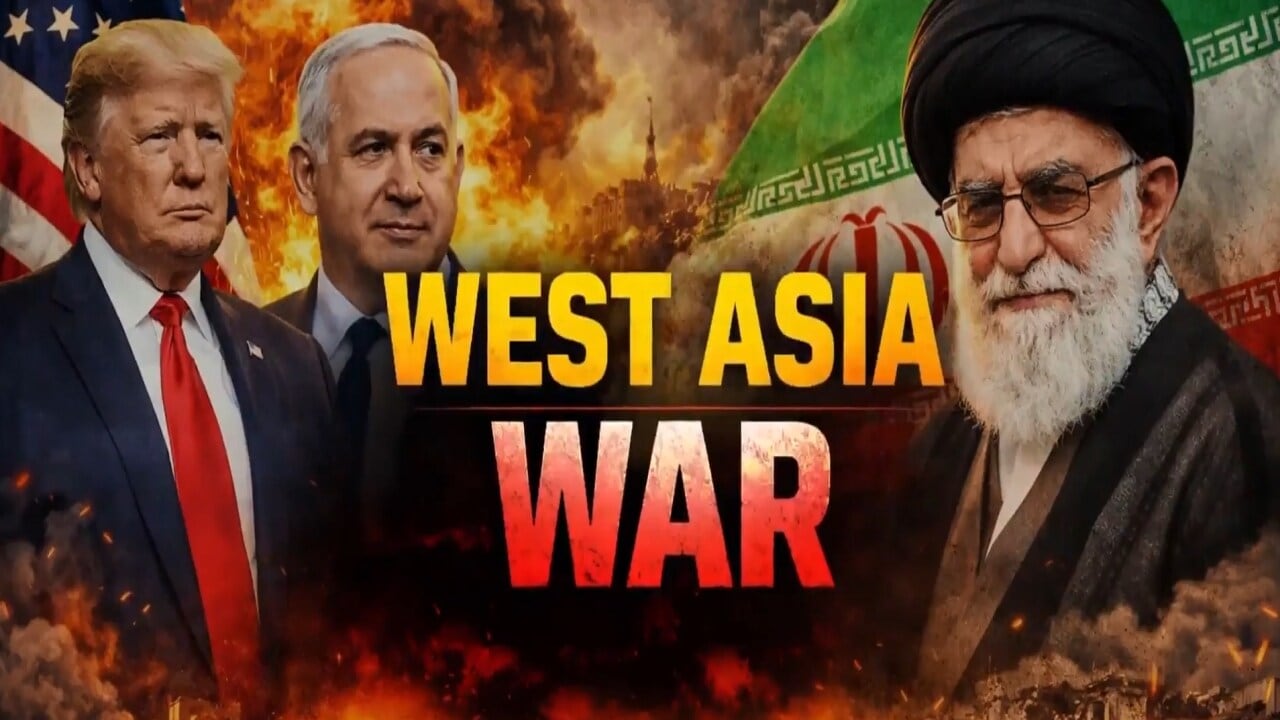
Donald Trump is currently attempting to sell the world a "mission accomplished" moment that doesn’t exist. By claiming the United States and Israel have "obliterated" Iran’s military capacity while simultaneously threatening to carpet-bomb power plants if the Strait of Hormuz remains closed, the administration is trapped in a cycle of tactical success and strategic incoherence. The reality is that while Iranian hardware—its aging air force, its surface ships, and its known missile sites—has been decimated over four weeks of intensive strikes, the regime’s leverage has shifted from the battlefield to the global jugular.
The Asymmetric Trap
Washington’s current posture rests on the assumption that total military dominance translates into political surrender. It hasn't. Veteran diplomats like former Indian Foreign Secretary Kanwal Sibal argue that the current escalation was a "huge mistake," not because the U.S. lacks the power to destroy Iranian infrastructure, but because it lacked an endgame from day one. Meanwhile, you can explore similar stories here: The Calculated Silence Behind the June Strikes on Iran.
Trump’s recent claims that Iran’s leadership has been "killed at every level" ignore the cellular nature of the Islamic Revolutionary Guard Corps (IRGC). Even with the loss of high-ranking figures like Ayatollah Ali Khamenei in late February, the IRGC’s command and control was designed to survive a decapitation strike. By focusing on "strategic submission," the U.S. has inadvertently backed Tehran into a corner where its only remaining card is global economic sabotage.
The Two Wars Paradox
The current conflict is actually two distinct wars occurring in the same geography. The first is a conventional air and missile campaign that the U.S. and Israel are winning by every measurable metric. Radars are dark, runways are cratered, and the Iranian Navy has ceased to exist as a cohesive blue-water force. To understand the complete picture, we recommend the recent analysis by USA Today.
The second war, however, is a war on the global economy, and in this arena, Iran is holding its ground.
- The Energy Stranglehold: Despite Trump’s dismissive remarks that the U.S. doesn’t "need" the Strait of Hormuz, 20% of the world’s oil and liquefied natural gas (LNG) passes through that narrow 21-mile gap.
- The Price at the Pump: While the U.S. is a net exporter of oil, the price of crude is set on a global market. When the Strait is mined or threatened, prices at American gas stations spike. This is the ultimate political poison for a President who won on a platform of domestic economic relief.
- The Force Majeure Ripple: Qatar’s recent invocation of force majeure on its LNG contracts has sent Europe and East Asia into a scramble. Japan and South Korea are already tapping strategic reserves that cannot be replenished until the waterway is cleared.
Why Negotiations Failed Before the First Shot
The tragedy of the current war is that it followed a series of genuine, if flawed, diplomatic attempts in 2025. In April of that year, Trump sent a personal letter to Tehran, setting a 60-day deadline for a new nuclear deal. Omani-mediated talks in Muscat and Rome actually saw Iran offering to "freeze" the activities of its proxies, including Hezbollah and the Houthis, in exchange for sanctions relief.
The talks collapsed not over the nuclear technicalities, but over a fundamental lack of trust. Trump’s "maximum pressure" was interpreted in Tehran not as a tool for a better deal, but as a prelude to regime change. When Israel launched its 12-day campaign in June 2025, any remaining moderates in the Iranian Foreign Ministry were silenced. For Tehran, negotiating with Trump has become a "suicide mission" where they are expected to disarm while under active bombardment.
The Indian Dilemma and the BRICS Factor
While Washington views this through a lens of regional security, New Delhi sees it as a direct threat to its national interests. India currently has nearly 10 million citizens living in the Gulf. Any further escalation risks a humanitarian crisis of unprecedented scale, requiring a massive naval evacuation that would drain the Indian treasury.
Furthermore, India’s presidency of BRICS this year puts it in a unique and uncomfortable position. Iran is now a BRICS member. So are the UAE and Saudi Arabia. If the U.S. expects India to simply fall in line with a blockade or a "takeover" of Iranian territory, it is miscalculating the depth of India's strategic autonomy. For the Global South, this war is not about democracy or nuclear non-proliferation; it is an "unbearable" tax on their growth.
The Myth of the Off Ramp
Trump is currently signaling a "winding down" of strikes, but this is a classic negotiation tactic rather than a shift in strategy. By offering to stop the bombing in exchange for the reopening of the Strait, he is asking Iran to surrender its only remaining leverage for nothing more than a temporary pause in hostilities.
Iran’s response has been consistent: they will not reopen the waterway until the U.S. and Israel stop their "existential" war against the regime. This is the "strategic submission" trap. If Iran yields, the regime likely collapses from within due to a perceived lack of strength. If they don't, the U.S. escalates to targeting civilian power grids and the Kharg oil terminal—a move that would send oil to $200 a barrel and potentially trigger a global depression.
The Brutal Reality
The U.S. military has proven it can break things. It has not proven it can fix the Middle East. Trump’s habit of sending "real estate fixers" and personal loyalists to handle complex nuclear dossiers has resulted in a spectacular show but a strategic vacuum.
Negotiating with Iran requires more than a Truth Social post or a 60-day ultimatum. It requires a recognition that Iran will choose national suicide over total humiliation. Until Washington provides an exit strategy that allows the Iranian leadership to save face—perhaps through a multilateral framework involving the UN or a coalition of neutral powers like India and Brazil—the "West Asia War" will continue to bleed the global economy.
Trump claims the war is "nearly over" because the enemy has no air force left. But in the modern age, you don't need an air force to destroy a global economy; you just need enough mines and the will to stay in the fight.
Would you like me to analyze the specific economic impact of the Qatar LNG force majeure on the European energy market for 2026?