The Silence in the Room
Somewhere in the labyrinthine corridors of Tehran’s administrative heart, a decision was made that didn’t involve a vote, a public debate, or a televised address. It was a refusal. A cold, calculated "not yet." While the world watches the sky over Gaza and Lebanon, waiting for the flash of an interception or the dust of a collapsed apartment block, the real trajectory of the conflict is being steered by a man who rarely speaks to the press.
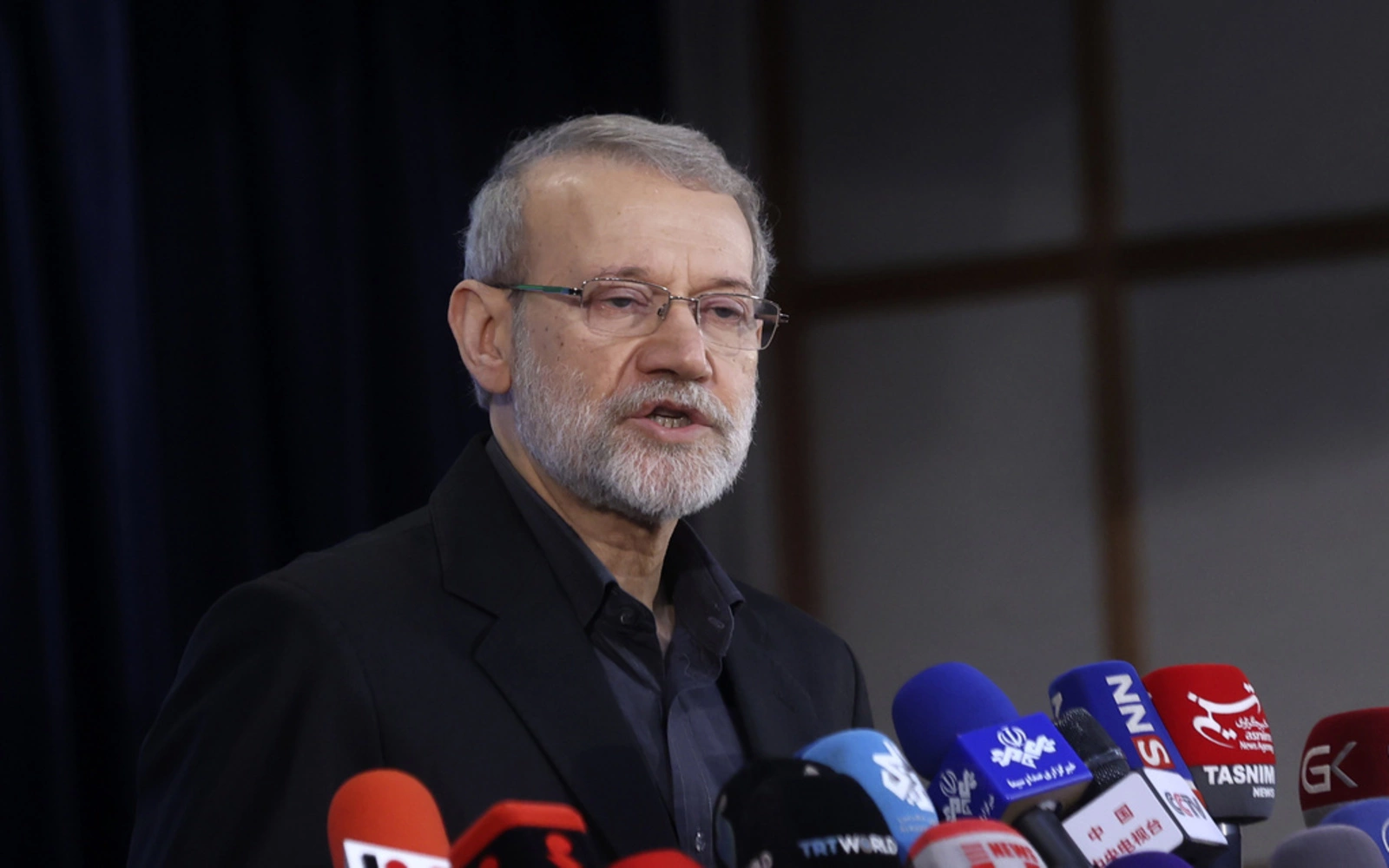
Mojtaba Khamenei, the second son of Iran’s Supreme Leader, has stepped out from behind the velvet curtains of the clerical establishment to signal something chilling. He has rejected the whispers of a ceasefire. In his view, the gears of the current war between the regional "Axis of Resistance" and the US-Israeli alliance have not yet ground enough bone to justify a halt.
Peace, in this context, isn't a moral imperative. It is a tactical variable.
Think of a grandmaster at a chessboard where the pieces are not wood, but lives, supply lines, and the sovereign borders of a dozen nations. The grandmaster doesn't care if the game is stressful for the spectators. He cares about the endgame. For Mojtaba, the current carnage isn't a tragedy to be averted—it is a furnace where a new Middle East is being forged.
The Weight of the Turban
To understand why a man would look at a region on fire and say "keep burning," you have to understand the shadow he was born into. Mojtaba is not just a son; he is the ideological heir to a system that views the world through the lens of a perpetual struggle. This isn't about a border dispute or a specific policy. It is a cosmic collision.
For decades, Mojtaba operated in the background, a ghost in the machine of the Revolutionary Guard. He learned how power works when it isn’t being filmed. He saw how the ripples of a single shipment of drones could change the diplomatic posture of a superpower. Now, as his father’s health remains a subject of global speculation, Mojtaba is signaling his readiness to lead.
But leading in this environment requires a specific kind of hardness. If he were to push for peace now, it would be seen as a retreat. In the brutal logic of regional power, a ceasefire is often interpreted as a lack of stamina. By rejecting the olive branch, he isn't just fighting Israel; he is auditioning for the throne.
The Invisible Stakes
When we hear the word "ceasefire," we think of children sleeping without the sound of drones. We think of bread arriving in cities that have forgotten the smell of it. But in the offices of the Iranian elite, "ceasefire" means something else. It means the cessation of pressure. It means giving the enemy room to breathe.
The US-Israel alliance is currently entangled in a multi-front dilemma that stretches from the Red Sea to the Mediterranean. From Mojtaba’s perspective, why would he stop now? The longer the conflict drags on, the more the internal social fabric of Israel is tested, and the more the United States finds itself stretched between its domestic political fractures and its overseas obligations.
Every day the war continues, the old order of the Middle East—the one built on the Abraham Accords and Western-aligned stability—erodes a little more. Mojtaba is betting that the pain of the present will eventually yield a future where Iran is the undisputed gravity center of the region.
The Human Geometry
Consider a hypothetical family in a small village near the border. Let’s call the father Yusuf. Yusuf doesn't read the geopolitical briefings. He doesn't know Mojtaba Khamenei’s name. He only knows that the windows of his home rattle every night. He knows his daughter hasn't been to school in months.
For Yusuf, "not the right time for peace" is an absurdity. When is peace ever "not right"?
But in the high-altitude politics of Tehran, Yusuf is a rounding error. This is the tragic disconnect of modern warfare. The decisions are made by men who will never feel the heat of the blast or the grit of the rubble. They deal in "strategic depth" and "regional leverage." These are sterile words designed to mask the smell of cordite.
The rejection of a ceasefire is a statement of confidence. It suggests that Tehran believes it can absorb the counter-punches. It suggests that the Revolutionary Guard’s networks are resilient enough to handle the mounting pressure. It is a high-stakes gamble with millions of lives as the stake.
The Logic of the Long War
The world often mistakes the Middle East for a place of chaos. It isn't. It is a place of rigorous, albeit brutal, logic. Mojtaba’s stance is rooted in a specific historical reading: that the West eventually tires.
He looks at the history of the last twenty years and sees a pattern of Western intervention followed by Western exhaustion. He believes that if the current conflict stays at a simmer—painful enough to be disruptive but not so explosive that it triggers a total global conflagration—the cost of maintaining the status quo will eventually become too high for Washington.
This is the "War of Attrition" reimagined for the 21st century. It’s not just about bullets; it’s about the psychological endurance of the American voter and the economic stability of the global supply chain. By saying it is "not the right time for peace," Mojtaba is essentially saying that he believes Iran’s threshold for pain is higher than ours.
The Ghost in the Succession
There is another layer to this refusal, one that stays closer to home. The internal politics of the Islamic Republic are a thicket of competing interests—the old guard, the hardline military, and the pragmatic clerics. By taking a stance that is more uncompromising than the diplomats, Mojtaba aligns himself with the most powerful element of the state: the IRGC.
The military elite doesn't want a return to the status quo. They want a total recalibration of the balance of power. By echoing their sentiments, Mojtaba secures his flank. If he is to eventually succeed his father, he needs the guns behind him. A man who brings peace might be a hero to the people, but in the halls of the Sepah, he is a risk.
It is a lonely kind of power. It requires a person to look at the mounting casualty lists and see only data points on a map.
The Price of the "Not Yet"
We often talk about the "cost of war" in terms of dollars or destroyed infrastructure. But the real cost is the death of the future. Every month that peace is deferred is a decade of trauma for the generation coming of age in the crossfire.
Mojtaba’s rejection of the ceasefire is, in effect, a mortgage on the future of the entire region. He is betting that the eventual payoff—a dominant Iran and a diminished West—is worth the sacrifice of the present. But what happens if the bet is wrong? What happens if the fire he is stoking grows beyond his ability to contain it?
History is littered with the names of men who thought they could control the wind. They see themselves as architects, building a new world order with steady hands. But war is not a blueprint. It is a living, breathing entity that eventually devours its creators.
As the sun sets over the Alborz mountains, the orders from Tehran remain unchanged. The drones will continue to fly. The shipments will continue to move. The diplomats will continue to meet in gilded rooms, only to be told that the time is not yet right.
The shadow of the son is growing longer, stretching across the desert, reaching toward a horizon that is increasingly red. He isn't waiting for the war to end. He is waiting for it to work.
The silence that follows his words is the loudest thing in the Middle East. It is the silence of a door being slammed shut, while the world outside waits for the sound of a key turning in the lock.
Would you like me to analyze how this shifts the internal power dynamics within the Iranian leadership transition?