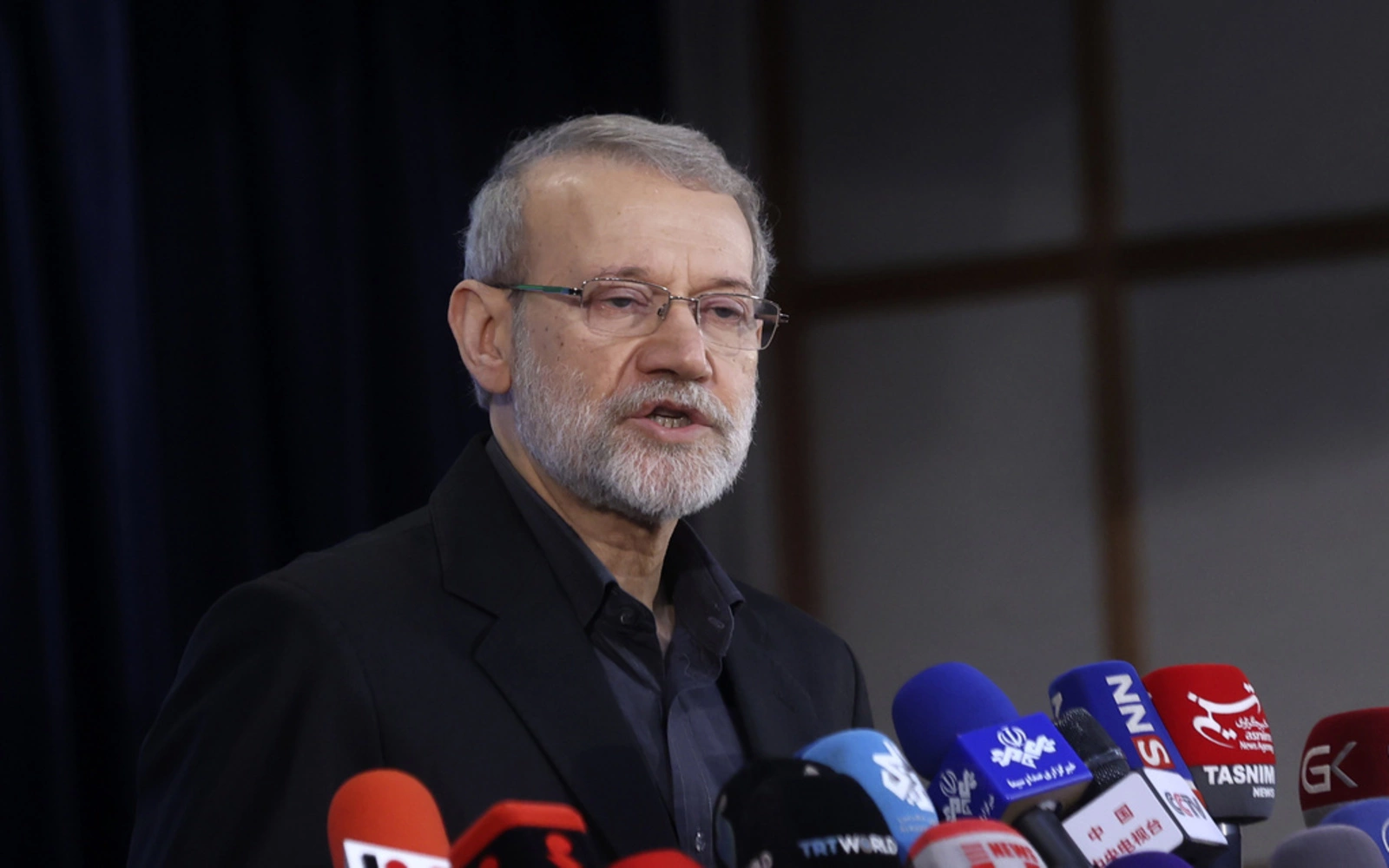
The headlines are screaming about a regional inferno. They want you to believe that the reported elimination of Iran’s security chief and subsequent strikes in the Gulf represent a point of no return. They are wrong. Most analysts are currently staring at a chess board while the real game is being played with high-frequency algorithms and shadow-state logistics.
What we are witnessing isn't the beginning of World War III. It is the sophisticated, brutal, and remarkably calculated "new normal" of 21st-century kinetic diplomacy.
The Myth of the Uncontrollable Spiral
The common consensus suggests that when a high-ranking official like a security chief is neutralized, the dominoes must fall toward total war. This logic is a relic of the 20th century. In the modern era, these actions are often "pressure release valves" rather than "spark plugs."
I have watched various intelligence agencies navigate these waters for two decades. The standard playbook for the media is to project emotional narratives of "revenge" and "honor" onto state actors. In reality, states are cold, calculating machines. Iran’s security apparatus is built on redundancy. Losing a chief is a blow to prestige, certainly, but it is rarely a blow to structural capacity.
The strikes on Gulf neighbors are not a wild lashing out. They are calibrated signals. They are designed to test the response times of missile defense systems like the Patriot (MIM-104) and the newer Iron Beam laser tech. These aren't attempts to conquer territory; they are live-fire R&D sessions.
Why the Gulf is More Stable Than It Looks
The "lazy consensus" says the Gulf is a powder keg. If you look at the raw data of trade flows and sovereign wealth fund allocations, you see a different story.
- Economic Interdependence as a Shield: The UAE and Saudi Arabia are transitioning to post-oil economies. They aren't going to let a few tactical skirmishes derail trillion-dollar projects like NEOM or the expansion of Dubai’s logistics hubs.
- The Shadow Dialogue: Behind the fiery rhetoric of Katz and the IRGC, there are backchannels in Muscat and Doha that never stop buzzing. The more public the hostility, the more intense the private negotiation.
- The Drone Asymmetry: We are seeing a revolution in how "strikes" are defined. A decade ago, a strike meant a wing of F-16s. Today, it’s a swarm of low-cost loitering munitions. This lowers the cost of engagement but also lowers the stakes. You don't launch a nuclear retaliatory strike because a $20,000 drone hit a storage tank.
The Intelligence Trap
People often ask: "How could this happen without a massive intelligence failure?"
The premise is flawed. Often, these events occur because of an intelligence surplus. When one side knows exactly where a security chief is at 3:00 AM, it’s not just a lucky break. It’s a signal that the inner circle is compromised. The real story isn't the strike; it's the internal rot that allowed the strike to happen.
In the defense industry, we call this "shaping the environment." By removing a specific hardliner, you aren't just deleting a person; you are creating a power vacuum that your preferred "moderate" (or at least, more predictable) actor can fill. It’s surgical, not chaotic.
The Problem With "Retaliation" Narratives
The media loves a good revenge plot. It sells papers. But look at the technical reality of the strikes on Gulf neighbors. These strikes are often telegraphed.
Imagine a scenario where a state sends coordinates through a third party twelve hours before a launch. The defenses are alerted, the personnel are evacuated, and the "strike" hits an empty warehouse. The attacker gets to save face domestically, the defender gets to show off their interception stats, and the global oil price takes a 2% jump that enriches everyone involved.
This isn't "war" in the Clausewitzian sense. It’s theater with real ammunition.
Technology is the Real Escalation
While you’re worried about who killed whom, you should be looking at the stuxnet-level cyber warfare happening concurrently. The kinetic strikes—the explosions and the smoke—are often just distractions.
While the world watches the Gulf, the real battle is for the control of satellite communication arrays and the underwater fiber optic cables that power the global financial system. A kinetic strike on a security chief is a headline. A silent shutdown of a regional banking grid is a catastrophe.
The Industry Insider’s Truth
I’ve seen how these briefings are constructed. They are designed to project strength while maintaining the status quo.
The downside of my perspective? It’s cynical. It assumes that human lives are secondary to systemic stability. And they are. In the eyes of a state actor, a security chief is an asset with a shelf life. When the cost of keeping that asset exceeds the benefit of their removal, they are liquidated.
The Actionable Reality
If you are an investor or a policy watcher, stop looking at the casualty counts. Look at the insurance premiums for tankers in the Strait of Hormuz. Look at the "basis point" shifts in regional credit default swaps.
When the insurance companies stop raising rates despite the headlines, you know the "crisis" is a choreographed performance. Right now, the markets are yawning. That should tell you everything you need to know about the "imminent" regional collapse.
Stop asking if there will be a war. The war is already happening, it’s just not the one you see on the news. It’s a war of attrition, of signals, and of technological dominance. The security chief was just a pawn sacrificed to move the queen.
Check the frequency of these "unprecedented" events. If everything is an escalation, nothing is. We are living in a permanent state of high-tension equilibrium. The goal isn't to win; it's to stay in the game without breaking the board.
Don't buy the fear. Buy the volatility.