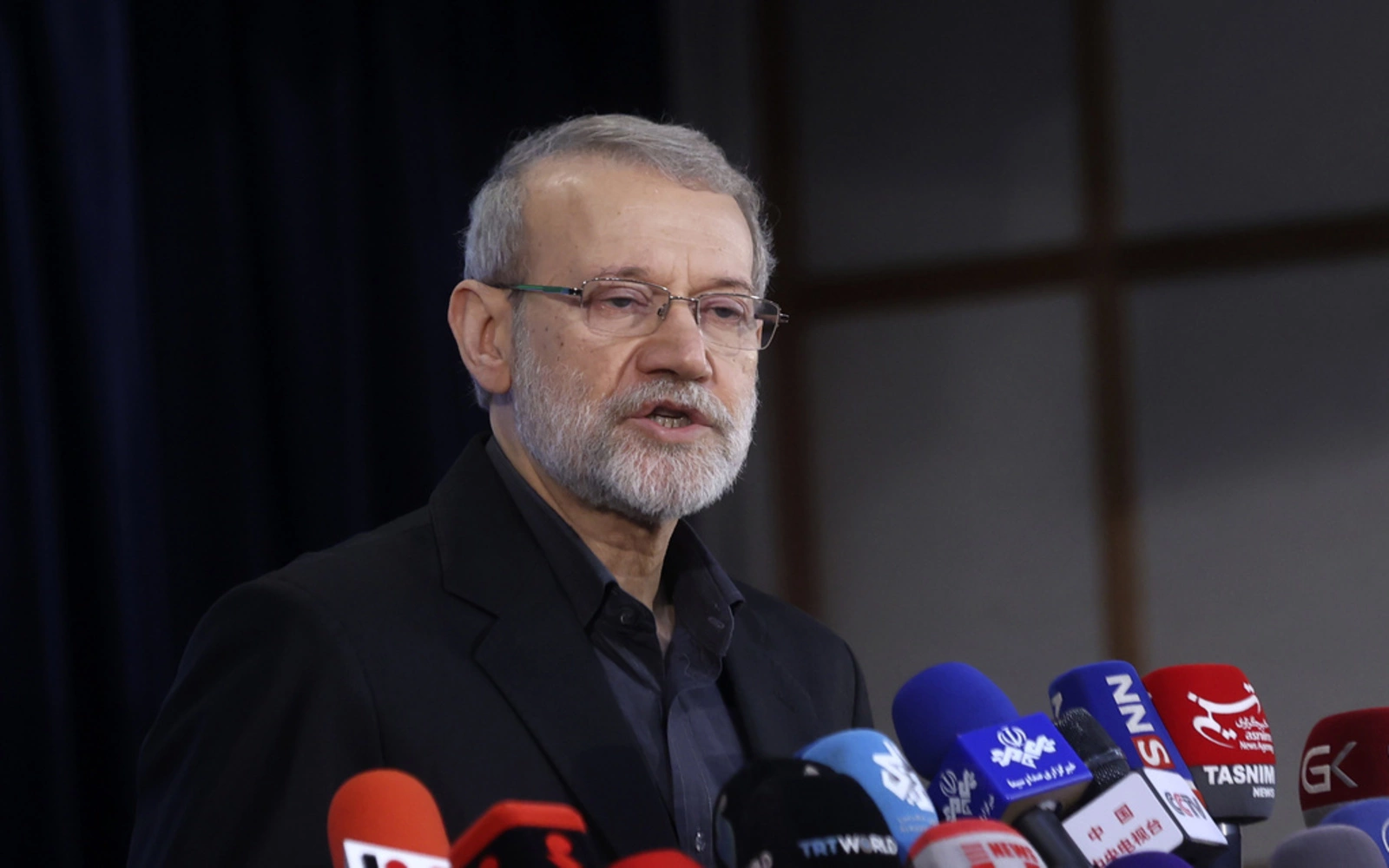
The rules of the game just dissolved. Israel's claim that it eliminated Ali Larijani, the former Iranian parliament speaker and a top-tier advisor to Supreme Leader Ali Khamenei, isn't just another notch on a target list. It's a seismic shift. If confirmed, this isn't like hitting a battlefield commander or a regional proxy leader. This is reaching into the very inner sanctum of the Islamic Republic’s political DNA.
Larijani wasn't just some bureaucrat. He was the bridge. He represented the sophisticated, pragmatic face of the Iranian establishment, often acting as the primary envoy for delicate international negotiations, including those with China. Taking him off the board doesn't just degrade Iran's military capabilities; it guts their diplomatic and strategic nervous system. It's a message sent in the loudest possible way: no one is out of reach.
The Architecture of a High Stakes Strike
The operation reportedly took place in Damascus, a city that's become a graveyard for Iranian high command over the last year. Israel hasn't been shy about its "Interwar Campaign," but the scale has shifted from tactical to existential. We're seeing a pattern where intelligence penetration is so deep that Iranian officials can't even find safety in supposedly secure diplomatic quarters in Syria.
You have to look at the timing. This comes amidst a broader regional collapse of Iranian deterrence. After the dismantling of Hezbollah’s leadership and the repeated strikes on IRGC infrastructure, hitting Larijani is the exclamation point. It suggests that the "ring of fire" Iran built around Israel is no longer a shield—it’s a lightning rod.
Israel’s intelligence apparatus, specifically the Mossad and Unit 8200, seem to be operating with a level of real-time data that's frankly terrifying for Tehran. To hit a figure of Larijani's stature requires more than just a drone and a coordinate. It requires knowing exactly which room he's in, who he's talking to, and the precise window of his vulnerability.
Who Was Ali Larijani Really
To understand why this matters, you have to stop thinking of him as just a "security chief." Larijani came from a political dynasty. His brothers hold or have held massive power in the judiciary and beyond. He served as the head of the Ali Khamenei’s state broadcasting, the chief nuclear negotiator, and the speaker of the Majlis for over a decade.
He was the guy they sent when things got complicated. When the IRGC's blunt force wasn't enough, Larijani’s intellect and deep ties to the Supreme Leader were the fallback. Losing him creates a vacuum in the decision-making process that can't be filled by a generic General. You don't replace forty years of institutional memory and trust overnight.
Why This Isn't Just Another Assassination
Most analysts focus on the immediate retaliation. Will Iran fire more ballistic missiles? Will they activate sleeper cells? Those are the wrong questions. The real issue is the internal collapse of confidence within the Iranian regime.
If Larijani can be hit in Damascus, then every high-ranking official in Tehran is looking over their shoulder. This creates a "paralysis of suspicion." When you can't trust your communications, your safe houses, or your inner circle, you stop making bold moves. You retreat. You second-guess. That’s exactly what Israel wants.
- Intelligence Superiority: The strike proves the Israeli "intelligence-led defense" is currently untouchable.
- Deterrence Rebranding: Israel is no longer satisfied with hitting proxies; they're decapitating the thinkers.
- Syrian Sovereignty: Damascus is effectively an open-air shooting range for Israeli jets, and Assad can't—or won't—do a thing about it.
The Massive Miscalculation in Tehran
Iran’s strategy for decades was based on "strategic patience." They'd take a hit, wait, and respond through a proxy. But that's a losing hand when the other side is playing at 10x speed. By the time Iran prepares a response for "Person A," Israel has already moved on to "Person B" and "Person C."
There's a school of thought that says these killings don't change anything because the system is bigger than one man. Honestly, that's nonsense. Systems are made of people. When you remove the people who have the authority to tell the Supreme Leader the truth or negotiate a way out of a crisis, the system becomes brittle. It becomes prone to catastrophic errors.
The Regional Ripple Effect
Watch the neighbors. Countries like the UAE, Saudi Arabia, and Jordan are seeing a fundamental rebalancing. The "unstoppable" Iranian influence is looking remarkably fragile. If the head of the snake is being bruised this badly, the tail—the Houthis in Yemen, the militias in Iraq—starts to lose its direction.
Israel is betting that by hitting the highest levels, they can force a total recalibration of Iranian foreign policy. It’s a high-risk gamble. But looking at the wreckage in Damascus, it’s one they're clearly willing to double down on.
What Happens Tomorrow
Don't expect a quiet de-escalation. The Iranian regime is backed into a corner, and a cornered regime is unpredictable. However, their options are thinning out. A direct military confrontation with Israel—and by extension, the United States—is a suicide mission they aren't ready for.
Instead, look for a frantic scramble within Tehran to plug the leaks. There will be purges. There will be internal investigations that likely lead to more paranoia. For the average observer, the takeaway is clear: the shadow war is over. This is a front-page, high-intensity conflict where the traditional boundaries of "senior leadership" no longer provide any protection.
The next steps for regional players involve hardening their own domestic security and bracing for the inevitable Iranian attempt to save face. Whether that's a cyberattack or a desperate proxy strike, the underlying reality remains unchanged. The aura of invincibility around Iran’s top brass has been shattered. If you're following this, keep your eyes on the internal politics of the IRGC in the coming weeks; that's where the real fallout will manifest.