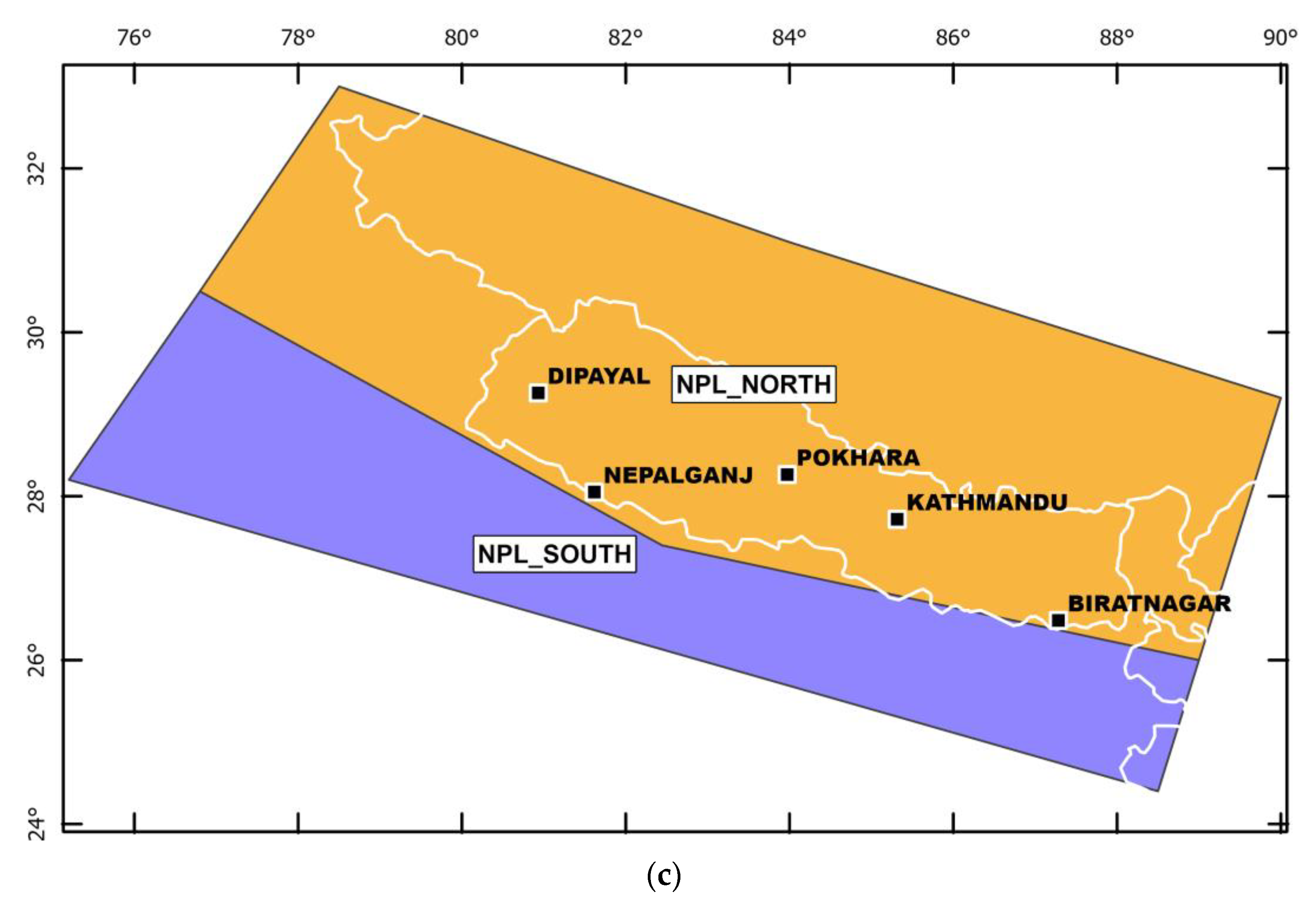
The ground shifted again in Bajhang on Monday afternoon. At 1:14 pm, a 4.1 magnitude earthquake struck near the Rayal area, sending residents in Bajhang, Bajura, and Baitadi scrambling into the streets. While early reports from the National Earthquake Monitoring and Research Centre indicate no immediate loss of life or significant structural failure, treating this as a routine tremor is a dangerous gamble. This is the third notable seismic event in the Sudurpaschim province in a single week, following a 4.2 in Darchula earlier this Monday morning and a 4.0 in the same district on March 17.
To the casual observer, a 4.1 magnitude quake is a minor inconvenience. To a seismologist tracking the "Central Seismic Gap," it is a localized symptom of a much larger, more lethal pressure cooker. Building on this theme, you can also read: Why the Green Party Victory in Manchester is a Disaster for Keir Starmer.
The 500 Year Silence
Seismologists have identified a massive stretch of the Himalayan arc in western Nepal that hasn't seen a "Great" earthquake (magnitude 8.0 or higher) in over 500 years. This is the Western Nepal Seismic Gap. Tectonic plates don't just stop moving; the Indian plate continues its relentless northward push into the Eurasian plate at a rate of roughly 4 to 5 centimeters every year.
When decades pass without a major rupture, that energy doesn't dissipate. It stores. The series of mid-sized jolts we are seeing now—the 6.3 in Bajhang in 2023, the 6.4 in Jajarkot later that year, and now this cluster of 4.0+ tremors—suggests the crust is struggling to contain the mounting strain. We aren't seeing "pressure being safely released." We are seeing the fraying edges of a fault line that is overdue for a catastrophic break. Experts at NBC News have also weighed in on this situation.
Why Small Quakes Kill in the Mountains
In Kathmandu, a 4.1 magnitude earthquake might rattle some windows. In the rugged terrain of Bajhang, the math changes. The vulnerability here isn't just about the Richter scale; it is about the amplification of risk caused by geography and poverty.
- Topographic Amplification: Steep mountain slopes can amplify seismic waves, making the shaking feel significantly more intense than the magnitude suggests.
- Secondary Hazards: In Sudurpaschim, the quake is rarely the only killer. Minor tremors destabilize already weathered slopes, leading to delayed landslides that can bury mountain roads or dam rivers, creating "ghost" lakes that threaten downstream villages.
- Infrastructure Fragility: Over 70% of the building stock in rural western Nepal consists of stone masonry held together by mud mortar. These structures have almost zero ductility. They don't bend; they shatter.
The 2023 Bajhang earthquake proved this. Even at a moderate 6.3 magnitude, thousands of homes were rendered uninhabitable. Monday’s 4.1 tremor serves as a stress test for those already cracked walls. A house that survived the 2023 jolt with "minor" fissures is now a structural liability.
The Policy of Reaction
Nepal’s approach to seismic risk remains stubbornly reactive. After the 2015 Gorkha earthquake, the world watched as billions were pledged for reconstruction. Yet, a decade later, the focus remains on the central and eastern regions, leaving the west—the area with the highest stored energy—to rely on luck and tarpaulins.
Local governments in districts like Bajhang and Darchula lack the technical manpower to enforce the National Building Code. Most rural "engineers" are actually local masons building what they have always built. Without a massive, state-led retrofitting program specifically targeting the western districts, the next big one will not be a disaster of nature, but a disaster of planning.
The Rayal Epicenter
The specific location of Monday's jolt, near Rayal, sits on a complex network of faults. While the National Seismological Centre monitors these events with increasing precision, there is a gap between detection and protection. We know where the epicenters are. We know which villages are in the line of fire. What we lack is the political will to move beyond "no immediate reports of damage" as a benchmark for success.
A 4.1 magnitude earthquake is a gift. It is a low-cost reminder that the clock is ticking in the western mountains. The next time the ground moves in Bajhang, the magnitude may not start with a four.
Would you like me to look into the current status of the government's housing grant distribution for previous earthquake victims in the Bajhang region?