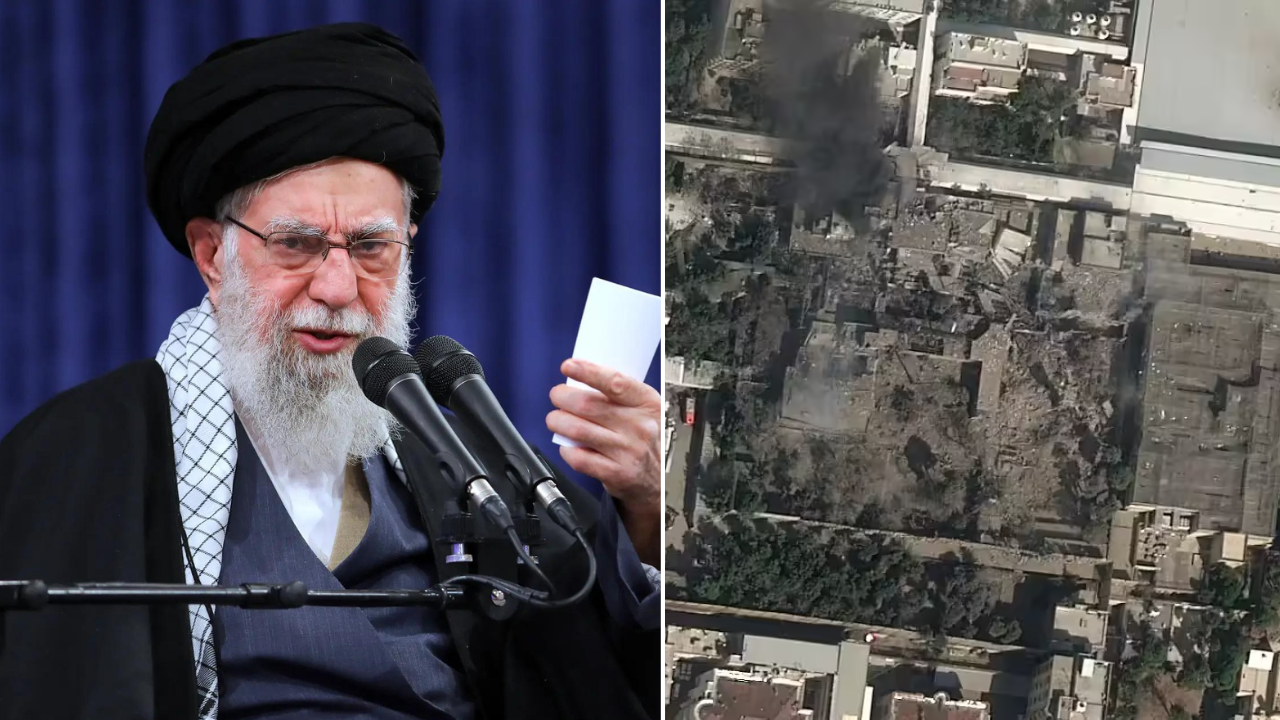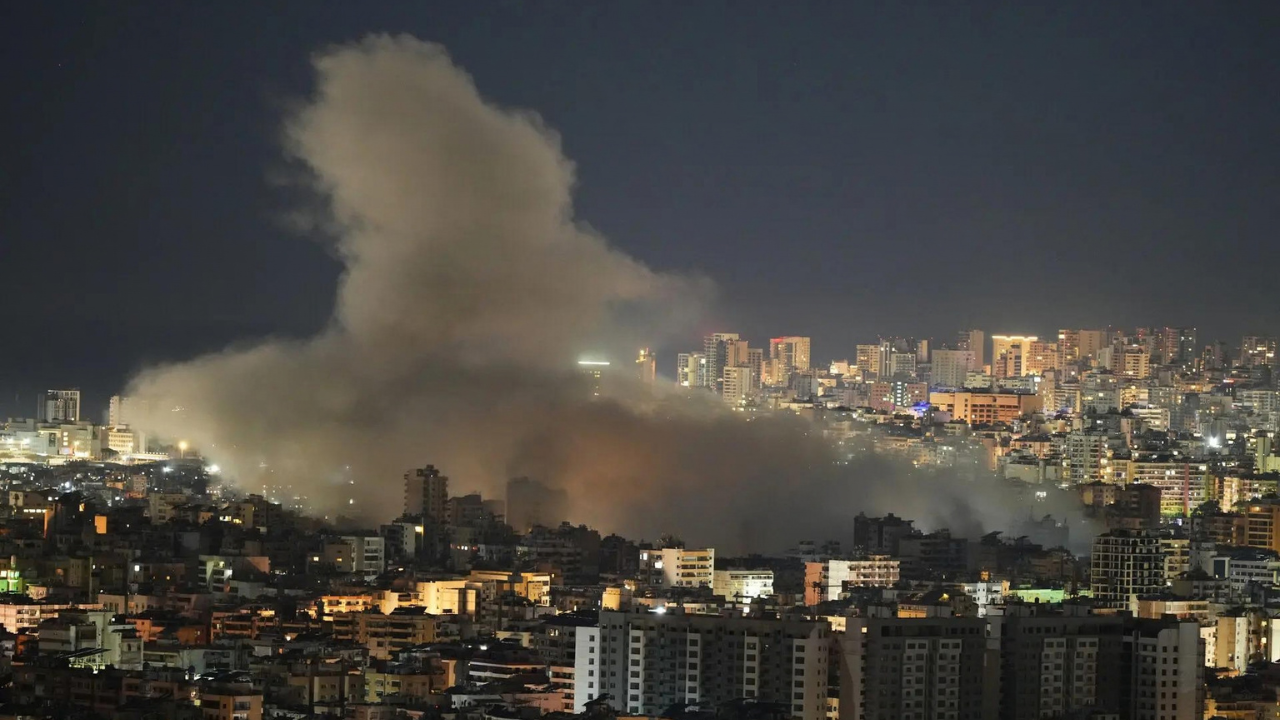
The escalation of regional hostilities between the Israel Defense Forces (IDF) and Iranian-aligned proxies has reached a critical inflection point where psychological signaling is transitioning into kinetic reality. As the conflict crosses the one-week mark, the rhetoric regarding "unseen weapons" and "painful blows" functions as more than mere propaganda; it represents a calculated attempt to alter the cost-benefit calculus of a technologically superior adversary. Understanding this shift requires a deconstruction of Iranian military doctrine, specifically how it leverages asymmetric saturation to neutralize conventional air superiority and missile defense systems.
The Triad of Iranian Asymmetric Escalation
Iran’s strategic architecture rests on three specific pillars designed to exploit the vulnerabilities of high-tech defense grids. While the IDF maintains qualitative military edge (QME), the Iranian "unseen" threat profile targets the economic and logistical exhaustion of that edge.
1. Kinetic Saturation via Low-Cost Loitering Munitions
The primary mechanism for "unseen" strikes is not necessarily stealth in the radar-cross-section sense, but stealth through volume. By deploying swarms of low-altitude, slow-moving Shahed-variant drones, Iran forces an unfavorable exchange ratio. A drone costing roughly $20,000 requires an interceptor missile—such as the Tamir (Iron Dome) or Stunner (David’s Sling)—costing between $50,000 and $1,000,000.
This creates a long-term depletion of interceptor stocks, which are harder and more expensive to manufacture than the drones they target. The "unseen" aspect of these weapons lies in their ability to terrain-hug, masking their signature until they are within close proximity of the target, thereby reducing the response window for local point-defense systems.
2. Hypersonic and Sub-Hypersonic Velocity Curves
The reference to "unseen weapons" frequently points toward Iran's recent advancements in solid-fuel ballistic missiles with maneuverable reentry vehicles (MaRVs). Conventional missile defense relies on predictable parabolic trajectories. If a missile can adjust its course mid-flight or travel at velocities exceeding Mach 5 at lower altitudes, it enters the "blind zone" of existing radar arrays. This capability, while still debated in its total operational reliability, functions as a psychological deterrent by introducing a high-probability strike risk that cannot be countered with 100% certainty.
3. Sub-Surface and Maritime Denial
Beyond the aerial theater, the Iranian Navy and IRGC Navy (IRGCN) have invested in midget submarines and unmanned underwater vehicles (UUVs). These assets are designed for the "unseen" neutralization of maritime logistics. Given the geography of the Strait of Hormuz and the Eastern Mediterranean, a single successful UUV strike on a commercial vessel or naval asset disrupts global insurance rates and energy transit, exerting pressure on the international community to demand an Israeli de-escalation.
Mapping the US-Israel Response Function
The intensification of strikes by the US and Israel represents a shift from "mowing the grass"—periodically degrading tactical capabilities—to a systemic dismantling of the logistics hubs supporting these "unseen" assets. This strategy involves three distinct operational layers.
Pre-emptive Neutralization of Logistics Nodes
The primary focus of current US-Israeli operations is the destruction of the Iranian "land bridge," the supply route running through Iraq and Syria. By targeting airfields (such as Damascus and Aleppo) and border crossings (like Al-Bukamal), the coalition aims to starve the frontline proxies of the advanced components required for "unseen" strikes. The logic is simple: a weapon cannot be "unseen" if it never reaches the theater of operations.
Multi-Domain Suppression of Signal
The "unseen" nature of these weapons depends heavily on electronic warfare (EW) and GPS jamming. Israel has deployed widespread GPS spoofing across the northern border and central regions to disrupt the navigation systems of loitering munitions. This forces the adversary to rely on more primitive, less accurate inertial navigation systems (INS), which significantly reduces the probability of a high-value hit.
The Decapitation of Command and Control
A decentralized network of militias relies on centralized intelligence and funding. The intensification of strikes targets the mid-to-high level IRGC-QF leadership responsible for coordinating the delivery of advanced weaponry. This creates a friction point where the tactical units have the "unseen" tools but lack the strategic coordination to use them effectively during a high-tempo offensive.
The Economic and Industrial Bottleneck
A critical oversight in standard reporting is the industrial capacity of both sides to maintain a high-intensity conflict. Modern warfare is a function of supply chain resilience.
- Israeli Defense Industrial Base (DIB): Israel has the advantage of the U.S. "Offshore Procurement" (OSP) model, allowing for rapid resupply of interceptors and precision-guided munitions (PGMs). However, the lead time for producing advanced air defense missiles is often measured in months or years, creating a potential "hollow-out" risk if the conflict extends beyond several weeks.
- Iranian DIB: Iran has optimized for mass-producibility. Their weapons are designed with off-the-shelf electronic components sourced through gray-market networks. This makes their "unseen" arsenal far more resilient to international sanctions than a Western-style high-precision manufacturing line would be.
Evaluating Strategic Risk in the Seventh Day
As the war enters its second week, the primary risk is a "miscalculation of the threshold." Each side is testing the other’s tolerance for loss. If Iran utilizes a truly "unseen" asset—such as a cyber-kinetic attack on civilian infrastructure or a high-speed ballistic strike that bypasses the Arrow system—the resulting Israeli response would likely transition from tactical strikes to a strategic offensive against the Iranian homeland itself.
The second limitation is the geographic spread of the conflict. By activating proxies in Yemen, Lebanon, and Iraq, Iran forces Israel to divide its intelligence, surveillance, and reconnaissance (ISR) assets. This dilution of focus increases the probability of a successful "unseen" penetration.
The tactical necessity for the US and Israel is now to force a decisive engagement before the attrition of interceptor stockpiles reaches a critical low. This suggests that the current intensification of strikes is not just about retaliation, but about destroying the adversary's capability to continue the war of attrition before the window of superiority closes.
The immediate strategic priority must be the deployment of directed-energy weapons (DEW), specifically high-power laser systems like the Iron Beam. These systems, once operational, solve the cost-exchange ratio problem by providing an "infinite" magazine at a near-zero cost per shot. Until that technology reaches full-scale deployment, the conflict remains a contest of industrial endurance, where the "unseen" weapon is merely a tool used to facilitate the exhaustion of the opponent's financial and military reserves.
The strategic play here is not to wait for the "unseen" weapon to manifest, but to execute a high-tempo, multi-axis destruction of the assembly and command infrastructure within the Iranian interior’s immediate orbit. If the IDF and US forces can disrupt the command-and-control (C2) nodes faster than Iran can launch its saturation swarms, the "unseen" threat remains theoretical rather than operational. Precision must outpace volume in the next 72 to 96 hours to prevent a wider regional conflagration that would fundamentally shift the global energy security framework.