The fatal shooting at Cannon Air Force Base in New Mexico has shattered the illusion of the "impenetrable" military perimeter. On what should have been a routine day for the 27th Special Operations Wing, gunfire erupted, leaving one person dead and another wounded. While the Air Force Office of Special Investigations (AFOSI) has taken the lead, the incident highlights a growing, uncomfortable reality for the Department of Defense. Domestic military installations, once considered the safest ground in the country, are increasingly vulnerable to internal strife and security lapses that traditional gate guards are not equipped to stop.
The breach occurred near a housing area on the base. It was not a foreign incursion. It was a localized explosion of violence. This distinction is vital because it points to a systemic failure in how the military manages personnel stress and internal security threats. When we talk about "base security," the conversation usually revolves around drone defense or gate crashers. We rarely talk about the volatility of the people who have already been invited inside. You might also find this similar coverage interesting: The $2 Billion Pause and the High Stakes of Silence.
The Cannon Breach and the Myth of Total Control
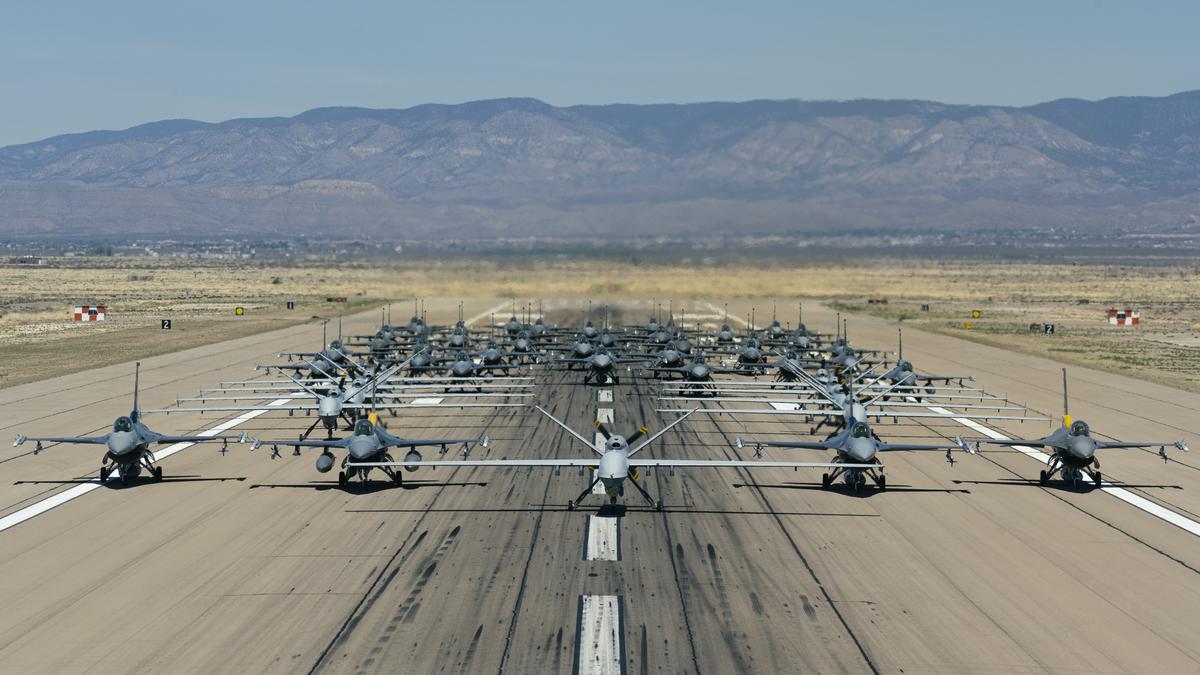
Cannon Air Force Base is not a typical administrative hub. It is the home of the Air Force’s specialized "quiet professionals." The personnel here handle high-stakes missions involving AC-130J Ghostriders and MQ-9 Reapers. The operational tempo is relentless. When violence breaks out in an environment designed for peak discipline, it suggests that the pressure cooker of modern military life is venting in the most destructive way possible.
Security protocols at Cannon, like most U.S. bases, rely on a "hard shell, soft interior" model. Once a person passes the primary checkpoint, the internal surveillance is surprisingly sparse compared to civilian corporate headquarters. This creates a dangerous blind spot. In this instance, the shooter was able to discharge a weapon in a sensitive area before being neutralized or apprehended. The immediate lockdown that followed—a standard procedure—serves as a grim reminder that the military's primary tool for internal safety is reactive, not proactive. As discussed in recent articles by TIME, the effects are significant.
The investigation is currently focused on the relationship between the shooter and the victims. Preliminary reports suggest a domestic or interpersonal dispute. This is a common thread in military base shootings over the last decade. From Fort Hood to Pearl Harbor-Hickam, the threat is almost always homegrown. The military excels at identifying external enemies but remains strikingly mediocre at identifying the ticking clock of a mental health crisis or a violent personal vendetta within its own ranks.
Why Gates and Fences Failed
The physical security of a base is designed to keep out "the other." It does nothing to mitigate the risk posed by someone with a valid Common Access Card (CAC). At Cannon, the shooter did not have to jump a fence or ram a barricade. They were likely already authorized to be there.
This brings us to the core of the problem: Internal Behavioral Analysis.
Current military security relies heavily on background checks performed every few years. However, a person’s mental state can degrade in weeks. The 27th Special Operations Wing operates under extreme stress. If the military continues to ignore the psychological health of its personnel and their families, the most expensive security systems in the world will remain useless. You cannot build a wall high enough to keep out a threat that lives in the barracks.
The High Cost of the Special Operations Pressure Cooker
The 27th Special Operations Wing is a unique beast. Its members are part of the Air Force Special Operations Command (AFSOC). These are individuals trained for some of the most grueling missions in the American arsenal. The culture at Cannon is one of "get the job done," which often translates to "ignore your personal problems."
When a shooting happens at a Special Operations hub, we have to look at the environment. Clovis, New Mexico, is an isolated location. The "remote" nature of the base, combined with the high-intensity mission, creates a social vacuum. For service members and their families, the base is their entire world. When that world becomes toxic or a personal relationship fails, there is nowhere to go. This isolation acts as a force multiplier for tragedy.
The Failure of the Commander’s Discretion
Under current regulations, commanders have significant leeway in how they handle "red flags" among their troops. If a service member shows signs of instability, the commander can order an evaluation. But there is a massive stigma attached to this. Most commanders are hesitant to pull a specialist off the line because it impacts "mission readiness."
This creates a perverse incentive to look the other way. We see this pattern repeatedly. A service member shows erratic behavior, coworkers notice, but no formal action is taken because the unit is short-staffed or preparing for deployment. Then, a trigger event occurs—a divorce, a demotion, or a disciplinary action—and the base is locked down because someone started shooting.
The Cannon shooting must be viewed through this lens of operational neglect. It is not just a "sad incident." It is a data point in a long-standing trend of the military failing to police its own culture of silence regarding mental instability.
Infrastructure Gaps and the Slow Response
Eye-witness accounts from Cannon indicate that while the lockdown was initiated quickly, the communication to the civilian community and families on base was fragmented. This is a recurring issue. In an active shooter situation, the first five minutes are everything.
The Air Force has invested billions in "Smart Base" technology, yet in many cases, the primary way families receive emergency information is through a localized "Giant Voice" (a loud-speaker system) or an opt-in text alert that often lags behind social media. At Cannon, the lag between the initial shots and a clear picture of the threat allowed rumors to flourish.
Modernizing Internal Surveillance
To prevent the next Cannon, the Air Force needs to move beyond the "Front Gate" mentality. This doesn't mean turning every base into a police state, but it does mean implementing Acoustic Gunshot Detection (AGD) systems in housing and administrative areas. These systems, common in many major U.S. cities, automatically alert security forces to the exact coordinates of a gunshot.
If Cannon had an integrated AGD system, the response time could have been cut in half. Instead, military security often relies on 911 calls from panicked bystanders. In a high-security environment, relying on a phone call is an archaic strategy.
The Investigative Path Forward
As AFOSI digs into the evidence, they will likely find a paper trail of missed opportunities. There is almost always a "leakage" of intent before a shooting. This could be in the form of social media posts, comments to friends, or a sudden change in performance.
The military's "Insider Threat" programs are largely focused on espionage and data theft. They are not tuned to detect "expressive violence"—violence committed as an end in itself, usually stemming from emotional distress. This is a massive gap in the analytical framework.
Accountability Above the Rank
If the investigation reveals that the shooter had been reported for threatening behavior previously, the fallout should not stop at the shooter. It should extend to the leadership chain that failed to intervene. The military is a hierarchy of responsibility. If a commander allows a volatile situation to simmer until it boils over into a fatal shooting, that commander has failed their most basic duty: the protection of their force.
The "one dead, one wounded" headline is a tragedy, but the "why" is a scandal. We are seeing a breakdown of the social contract between the military and its members. The base is supposed to be a sanctuary. When it becomes a crime scene, it indicates that the internal systems of support and surveillance are fundamentally broken.
Redefining Base Security for 2026
The Department of Defense must stop treating these shootings as isolated "tragedies" and start treating them as security breaches of the highest order. A CAC card is not a shield against insanity or malice.
The following steps are non-negotiable for future safety:
- Mandatory, anonymous peer-reporting systems that bypass the immediate chain of command to prevent "mission-first" suppression of red flags.
- Integration of automated threat detection (like acoustic sensors) in all residential and high-traffic areas on military installations.
- A fundamental shift in the "Insider Threat" definition to include behavioral health and domestic volatility as high-priority security risks.
The investigation at Cannon Air Force Base will eventually close. The cordons will come down, and the flags will return to full staff. But unless the Air Force addresses the reality that their greatest threat is currently walking through the front gate with a valid ID, the next lockdown is already inevitable. Security is not a fence; it is a culture of vigilance that must look inward as often as it looks outward.
Demand a full audit of the 27th Special Operations Wing’s mental health and behavioral intervention protocols immediately.