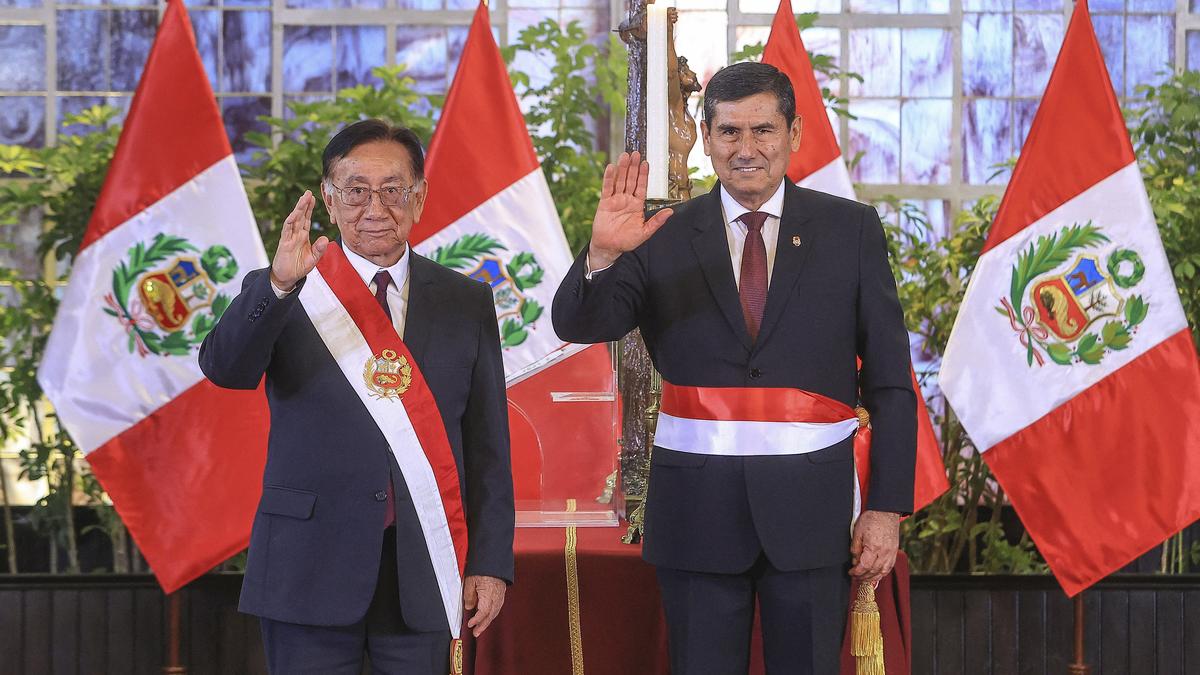
The sudden departure of Denisse Miralles from the Peruvian premiership has sent a tremor through the Andean region that goes far beyond a simple cabinet reshuffle. Within hours of her resignation, Lima’s political machine scrambled to install a successor, but the haste only highlights the deepening instability of the Boluarte administration. This wasn't a planned transition. It was a fracture. By naming a new Prime Minister under the shadow of mounting investigations and a flatlining economy, the government has signaled that it is in survival mode, prioritizing short-term loyalty over the structural reforms the country actually needs.
For those watching from the outside, the revolving door of Peruvian politics might seem like business as usual. It isn't. The Miralles exit represents the collapse of the last credible bridge between a besieged presidency and a hostile, fragmented Congress. Without her, the executive branch is exposed.
The Mechanical Failure of the Peruvian State
To understand why this resignation matters, one must look at the office itself. The President of the Council of Ministers—the formal title for the Prime Minister—is intended to be the "shock absorber" of the government. In Peru’s unique constitutional setup, this person takes the heat so the President doesn't have to. When the shock absorber breaks, the entire engine starts to smoke.
Miralles was supposed to be the technocrat who could speak the language of international investors while keeping the provincial governors from revolting. Her exit suggests that the internal friction within the Place of Government has become heat-damaged. Sources within the capital indicate that the rift wasn't over a single policy, but rather a fundamental disagreement on how to handle the increasing judicial pressure surrounding the presidency.
The new appointment is a tactical retreat. By selecting a figure known for deep ties to the legislative old guard, the administration is effectively surrendering its independent policy agenda in exchange for protection from impeachment. This is a survival pact, not a governing strategy.
The Ghost of Economic Credibility
Investors hate surprises. Peru used to be the "Andean Miracle," a place where politics was messy but the central bank and the finance ministry were sacred ground. That separation is disappearing. The frequent turnover at the top of the cabinet makes it impossible to provide the regulatory certainty required for multi-decade mining projects.
Copper doesn't move when the rules change every six months.
We are seeing a massive "uncertainty tax" being applied to the Peruvian economy. When a Prime Minister resigns without warning, the risk profile of every pending contract in the country is recalibrated. The new Prime Minister inherits a desk full of stalled infrastructure projects and a private sector that has largely stopped listening to the government’s promises.
The reality is that no matter how qualified the new appointee might be, they are operating with a diminished mandate. They are the third or fourth choice in a room where nobody wants the job. This leads to a dangerous "hollowing out" of the state. Career civil servants, seeing the chaos at the top, are either leaving for the private sector or keeping their heads down, refusing to sign off on any major initiatives for fear of future legal blowback.
The Congressional Stranglehold
The Peruvian Congress is currently the most powerful institution in the country, but it lacks a coherent ideology. It functions more like a collection of regional interests and personal fiefdoms. Miralles' resignation is a trophy for the opposition, but it is also a warning.
The legislature has mastered the art of "parliamentary capture." By threatening to censure ministers or launch investigations at the slightest provocation, they have forced the executive into a state of perpetual apology. The new Prime Minister will not be a leader so much as a negotiator-in-chief, spending eighty percent of their time in backroom deals to prevent the next motion of no confidence.
This dynamic creates a policy vacuum. While the leadership in Lima argues over cabinet seats, the actual problems facing the country—rising crime in the northern cities, water scarcity in the agricultural belt, and the slow collapse of the public health system—remain unaddressed.
The Judicialization of Politics
In Peru, the path from the presidential palace to a prison cell has become a well-traveled road. This reality dictates every move the current administration makes. The resignation of Miralles can be viewed through the lens of legal defense. When the executive branch feels the prosecutors closing in, they reshuffle the cabinet to change the narrative or to reward those who can offer a shield.
It is a grim cycle. Investigative units in Lima have been tracking a series of administrative irregularities that allegedly trace back to the President’s inner circle. Miralles, who cultivated an image of "clean hands," likely saw the writing on the wall. Leaving now allows her to preserve her professional reputation before the inevitable subpoenas start flying.
For the public, this creates a profound sense of cynicism. When the "good" ministers leave and are replaced by "loyal" ones, the message is clear: the government is protecting itself, not the people. This cynicism is the fuel for the next wave of social unrest. We have seen this movie before in 2020 and 2022. It usually ends with tear gas in the Plaza San Martín.
The Regional Impact
Peru is not an island. It is the world’s second-largest copper producer and a key player in the Pacific Alliance. If Peru remains in a state of permanent political crisis, the entire region loses its anchor. Chile is navigating its own constitutional shifts, and Colombia is undergoing a radical policy pivot. A stable Peru was supposed to be the "boring" center of the region.
Now, that center is not holding. The instability in Lima invites external influence and emboldens populist movements that argue the entire democratic system is a failure. The new Prime Minister has the impossible task of convincing the world that Peru is still a functioning state while the building is visibly on fire.
The focus must move beyond the names on the door. It doesn't matter who the Prime Minister is if the underlying structure is designed to produce failure. The current constitution allows for a level of legislative interference that makes consistent governance a fantasy. Until the "vacancy" clause and the "confidence" mechanisms are reformed, we will be back here in six months writing about the next "surprise" resignation.
The Path to Nowhere
There is no "fix" that involves a simple change in personnel. The new Prime Minister is stepping into a trap. If they try to be independent, Congress will destroy them. If they are too loyal to the President, the public and the prosecutors will eventually catch up with them.
The tragedy of the Miralles resignation is that it confirms the death of the technocratic dream in Peru. The idea that a smart, capable administrator can fix a broken political system has been proven wrong once again. The system doesn't want to be fixed; it wants to be fed.
The immediate next step for any serious observer is to track the upcoming appointments in the mid-level ministries. That is where the actual patronage happens. If we see the installation of partisan loyalists in the Ministry of Transport or the Ministry of Energy and Mines, we will know that the "new" government is simply a vehicle for the same old interests.
Watch the budget allocations for the regional governments. In the absence of a strong Prime Minister, the administration will likely try to "buy" peace by funneling money to the provinces with zero oversight. This is how the last of the state’s reserves will be spent—not on building a future, but on delaying the inevitable.
The resignation of Denisse Miralles wasn't the start of a crisis. It was the admission that the current one is terminal.