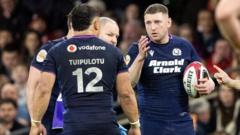
The atmosphere at Murrayfield on a Saturday in March is unlike anything else in rugby. You can feel the tension from the moment you step off the tram. This weekend, Scotland doesn't just need a win against France; they need a statement performance to prove that their 2026 Six Nations campaign is more than just potential. France arrives as the tournament favorite, undefeated and looking like a juggernaut that's impossible to derail. But France isn't invincible, and if Gregor Townsend’s side sticks to a rigid plan, they’ll get dismantled before the final whistle.
Scotland’s chances hinge on one uncomfortable reality: you can’t out-muscle the French pack. If Scotland tries to win this game through raw physicality in the tight channels, they’re playing right into Fabien Galthié’s hands. France thrives on that. They want the arm-wrestle. They want the slow, grinding game where their superior depth and power eventually wear you down.
Instead, Scotland has to make this match chaotic.
Mastering The Tactical Kicking Game
Forget about keeping the ball in hand for twenty phases. If you do that against France, you're asking to be turned over. The French defense is clinical at the breakdown. Every time Scotland coughs up possession, they risk a counter-attack from Antoine Dupont or Thomas Ramos that can turn a three-point deficit into a converted try in seconds.
Scotland needs to win the kicking battle. This means precise, contestable high balls that force French back-three players to make decisions under intense pressure. Finn Russell is the conductor here. He has to pin France deep in their own territory, forcing them to run from their 22. If Scotland can force France to play from deep, they create opportunities for mistakes.
The goal isn't just to kick the ball away. The goal is to move the French defensive line around the pitch until they get frustrated. You're looking for that split-second lack of focus from a defender who’s tired of chasing shadows. That’s when the Scottish centers need to strike.
Set Piece Discipline Is Non-Negotiable
Watching the tape from previous encounters, Scotland often shoots themselves in the foot at the set piece. Conceding penalties at the scrum or lineout gives France an easy exit strategy. You give them a penalty, they kick to touch, they set up a rolling maul, and suddenly you’re defending your line with ten men down.
The scrum needs to be rock-solid. Pierre Schoeman and Zander Fagerson have the experience to hold their own, but they need to be technically perfect. No early shoves. No falling under pressure. Just pure, clean ball-winning mechanics. If Scotland gives away cheap penalties at the set piece, the crowd goes quiet, and the momentum shifts instantly to the visitors. Keeping the penalty count low isn't just about discipline; it's about denying France the easy points that keep them in the lead during tight matches.
Denying The French Playmakers Space
Everyone knows what Matthieu Jalibert and Antoine Dupont can do. They’re world-class for a reason. You don’t stop players like that by trying to tackle them one-on-one in open field. You stop them by shutting down their options before the ball even gets to their hands.
Scotland’s defensive line speed needs to be relentless. This isn't about rushing up like headless chickens; it’s about coordinated, aggressive drift defense that forces the French playmakers to pass to players they don't want to use. If you can force Dupont to take the ball into contact because his options have been cut off, you’ve neutralized half his threat.
Watch for the inside channels. France loves to cut back inside against a rushing defense. Scotland's back row, led by Rory Darge, needs to be disciplined. Don't over-commit to the wide channel and leave the gate open in the middle.
Staying In The Fight For Eighty Minutes
The biggest mistake teams make against France is thinking they’ve won when they’re up by ten at halftime. France is famous for those late-game surges. They have the bench depth to bring on fresh, international-class players who can change the tempo in the final twenty minutes.
Scotland’s finishers are just as important as the starters. If the lead is fragile, the players coming off the bench need to be ready to match the intensity from the first minute. Don't sit on the lead. Don't play it safe. Keep the foot on the gas and keep the French team uncomfortable.
This match is about grit and tactical intelligence. If Scotland can control the territory, minimize the penalty count, and keep their composure when France tries to force the game open, they’ve got a real shot. Get behind the team, make the noise count, and force a result that shakes the tournament.
The next steps for the coaching staff are clear: prioritize defensive cohesion in the middle of the pitch and drill the kick-chase relentlessly. If they execute that, the rest will follow.