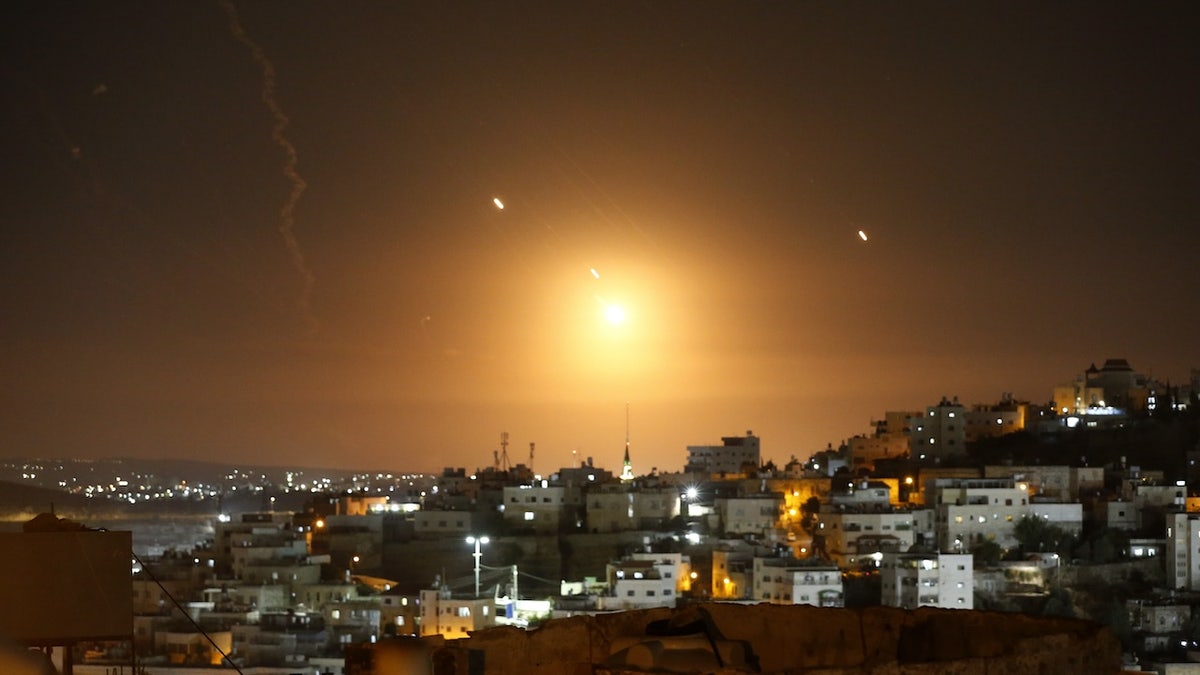
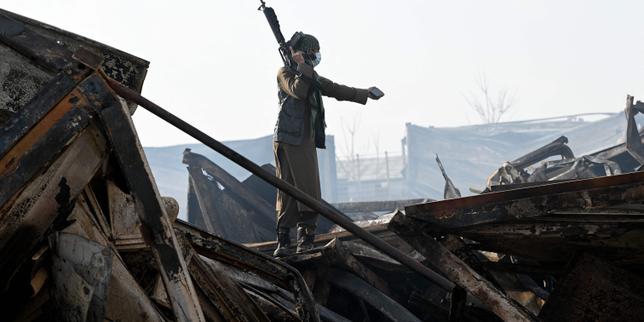
Israel just took a sledgehammer to the Iranian military hierarchy. The overnight elimination of two high-ranking Iranian officials in targeted strikes represents more than a tactical win for the Israel Defense Forces (IDF). It is a surgical removal of the institutional memory and operational connective tissue between Tehran and its regional proxies. By neutralizing these figures, Israel is betting that the Iranian Revolutionary Guard Corps (IRGC) cannot easily replace the specialized expertise required to coordinate complex, multi-front logistics.
This is not a random escalation. It is a calculated gamble that the "ring of fire" strategy—Tehran's method of surrounding Israel with hostile actors—is only as strong as the human bridge that links them. When those bridges are destroyed, the entire architecture of the regional conflict begins to wobble.
The Architecture of a High Stakes Hit
Intelligence gathering for an operation of this magnitude does not happen in a vacuum. It requires months, sometimes years, of painstaking signals intelligence (SIGINT) and human intelligence (HUMID) to track moving targets who are professionally trained to evade detection. The officials targeted were not low-level bureaucrats. They were the architects of supply lines, the men who signed off on the transfer of precision-guided munitions and drone technology.
When the missiles hit their marks, they did not just destroy physical structures. They obliterated the "soft power" of personal relationships. In the Middle East, military alliances are often built on decades of face-to-face trust. You cannot replace a general who has spent twenty years building rapport with local militia commanders by simply promoting the next man in line. The successor lacks the history, the shared trauma, and the specific authority that the predecessor commanded.
Israel’s intelligence apparatus appears to have penetrated the highest circles of Iranian security. To know exactly where these officials were sleeping, or which vehicle they were entering at a precise moment, suggests a level of compromise within the Iranian ranks that should keep every commander in Tehran awake at night.
Logistics as the Ultimate Weapon
We often talk about war in terms of ideology or territory, but at its core, modern conflict is a math problem. It is about how many missiles you can move from point A to point B without them being intercepted. The two officials eliminated were essentially the chief logistics officers of the Iranian project in the Levant.
The Breakdown of the Supply Chain
- Financial Flow: These individuals managed the black-market pipelines that moved currency across borders, bypassing international sanctions.
- Technical Transfer: They oversaw the "indigenization" of weapons manufacturing, teaching local forces how to build Iranian-designed drones on-site.
- Strategic Sync: They ensured that a strike from the north was timed perfectly with a provocation from the south.
Without this coordination, the "Axis of Resistance" becomes a collection of disconnected cells. They can still cause damage, but they lose the ability to overwhelm defenses through synchronized action. Israel is banking on this resulting chaos to buy time for its own defensive recalibrations.
The Myth of Seamless Succession
The standard line from Tehran is that "the blood of martyrs only strengthens the cause." This is a convenient fiction. In reality, the IRGC is a massive, often bloated bureaucracy. Like any large organization, it suffers from internal politics, rivalries, and inefficiency.
When a top official is killed, a power vacuum opens. This triggers a scramble for influence among subordinates. Instead of focusing on the enemy, mid-level officers begin looking over their shoulders at their rivals. They wonder if the leak that led to the strike came from inside their own office. Trust evaporates. Paranoia becomes the primary driver of decision-making, which leads to hesitation. And in a high-speed kinetic conflict, hesitation is fatal.
The Intelligence Failure in Tehran
How does this keep happening? Since the 2020 killing of Qasem Soleimani, Iran has vowed to harden its internal security. Yet, the strikes continue with increasing frequency and devastating accuracy. This points to a systemic failure in Iranian counter-intelligence.
It is likely that the economic desperation within Iran is making it easier for foreign agencies to recruit assets. When a currency is devaluing and the cost of living is skyrocketing, loyalty becomes a commodity. Furthermore, the sheer volume of Iranian activity across Syria, Lebanon, and Iraq creates a massive "attack surface." Every phone call, every shipment of fuel, and every diplomatic convoy is a potential data point for Israeli intelligence.
Israel has moved past the era of "mowing the grass"—a term used to describe occasional strikes to keep threats at bay. They are now engaged in "uprooting the forest." They are targeting the intellectual capital of the Iranian military.
The Gray Zone Disappears
For years, Iran and Israel fought in the "gray zone"—a space of deniable attacks, cyber warfare, and shadow operations. Those days are over. The strikes are now loud, public, and undeniable.
This shifts the burden of response back to Tehran. If they do nothing, they look weak to their proxies. If they retaliate too harshly, they risk a full-scale regional war that the Iranian economy is ill-equipped to handle. It is a classic "zugzwang" in chess: a situation where every move available to a player makes their position worse.
Israel is leveraging its technological superiority to force Iran into making a mistake. By removing the "adults in the room"—the experienced commanders who understand the nuances of the escalatory ladder—Israel increases the chance that Iran’s response will be clumsy or miscalculated.
Beyond the Headlines
The real story isn't just that two people died. The story is the collapse of the Iranian deterrence model. For a long time, the threat of an Iranian response was enough to keep certain Israeli actions in check. That psychological barrier has been breached.
The IDF is demonstrating that no one is untouchable. Not in Damascus, not in Beirut, and certainly not in Tehran. This creates a ripple effect of anxiety throughout the region. If you are a mid-level commander in a proxy militia, you are now looking at your senior leadership and wondering if standing next to them is a death sentence.
The Tech Edge
We must also consider the hardware involved. These strikes are often carried out using advanced loitering munitions or stealth platforms that the Iranian air defense systems—largely based on aging Russian technology—simply cannot see.
$$E = mc^2$$ is the physics of the old world; the physics of the new world is $Signal + Precision = Dominance$. Israel has mastered the art of turning information into kinetic energy. They are using data as a delivery system for explosives.
The Geopolitical Fallout
The international community will likely call for "restraint," but that word has lost its meaning in this theater. The United States finds itself in a difficult position, trying to prevent a wider war while simultaneously supporting its primary ally’s right to defend itself against the very commanders who have orchestrated attacks on American interests.
Meanwhile, Russia and China are watching closely. Russia, distracted by its own quagmire in Ukraine, cannot offer much more than rhetorical support to Iran. China, ever the pragmatist, is more concerned with the flow of oil than the survival of individual Iranian generals. Tehran is increasingly isolated, forced to rely on a shrinking circle of loyalists who are being picked off one by one.
The removal of these two officials is a message to the Iranian leadership: Your strategy of using proxies to shield your own soil is failing. The war is coming to your door, and your front-line managers are already gone.
Security is an illusion when the enemy knows your location better than you do.
Identify the gaps in your own internal security before the next overhead drone does it for you.