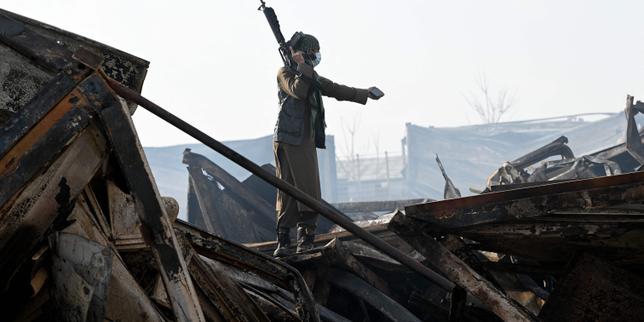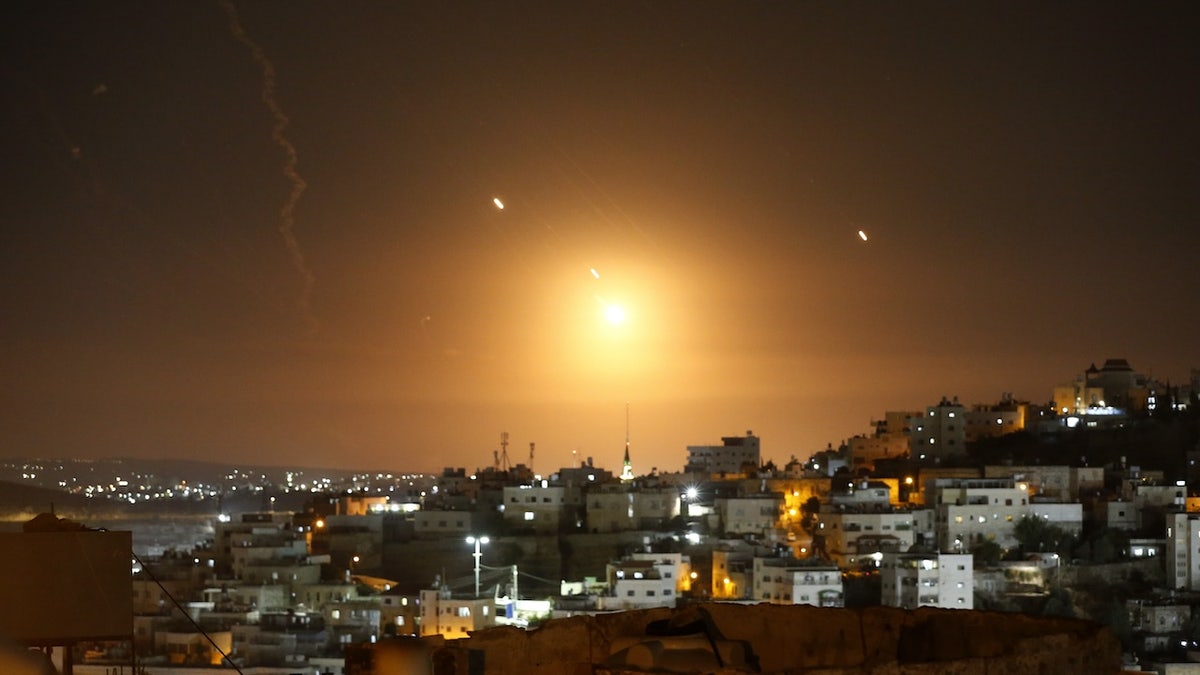
The shadow war between Jerusalem and Tehran just entered a volatile new phase. Israeli intelligence sources have confirmed the elimination of a high-ranking Iranian security official, a move that strips the Islamic Revolutionary Guard Corps (IRGC) of one of its most capable strategic minds. This was not a random strike. It was a surgical removal of a man responsible for coordinating proxy logistics across the Middle East. By taking out a figure of this magnitude, Israel has signaled that no one within the Iranian security apparatus is untouchable, regardless of their rank or location.
For years, the conflict between these two powers played out in the dark. We saw cyberattacks on water infrastructure, "mysterious" fires at enrichment facilities, and the occasional drone strike on a remote convoy. That era of plausible deniability is over. This latest operation is a brazen statement of intent. It tells the leadership in Tehran that their internal security is compromised and their most guarded secrets are sitting on a desk in Tel Aviv.
The Breach within the IRGC
The success of this operation points to a massive intelligence failure inside Iran. You do not kill a top-tier security official without high-level human intelligence. To track a man who likely used decoy motorcades, encrypted communications, and sanitized safe houses requires more than just satellite imagery. It requires people on the ground.
It suggests that Mossad has successfully cultivated assets deep within the Iranian military-industrial complex. These aren't just low-level informants. We are talking about individuals with access to movement logs and daily schedules. The psychological impact of this breach is perhaps more damaging than the loss of the official himself. Every general in the IRGC is now looking over his shoulder, wondering if his driver, his secretary, or his deputy is on a foreign payroll.
Paranoia is a powerful tool in espionage. When a leadership structure begins to distrust itself, decision-making slows down. Verifying orders takes longer. Communication becomes fragmented. Israel is betting that by thinning the ranks of the elite, they can paralyze the Iranian command structure before a wider regional conflict breaks out.
Why Technical Surveillance Wasn't Enough
Many analysts focus on the hardware—the drones and the missiles. They are missing the point. The technical aspect is the easy part once you have the data. The real work happens in the months of "pattern of life" analysis.
Intelligence officers spent hundreds of hours watching how this official lived. They knew when he drank his coffee. They knew which routes he preferred when he was in a hurry. They identified the exact moment when his security detail was most vulnerable—perhaps during a shift change or at a specific checkpoint where the armored glass didn't matter. This level of granular detail is what separates a botched attempt from a definitive hit.
The Strategy of Decapitation
Israel has long favored the "decapitation" strategy. The logic is simple: organizations like the IRGC or Hezbollah are top-heavy. They rely on the charisma and institutional knowledge of a few key individuals. When you remove those individuals, the organizational memory vanishes.
However, this strategy carries a massive risk. We have seen in the past that killing a leader often paves the way for a younger, more radical successor. When Abbas al-Musawi was killed in 1992, he was replaced by Hassan Nasrallah, who turned Hezbollah into a far more formidable threat. Israel is aware of this history, but they clearly believe the immediate tactical advantage of removing this specific official outweighs the long-term risk of his replacement.
The official in question was a bridge-builder. He was the one who could pick up the phone and coordinate between militias in Iraq, the Syrian military, and leadership in Yemen. Those relationships take decades to build. They are based on personal trust, not just official rank. You cannot simply promote a colonel and expect him to have the same influence over foreign warlords.
Retaliation and the Escalation Ladder
The big question now is how Tehran responds. They are trapped in a strategic dilemma. If they do nothing, they look weak to their proxies and their own citizens. If they retaliate too harshly, they risk a full-scale war that could threaten the survival of the regime itself.
We are likely to see a tiered response. First, expects a surge in cyberattacks targeting Israeli civilian infrastructure. Second, watch for increased activity from proxy groups on Israel’s borders. Tehran prefers to fight through others, keeping the direct cost to Iran as low as possible.
But the "proxy" model is fraying. Israel’s willingness to strike directly at Iranian officials shows they are no longer interested in fighting only the "tentacles" of the octopus. They are going for the head. This shift in doctrine forces Iran to reconsider its entire forward-defense strategy.
The Geographic Reality of the Strike
The location of the strike matters as much as the target. If it happened on Iranian soil, it is a humiliation for the Ministry of Intelligence and Security. If it happened in a third country, like Syria or Lebanon, it proves that Iran cannot protect its assets even in territory it supposedly controls.
The logistics of moving an assassination team and their equipment into a hostile environment are staggering. It involves smuggling specialized ordnance, establishing safe houses, and securing extraction routes. Every step is an opportunity for discovery. The fact that the team succeeded and vanished implies a level of operational mid-level support that should terrify the regional powers.
Economic and Political Aftermath
Beyond the smoke and the headlines, there is an economic dimension. Iran is already struggling under the weight of sanctions and internal dissent. High-profile security failures further erode confidence in the government. When the state cannot protect its most important defenders, the average citizen starts to wonder if the regime is as stable as it claims to be.
In Israel, this is a much-needed win for a defense establishment that has faced intense scrutiny. It reaffirms the prowess of their intelligence services and serves as a deterrent to other regional actors. It is a reminder that while the political situation in Israel may be chaotic, the "security wall" remains proactive and lethal.
The "gray zone" of conflict—that space between peace and total war—just got a lot smaller. We are moving toward a period where the strikes will become more frequent and the targets more prominent. There is no going back to the old status quo. The rules of engagement have been rewritten in blood and high-explosives.
Expect the next few weeks to be defined by a tense silence. Both sides are recalculating their positions. Iran is likely conducting a brutal internal purge to find the "moles" who enabled this hit. Israel is preparing its missile defenses for the inevitable blowback. The chessboard has been cleared of a major piece, but the game is far from over.
The next move won't be announced in a press release. It will happen in a quiet alleyway or via a corrupted line of code in a command center. This is the reality of modern warfare: it is constant, it is personal, and it is unforgiving. If you are a high-ranking official in the IRGC today, your world just became very small. Stop looking at the horizon and start looking at the car parked across the street.