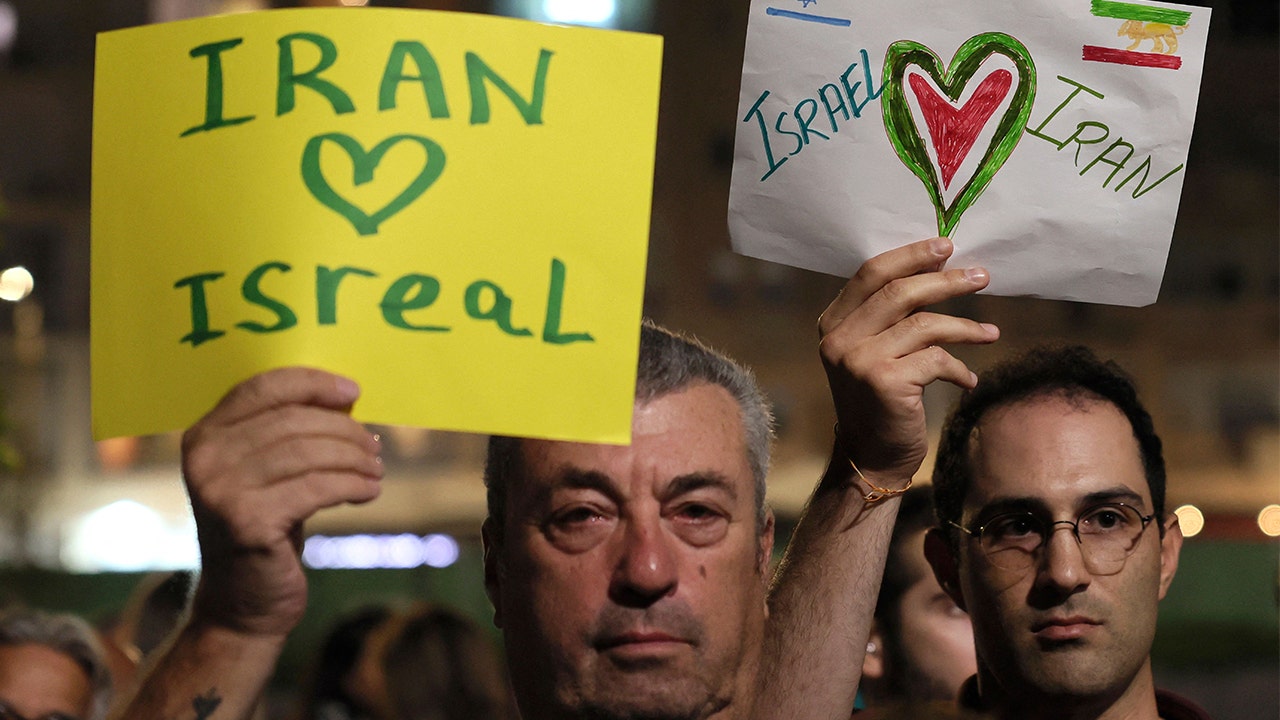
Western media loves a narrative of fragility. When news breaks of a US-Israeli kinetic operation against Iranian infrastructure, the headlines follow a predictable script: "Fear and Panic Grips Tehran." They paint a picture of a regime on the brink, a population cowering in shadows, and a military apparatus paralyzed by superior technology.
They are dead wrong.
What the "consensus experts" miss—usually from the safety of a think-tank office in D.C.—is that perceived panic is not a bug in the Iranian system; it is a feature. In the brutal logic of Middle Eastern brinkmanship, a population that looks "terrified" to a Western lens is actually a population being mobilized for the next phase of asymmetric warfare. If you think a few precision strikes on an assembly plant or a localized cyber-attack on a power grid triggers a systemic collapse, you haven’t been paying attention to the last forty years of geopolitical resilience.
The Myth of the Glass Jaw
The prevailing argument suggests that Iran is a brittle state. The theory goes that if you apply enough external pressure, the internal cracks will widen until the whole thing shatters. This is a fundamental misunderstanding of "Strategic Depth."
In conventional military terms, strategic depth is about geography. In the Iranian context, it is about the distributed nature of power and production. You cannot decapitate a hydra by bruising its skin.
When a strike occurs, the Western press focuses on the immediate tactical damage. They count the charred remains of centrifuges or the smoking ruins of a drone facility. I have watched analysts spend millions in billable hours dissecting satellite imagery while ignoring the psychological economy of the region.
The "panic" reported by outlets is often just the friction of a massive, state-mandated shift in resources. When the sirens go off, the IRGC (Islamic Revolutionary Guard Corps) doesn't just hide. They move. They decentralize. They bury the next generation of tech deeper into the Zagros Mountains. The chaos is a smokescreen for the hardening of the target.
Why "Fear" is a Bull Market for the Regime
Let’s talk about the economics of the "attack." Every time a high-profile strike occurs, the global price of risk fluctuates. For the Iranian leadership, internal "fear" serves two vital domestic functions that the West refuses to acknowledge:
- Crushing Dissent via Emergency: Nothing kills a protest movement faster than a "state of war." By leaning into the narrative of an external existential threat, the regime justifies the absolute suppression of internal rivals. You aren't a reformer anymore; you're a liability during a national emergency.
- Resource Reallocation: Under the guise of "panic," the government can bypass bureaucratic red tape to funnel billions into the defense sector, often at the expense of social programs, without the usual level of pushback.
If you are an investor looking at the region, you shouldn't be asking "Will the regime fall?" You should be asking "How much did this strike just increase their internal control?"
The Precision Strike Fallacy
The "lazy consensus" assumes that technological superiority wins the day. We see a video of a "surgical" strike and assume the mission is accomplished. But war is not a video game. It is a contest of wills and a race of industrial replacement.
Israel and the US possess the most sophisticated kinetic tools on the planet. This is undeniable. However, the use of these tools often results in a "Darwinian Pressure" effect. By destroying the mid-tier capabilities of an adversary, you effectively force them to innovate or die.
The Evolution of Asymmetry
Imagine a scenario where a cyber-attack cripples a specific Iranian naval communication hub. The "fear and panic" reported is real for the operators on the ground. But the institutional response is to move toward a more resilient, low-tech, or locally encrypted system that is even harder for Western signals intelligence to penetrate next time.
- 2010: Stuxnet hits. The world cheers the "end" of the nuclear program.
- Result: Iran builds the "National Information Network," effectively creating an air-gapped internet for critical infrastructure.
- Today: Iranian cyber-warfare capabilities are among the top five globally because they were forced to evolve in the crucible of that "panic."
Stop Asking if They Are Scared
The "People Also Ask" sections of the internet are filled with variations of: "Is Iran's military weak?" or "Will there be a revolution after the next attack?"
These are the wrong questions. They assume a Western standard of stability.
A "brutal" and honest assessment: The Iranian state is built to operate in a permanent state of crisis. While a strike might cause the rial to plummet or people to line up for gas—symptoms of what we call panic—the command structure thrives in this environment. It is their natural habitat.
If you want to understand the true impact of a US-Israeli operation, stop looking at the street level. Look at the procurement chains. Look at the "Gray Market" shipping lanes. If those aren't moving, then you have a story. If they are, the "panic" is just noise.
The Cost of the Contrarian View
I'll be the first to admit: this perspective is unpopular because it suggests that "doing something" (i.e., launching a strike) might actually be counter-productive in the long run. It suggests that our "victories" are often just high-priced lessons we are giving our enemies for free.
The downside of this realization is that it leaves us with fewer "quick fix" options. It’s much easier to sell a "surgical strike" to a nervous public than it is to explain that we are locked in a fifty-year game of institutional chess where the other side views "fear" as a legitimate mobilization tool.
The Hard Truth About Intelligence
We often mistake "intelligence" for "data." We have all the data. We know where the buildings are. We know what color the uniforms are. But we lack the intelligence to understand the cultural and psychological infrastructure that turns a "panicked" population into a hardened one.
When the bombs fall and the headlines scream about "Fear in Tehran," the IRGC commanders aren't shaking. They are opening the blueprints for the next bunker. They are laughing at the fact that we think we can end a thousand-year-old culture of persistence with a few million dollars' worth of ordinance.
The next time you see a headline about "panic" in the streets of a sanctioned nation, remember: a cornered animal is at its most dangerous not because it is brave, but because it has finally accepted that the worst has already happened.
Quit looking for the collapse. Start looking for the mutation.