In the high-stakes theater of Middle Eastern intelligence, silence is rarely just an absence of noise. It is a data point. For decades, the geopolitical pulse of the region has been synchronized to the rhythmic, often fiery oratory of Ali Khamenei. When the Supreme Leader of Iran speaks, markets shift, militias move, and analysts in windowless rooms in Tel Aviv and Washington D.C. scramble to deconstruct every syllable.
But lately, the microphone has been cold. In other developments, we also covered: The Sabotage of the Sultans.
Benjamin Netanyahu did not just drop a headline when he suggested that Khamenei "is no longer." He dropped a match into a powder keg of digital forensics, biological rumors, and the terrifying vacuum of power. To understand the weight of this claim, you have to look past the podiums and into the shadows of the "Deep State" of the Islamic Republic, where the health of an 85-year-old man is the single most important variable in a global equation of war and peace.
The Ghost in the Machine
Intelligence isn't always about intercepted emails or glamorous spies in trench coats. Often, it’s about the "pacing" of a human life. TIME has analyzed this important subject in extensive detail.
Consider a hypothetical intelligence officer—let’s call her Sarah—sitting in a secure facility in the Negev desert. Her entire professional existence is dedicated to monitoring the physical presence of one man. She tracks the tremor in a hand during a televised Friday sermon. She measures the gait of a man walking toward a prayer mat. She notes the frequency of public appearances compared to the historical average of the last twenty years.
When that frequency drops to zero, the red lights start flashing.
For weeks, the rumors have been swirling like desert dust. Reports of a secret coma, a quiet passing, or a debilitating stroke have leaked through the cracks of Iran's digital iron curtain. When Netanyahu stands before a camera and implies that the seat of power in Tehran is effectively vacant, he isn't just guessing. He is signaling that the "pattern of life" analysis—the methodology used to track high-value targets—has flatlined.
The Anatomy of a Power Vacuum
Nature abhors a vacuum, but geopolitics fears it.
If Khamenei is indeed incapacitated or deceased, we are not looking at a simple funeral and a changing of the guard. We are looking at a seismic shift in the tectonic plates of the Shia Crescent. The Supreme Leader is the glue. He is the final arbiter between the pragmatic politicians in Tehran and the ideological zealots of the Islamic Revolutionary Guard Corps (IRGC).
Without the arbiter, the factions begin to bleed into one another.
Imagine the internal tension within the IRGC. These are men who have spent billions of dollars and decades of effort building a "Ring of Fire" around Israel. They command the Houthis in Yemen, Hezbollah in Lebanon, and various militias in Iraq and Syria. To them, the Supreme Leader is more than a boss; he is a divine mandate. If that mandate vanishes before a successor is firmly entrenched, the command structure begins to fray.
Netanyahu's rhetoric is designed to accelerate that fraying. By publicly questioning Khamenei's existence, he is inviting the Iranian people—and the Iranian military—to ask: Who is actually in charge?
The Digital Shadow and the Truth
In 2026, you cannot hide a death forever, but you can certainly try to simulate a life.
We live in an era where AI-generated content can sustain a persona long after the person has left the room. There is a growing suspicion among tech-literate analysts that recent "messages" or "photos" from the Supreme Leader’s office bear the hallmarks of digital manipulation. Low-resolution videos, recycled audio clips, and suspiciously timed archival footage are the tools of a regime trying to buy time.
Why buy time? Because the succession plan is a mess.
The Assembly of Experts, the body tasked with choosing the next leader, is a collection of aging clerics caught between the past and a very uncertain future. The most likely candidate was Ebrahim Raisi, but his sudden death in a helicopter crash last year left a gaping hole in the lineage. Now, the eyes turn to Mojtaba Khamenei, the leader’s son.
But a dynastic succession is a hard sell in a country that defined itself by overthrowing a monarchy. The irony is thick enough to choke on. To install a son to replace a father would be to admit that the revolution has come full circle, returning to the very "Sultanate" model it once sought to destroy.
The Human Stakes of the Silence
While the politicians play chess with rumors, the average person on the streets of Isfahan or Shiraz feels a different kind of pressure.
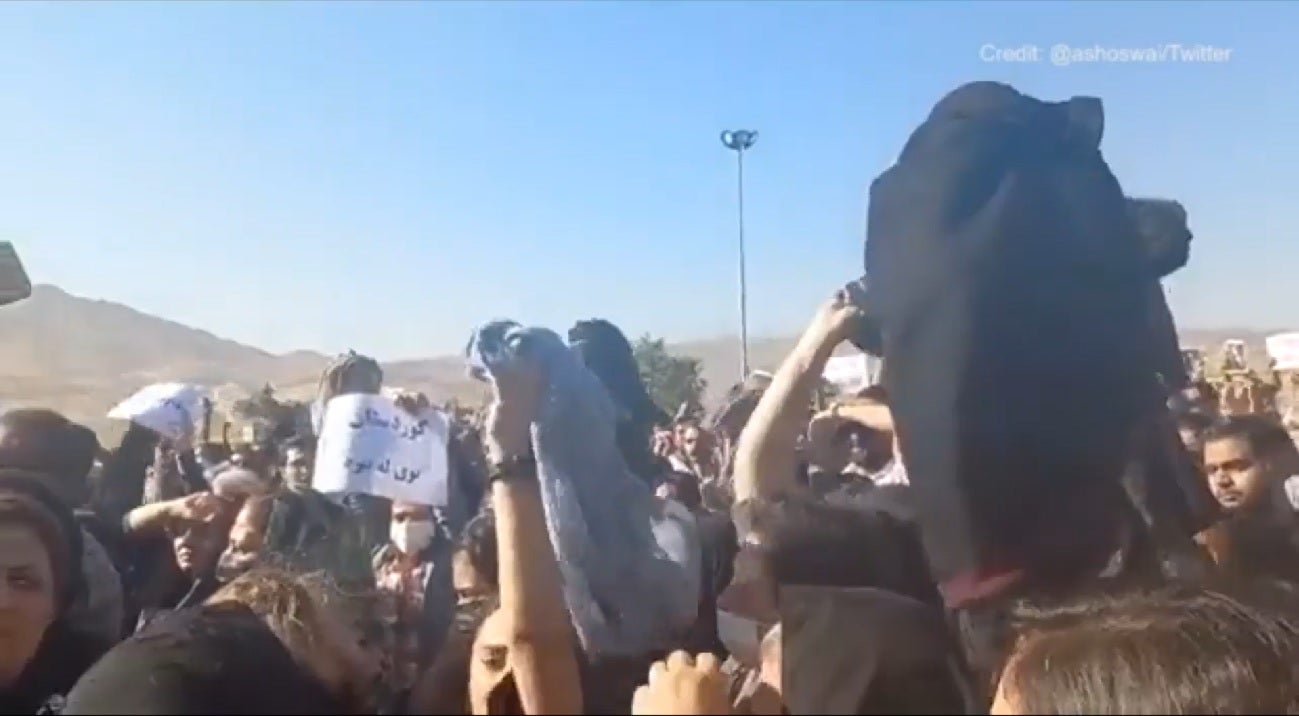
For a young Iranian woman, the "absence" of Khamenei isn't a strategic talking point. It is a flicker of hope or a wave of terror. Does his departure mean the loosening of the morality police? Or does it mean the IRGC will seize total control, turning the country into a literal garrison state with no civilian oversight?
The invisible stakes are the lives of millions who are currently caught in the crossfire of a shadow war. If the "Head of the Snake"—as Netanyahu often calls the Iranian leadership—is truly gone, the "tentacles" (Hezbollah, Hamas, the Houthis) may find themselves operating without a central nervous system. This makes them more dangerous, not less. A decentralized militia with something to prove is a wildcard that no computer model can accurately predict.
The Evidence of the Absence
Netanyahu's claim isn't just psychological warfare; it's based on the "Dog That Didn't Bark" principle.
- The Missed Commemorations: Khamenei has missed several key religious and state functions that he has attended religiously for thirty years.
- The Audio-Only Messages: In an era of 4K video, the reliance on grainy audio files suggests a man unable to stand or speak to a camera.
- The IRGC’s Sudden Autonomy: We are seeing tactical decisions made on the ground in Lebanon and Syria that seem disconnected from a central, sobering authority.
It is a slow-motion collapse.
The reality of the situation is that we may be living in the "Post-Khamenei Era" already, even if the official announcement is months away. The regime is likely waiting for a moment of perceived strength to break the news, or perhaps they are waiting until the internal bloodletting of the succession battle has found a winner.
The Resonant Void
The Middle East is a region built on the cult of personality. From the Pharaohs to the Shahs to the Ayatollahs, the "Great Man" theory of history has dictated the lives of billions. When one of those men disappears, the world holds its breath.
Netanyahu’s words were a calculated gamble. He is betting that the Iranian regime is currently a house of cards, and that the "Grand Architect" is no longer there to hold the pieces together.
If he is right, the map of the world is about to be redrawn in ways we cannot yet imagine. If he is wrong, he has just given the Supreme Leader the ultimate propaganda victory: a "resurrection" that will be framed as a miracle.
But for now, the chair remains empty. The cameras are off. The silence from Tehran is growing louder by the hour, a deafening roar that tells us the world we knew yesterday is already gone, replaced by a ghost who refuses to leave the stage.
The most powerful man in Iran might currently be a memory, preserved in amber by a terrified committee, while the rest of the world waits for a heartbeat that may never come.