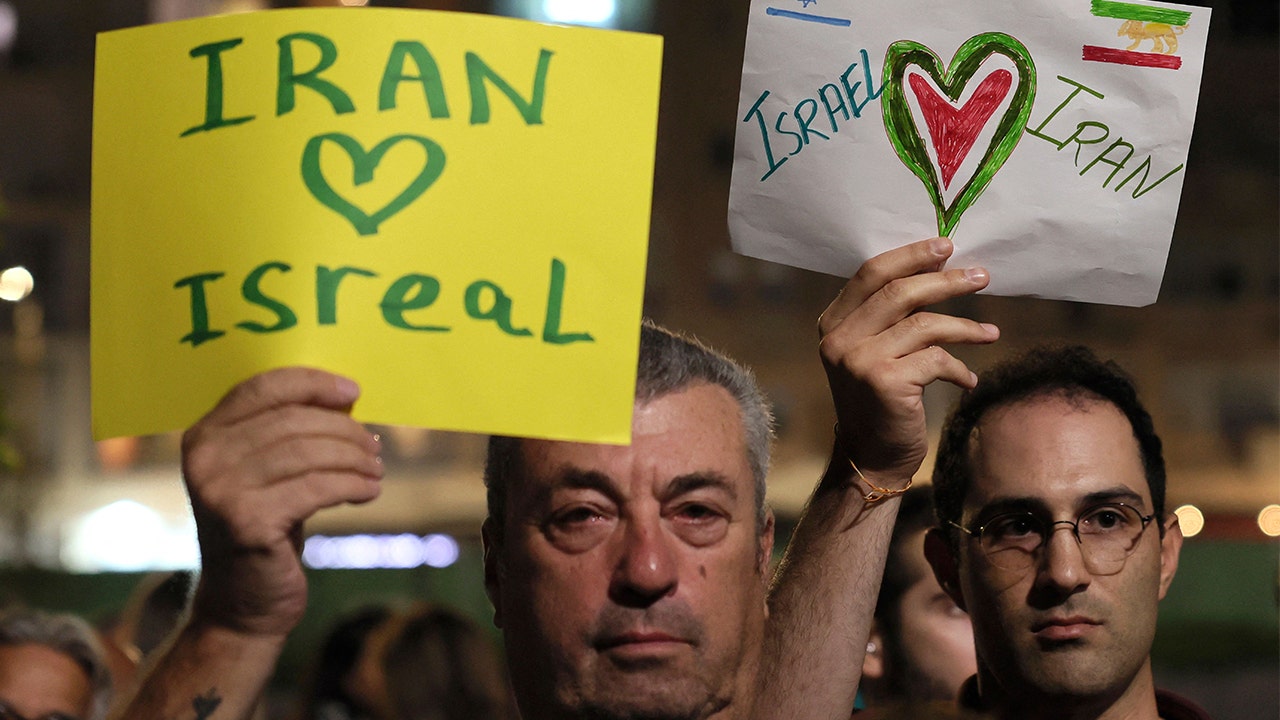
If you’ve spent your life watching your neighborhood change through the lens of a security camera or a military checkpoint, you start to recognize the same patterns in other parts of the world. It’s a gut feeling. You see a video of a protest thousands of miles away, and even if you don't speak the language, you recognize the stance of the people in the street. You recognize the specific way a mother holds a photo of her son. For Palestinians, watching the Iranian people demand change isn't just about foreign policy or regional chess moves. It’s about a shared vocabulary of survival.
The connection between Palestinians and Iranians often gets buried under layers of geopolitical static. Pundits love to talk about state funding, proxy battles, and "axes of resistance." They treat human beings like icons on a map. But for those of us living these realities, the bond is much simpler and more raw. It’s the realization that both populations are fighting for the right to breathe without asking for permission. We’re both caught between the crushing weight of external pressures and the internal longing for a life that feels normal.
Most people get the "solidarity" thing wrong. They think it’s a formal agreement signed by politicians. It isn't. It’s the shared experience of being told your life is a secondary concern to a "greater cause."
The shared weight of living under constant pressure
Living in Gaza or the West Bank means navigating a world where your movement is a gift granted by someone else. You learn to read the mood of a soldier at a gate. You learn which roads are yours and which aren't. When Iranians take to the streets, they're often fighting a different kind of gatekeeper, but the feeling of being restricted is identical. Whether it’s a physical wall or a legal one that dictates what you can wear or say, the psychological toll is a mirror image.
Take the 2022 protests in Iran following the death of Mahsa Amini. For a Palestinian, that wasn't just another news cycle. It was a reminder of how quickly a single life can become a flashpoint for an entire nation's exhaustion. We know what it’s like to have a funeral turn into a protest. We know the specific grief of losing the young—those who should have been the ones to build the future but ended up as names on a poster.
There’s a specific kind of exhaustion that comes with being a "cause" rather than a person. Palestinians are often reduced to symbols of resistance. Iranians are often reduced to symbols of a "threat" or a "victim" of a regime. In both cases, the actual human—the one who wants to open a small business, travel to see their cousins, or just walk down the street without looking over their shoulder—gets lost. Solidarity between us is a way of saying, "I see the person behind the headline."
Why the old political narratives are failing us
For decades, the story was simple. The Iranian government supported the Palestinian cause, so therefore, the people must be in total lockstep. That’s a lazy way to look at the world. It ignores the nuance of how people actually feel. Many Palestinians look at the bravery of Iranian activists and see a reflection of their own defiance. At the same time, many Iranians look at the Palestinian struggle and see a people who, despite everything, refuse to disappear.
It’s not about endorsing every political move. It’s about recognizing that the struggle for human rights is indivisible. You can't demand freedom in Jerusalem while ignoring the call for it in Tehran. If you do, your concept of freedom is hollow. It’s just tribalism with a better PR team.
The common ground is found in the resistance to being silenced. In Iran, that might look like a woman removing her headscarf in a crowded square. In Palestine, it looks like a farmer staying on his land despite the threat of demolition. These are different battles, but they spring from the same well of human stubbornness. We both refuse to be the "quiet" victims that the world finds easier to deal with.
The high cost of being a pawn in someone else's game
Both Palestinians and Iranians are intimately familiar with the concept of sanctions and isolation. We know how it feels when the world tries to squeeze a government but ends up bruising the people instead. In Gaza, the blockade has turned life into a calculated experiment in caloric intake and electricity hours. In Iran, inflation and economic isolation have gutted the middle class, turning everyday survival into a marathon.
This shared economic trauma creates a bond that’s hard to break. When you’ve both stood in lines for basic goods or watched the value of your currency vanish overnight, you stop caring about the grand speeches made by leaders in air-conditioned rooms. You care about the fact that your neighbor’s kid can't afford medicine.
There’s also the reality of the "dual threat." Palestinians face the immediate reality of occupation, but they also have to deal with the complexities of their own leadership. Iranians face a government that often prioritizes regional influence over domestic well-being. Both groups are fighting two battles at once—one against an external force and one for the soul of their own society.
Moving beyond the symbols to actual empathy
Solidarity shouldn't be a performance. It’s not about changing your profile picture or using a hashtag. It’s about doing the hard work of listening to voices that aren't filtered through state media or Western news hubs.
I’ve talked to Iranian students who feel a deep, aching connection to the kids in Bethlehem. They aren't talking about weapons or money. They’re talking about the desire to go to a concert without fear. They’re talking about the dream of a passport that actually means something at an airport. This is the stuff that matters.
The "Palestinian-Iranian" connection isn't a threat to anyone except those who profit from division. It’s a grassroots realization that our fates are linked. If one group succeeds in gaining their dignity, it provides a blueprint for the other. It proves that the status quo isn't a law of nature. It’s just a temporary arrangement of power.
What you can actually do to support these movements
Stop looking for the "perfect" victim. Human rights aren't a reward for good behavior. They're a baseline. If you want to stand with Palestinians or Iranians, start by humanizing them in your own circles. Challenge the idea that these are just "troubled regions" with no hope.
Read literature from both cultures. Look at the art coming out of the underground scenes in Tehran and Ramallah. You’ll find more similarities in a single poem than in a thousand hours of cable news. Support organizations that focus on the ground-level needs of people—legal aid, medical supplies, and independent journalism.
The next time you see a headline about Iran or Palestine, look past the flags. Look at the faces in the crowd. Look at the hands holding the signs. That’s where the real story is. The struggle for a normal life is the most radical act there is, and it’s one that Palestinians and Iranians are performing every single day.
Don't wait for a political shift to start caring. The connection is already there. It’s written in the scars and the songs of two peoples who have decided that they’ve had enough. Pay attention to the independent journalists on the ground who risk everything to upload a single video. Share their work. Translate their words. Amplify the voices that the authorities are trying to drown out. That’s how you turn solidarity from a word into a tool.


