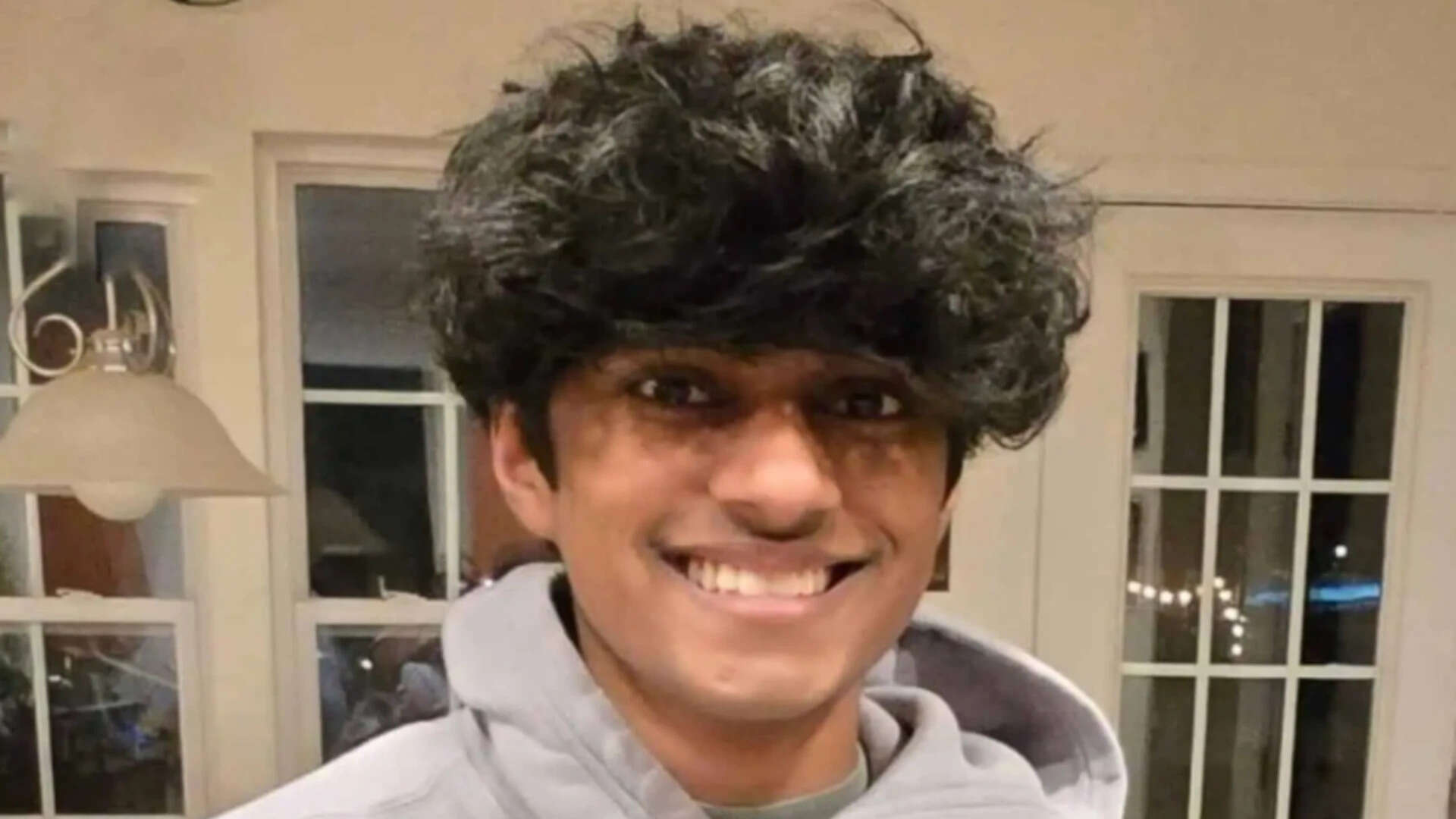
The cessation of active search operations for Gautham Rajanikanth, an Indian-American student at Carnegie Mellon University, represents a systemic breakdown in the transition from missing-person response to long-term investigative recovery. When Pittsburgh police halted their physical search efforts, they moved the case into a state of "investigative stasis"—a phase where the lack of actionable forensic data or digital breadcrumbs forces a shift from high-resource physical sweeping to passive monitoring. Understanding this outcome requires a cold dissection of the search mechanics, the geography of the urban-waterway interface, and the protocols governing municipal police behavior when initial leads evaporate.
The Search Decay Function: Time and Resource Allocation
In high-stakes missing person cases, the probability of a successful recovery follows a sharp decay curve. For Gautham Rajanikanth, the timeline between the initial report and the suspension of the search illustrates the "Threshold of Diminishing Returns." This occurs when the cost of specialized equipment and personnel—such as dive teams, K9 units, and aerial drones—exceeds the mathematical probability of finding a subject within a defined search perimeter. Discover more on a similar issue: this related article.
The Pittsburgh Bureau of Police operates under specific operational constraints:
- The 72-Hour Saturation Window: Initial efforts focus on "point of last contact" (POLC) and "direction of travel" (DOT). Once these variables are exhausted without a positive sighting, the search area expands exponentially, making physical saturation impossible.
- Resource Depletion: Tactical units are shared across multiple precincts. A protracted search for one individual, absent foul play indicators, eventually conflicts with the agency’s obligation to respond to active 911 calls.
- The Evidentiary Gap: Without CCTV footage or mobile ping data to narrow the radius, the search area remains a low-probability grid.
The Geographic Bottleneck: Pittsburgh’s Three Rivers Complexity
Pittsburgh’s unique topography—the confluence of the Allegheny, Monongahela, and Ohio rivers—presents a specific set of environmental challenges that complicate recovery efforts. In Rajanikanth’s case, the proximity of the university and his last known locations to these waterways introduced a "High-Complexity Variable" that police departments are often ill-equipped to solve without specific forensic markers. Additional analysis by TIME delves into related views on this issue.
The hydrology of these rivers dictates the search logic:
- Current and Thermal Strata: Suspended objects in the Allegheny or Ohio rivers do not follow a linear path. Underwater debris and fluctuating temperatures can trap a subject for weeks, rendering surface-level boat patrols ineffective.
- Infrastructure Interference: The high density of bridges and industrial piers creates "Blind Zones" for sonar. Traditional side-scan sonar technology often struggles to distinguish between human remains and submerged industrial refuse, common in Pittsburgh’s riverbeds.
- The Turbidity Constraint: Visual dive operations are limited by water clarity. In the days surrounding the search, any rainfall or industrial runoff increases turbidity, reducing underwater visibility to near zero and forcing a reliance on "blind" tactile searches, which are slow and high-risk for divers.
Institutional Friction: The "Missing vs. Endangered" Classification
A critical failure point in many student-related missing person cases is the bureaucratic classification of the individual. Gautham Rajanikanth was an adult; under standard law enforcement operating procedures, an adult has a "right to be missing" unless there is evidence of cognitive impairment, medical necessity, or a crime scene.
This classification creates a "Response Lag." If the case is not immediately coded as "High-Risk Endangered," the department cannot legally access certain invasive investigative tools, such as real-time GPS tracking or private financial records, without a warrant or subpoena. These legal hurdles create a time-gap where the subject's digital footprint goes cold.
The friction between university campus police and city municipal police also contributes to data silos. While Carnegie Mellon University (CMU) has its own security infrastructure, the hand-off to the Pittsburgh Bureau of Police often results in a loss of granular detail regarding the student’s social habits, recent academic stressors, or local peer networks.
The Digital Void: Forensic Limitations in 2026
Modern search strategies rely heavily on a "Digital Twin" of the missing person—a reconstruction of their movements via cloud-based data. In the Rajanikanth case, the lack of "answers" cited by the police suggests a failure to bridge the gap between physical absence and digital presence.
- Encryption Hurdles: If a subject uses end-to-end encrypted messaging services or does not have "Share My Location" active, the search is pushed back into the 20th-century methodology of physical canvassing.
- CCTV Fragmentation: Pittsburgh’s surveillance network is a patchwork of public "Real-Time Crime Center" cameras and private business security. The labor-intensive process of obtaining, reviewing, and syncing this footage means that by the time a lead is identified, it is often 48 to 72 hours old.
- The Wi-Fi Handshake Gap: University campuses have dense Wi-Fi networks. However, once a student moves off-campus into the surrounding urban neighborhoods, they lose that high-resolution location logging. If Rajanikanth’s phone died or was powered off at the edge of the campus network, the trail terminates at a "Dead Zone."
Socio-Cultural Variables and the Pressure of Perception
The Indian-American community and the broader student body often perceive the suspension of a search as a lack of effort. However, from a consulting and strategic standpoint, the suspension is a "Shift in Modality." The police move from Tactical Search (active boots on the ground) to Cold Case Monitoring (waiting for external triggers).
The pressure on international or first-generation students in high-pressure academic environments like CMU introduces a psychological variable that law enforcement is often poorly trained to quantify. The "Stress-Induced Flight" hypothesis is rarely factored into search grids, which are usually designed for victims of crime or accidents.
Strategic Reconstitution of the Investigation
To move past the current "End of Search" impasse, the investigation must be re-engineered from a physical recovery mission into a forensic data-mining operation. The reliance on municipal police has reached its limit; the next phase requires a private or specialized intervention focused on three specific vectors:
- Hydrological Mapping Integration: Utilizing private sector hydro-acoustic surveys that exceed the resolution of standard police sonar to map the riverbeds near the POLC during low-flow periods.
- The Digital Forensic Audit: Bypassing standard subpoenas by working with family-authorized access to cloud backups (Google Timeline, iCloud, and wearable device health data) to identify micro-trends in movement or biometric stress indicators leading up to the disappearance.
- The Radius Expansion Strategy: Shifting the focus from the immediate vicinity of the disappearance to regional transport hubs. If the subject utilized a ride-share or transit service under an alias or through a secondary device, the search must transition from a local "Missing Person" case to a multi-state "Bolo" (Be On the Lookout).
The suspension of the search by Pittsburgh police is not a conclusion; it is a declaration that their current toolkit has been exhausted. The case remains open, but it is now an information war rather than a physical race. The strategic move for stakeholders is to transition resources away from the rivers and into the deep-layer digital and social forensics that municipal budgets simply cannot sustain.