The courtroom is a place of heavy wood, low whispers, and the sterile smell of floor wax. It is meant to be a vacuum. Inside those four walls, the messy, screaming world of political rallies and social media hashtags is supposed to die at the door. When a prosecutor stands up, they aren’t supposed to be a person with a party affiliation or a grievance. They are supposed to be a ghost in the machinery of justice.
Saritha Komatireddy knows this silence. She has lived in it.
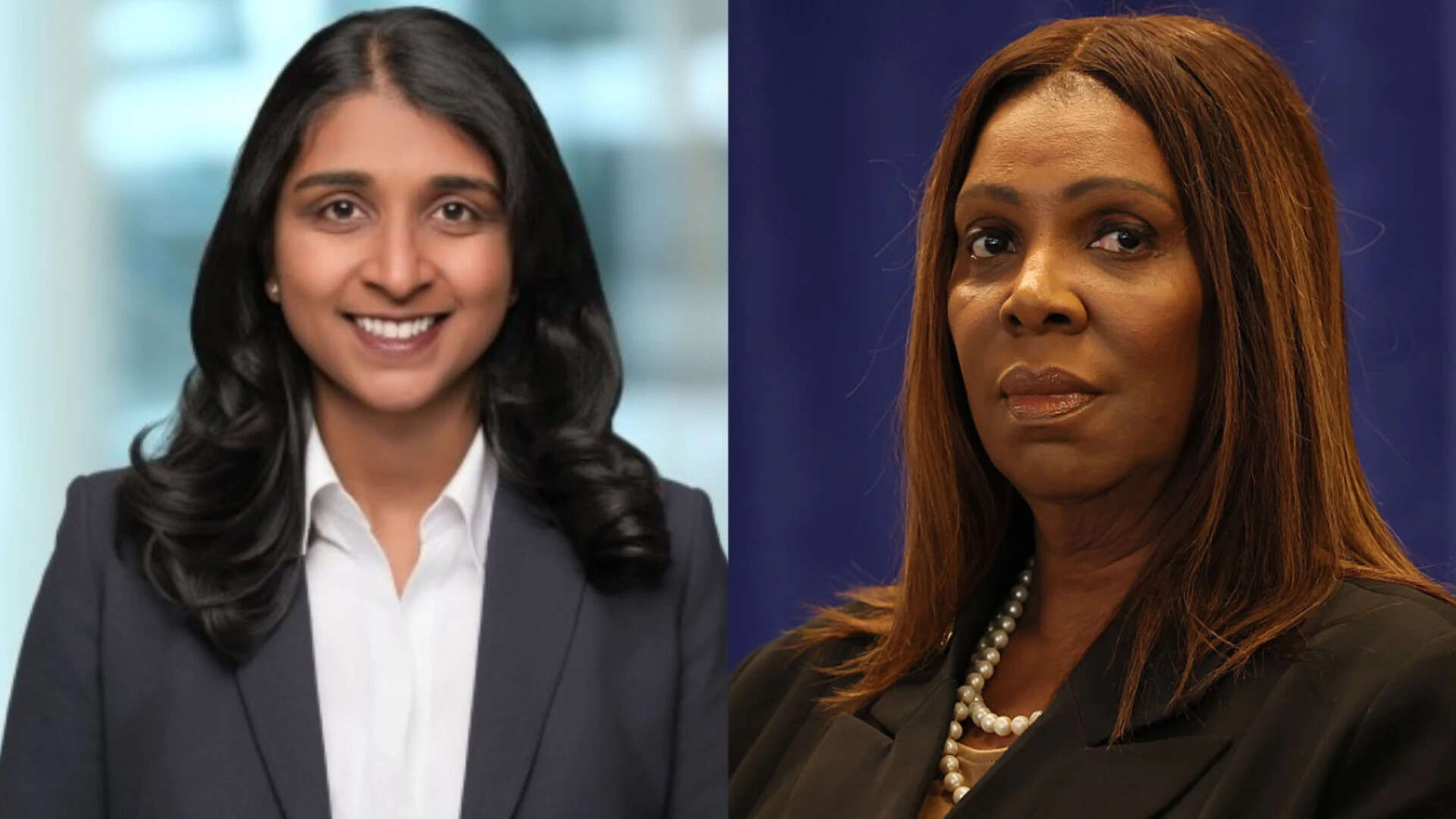
When news broke that Komatireddy, a seasoned federal prosecutor, had leveled a sharp critique at New York Attorney General Letitia James, it wasn't just a legal spat. It was a collision of two entirely different philosophies regarding what a "lawman" should be. Komatireddy’s comment—"Real prosecutors don't do that"—wasn't just a jab. It was a eulogy for a vanishing standard of the American legal system.
The Weight of the Badge
To understand the friction here, you have to look at the path Komatireddy walked. This isn't someone who spent their career chasing cameras. She is the Deputy Chief of the General Crimes Unit in the Eastern District of New York. She teaches at Columbia Law School. She spent years in the trenches of the Brooklyn federal court, taking on the kind of cases that don't make for catchy campaign slogans: international drug cartels, human traffickers, and the sprawling, violent infrastructure of the Sinaloa cartel.
In that world, words are dangerous. If a federal prosecutor speaks out of turn or shows a hint of personal bias, a case that took five years to build can vanish in a single afternoon of appeals.
Then there is Letitia James.
James represents a different breed of legal authority. She is an elected official. Her power comes from the people, which means her power is inherently tied to the promises she makes to them. When she campaigned on the promise of investigating the Trump family, her supporters saw it as a crusade for accountability. Her critics, however, saw it as a pre-judgment—a verdict looking for a crime.
The Invisible Stakes of the Jibe
When Komatireddy took her swing at James during a high-profile legal conference, she was touching a nerve that runs through the very heart of the Department of Justice. The "politics" she referred to isn't about Republican versus Democrat. It’s about the professional distance between an investigation and an ideology.
Consider a hypothetical scenario: A prosecutor decides to go after a local business mogul. Before they even see a shred of evidence, they stand on a stage and tell a crowd of thousands, "I am going to get this person."
Even if the mogul is actually guilty of every crime under the sun, the process is now poisoned. The defense doesn't have to prove their client is innocent; they only have to prove the prosecutor is obsessed. This is the "politics" Komatireddy is warning against. It’s the transition from being an officer of the court to being a protagonist in a political drama.
The tension between these two women is a microcosm of a larger American anxiety. We want our leaders to be fighters, but we need our prosecutors to be surgeons. You don't want a surgeon who hates the patient. You want a surgeon who follows the anatomy.
The Language of the Law
The specific language Komatireddy used—the "Real prosecutors" line—is a classic internal gatekeeping mechanism. It’s the way career lifers distinguish themselves from political appointees. In the halls of the DOJ, there is a deep-seated pride in being "non-partisan." It is a culture where you don't talk about who you voted for at the water cooler.
Komatireddy’s career has been defined by the high-stakes prosecution of Genaro García Luna, the former Mexican Secretary of Public Security. That case involved proving that one of Mexico’s highest-ranking officials was on the payroll of the cartel. It was a case built on thousands of documents, encrypted messages, and the testimony of dangerous men.
In a trial like that, the prosecutor's personal opinion of the defendant is irrelevant. In fact, it’s a liability. Every ounce of emotional energy that goes into a "politics-driven" public statement is an ounce of energy that isn't going into the meticulous, boring work of the law.
The Mirror of a Divided America
James and Komatireddy are both formidable, brilliant women. Their conflict is a reflection of the culture that created them. We live in an era where silence is seen as complicity, and where every act of public service is scrutinized through the lens of a "side."
When Letitia James campaigned on a platform of investigation, she was responding to a public that was hungry for it. She gave the people what they asked for. That is what an elected official does.
But Komatireddy is a different animal. She was appointed, not elected. Her accountability is to the Department of Justice, not to a voter block. This is where the friction lives. This is where the "real prosecutors" comment comes from. It’s the sound of a professional class that feels its boundaries being eroded.
The Invisible Line
Imagine the invisible line that separates the court from the street. On the street, you can say whatever you want about a defendant. You can call them names. You can demand their head.
But once you step across that line into the wood-paneled room, those words become chains. If a prosecutor can’t stay silent on the street, they might find their case silenced in the courtroom.
The jibe wasn't just a moment of drama. It was a warning shot from a career prosecutor who knows that once the law becomes a performance, the performance eventually replaces the law.
The gavel falls, and the room goes quiet. That silence is the only thing that keeps the system from tearing itself apart.