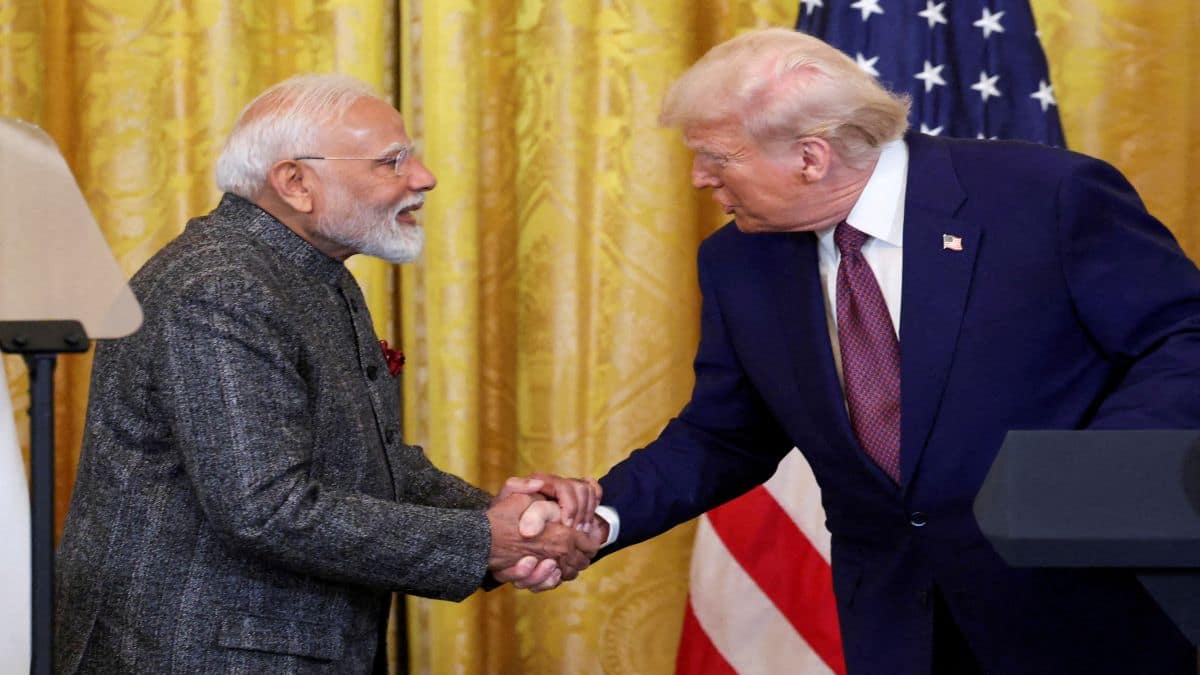
The current impasse in the India-US trade negotiations is not a failure of diplomatic intent but a conflict of fundamental fiscal architectures. India’s refusal to sign a comprehensive trade deal until a new tariff framework is finalized reflects a shift from reactive policy to a structural insistence on reciprocity. The delay indicates that the Indian Ministry of Commerce is prioritizing the protection of its domestic manufacturing cost-base over the immediate optical win of a bilateral agreement. To understand why this deal remains stalled, one must analyze the mechanical friction between the US "market access" model and India’s "production-linked" protectionism.
The Tariff Framework as a Barrier to Entry
A trade deal is effectively an exchange of sovereign tax revenue for market volume. India currently operates under one of the most complex tariff structures in the G20, designed to incentivize the "Make in India" initiative. The new framework mentioned by government sources is an attempt to rationalize these duties into a predictable, tiered system. Without this internal rationalization, any deal signed with the US would be built on shifting sand.
The friction originates from three specific structural variables:
- Effective Rate of Protection (ERP): India’s current tariffs are often higher on finished goods than on raw materials. If a trade deal lowers the duty on finished US goods before India lowers its own internal input costs, domestic manufacturers face a negative ERP, making them uncompetitive by default.
- Revenue Neutrality: Tariffs provide a significant portion of India’s indirect tax revenue. The new framework must calculate how to offset the losses from lower US import duties without blowing a hole in the fiscal deficit.
- The Generalized System of Preferences (GSP) Restoration: India views the restoration of GSP status—which allowed $6 billion of Indian exports to enter the US duty-free until 2019—not as a concession, but as a prerequisite for balancing the trade equation.
Structural Asymmetry in Market Access
The US trade strategy centers on aggressive market access for its dairy, medical device, and agricultural sectors. For India, these sectors are politically and economically sensitive because they involve fragmented, small-scale producers who cannot compete with the industrial-scale subsidies of the US Farm Bill.
The logic of the bottleneck follows a simple cause-and-effect chain:
- The US demands a reduction in price caps on medical devices (e.g., coronary stents and knee implants).
- India views these caps as essential social infrastructure to maintain affordable healthcare.
- The conflict moves from a trade issue to a domestic social policy issue, stalling the "clarity" India seeks.
By waiting for the new tariff framework, India is attempting to define the "floor" of its protectionism. Until this floor is codified, Indian negotiators cannot determine how much "ceiling" they can afford to trade away to the US.
The Pivot Toward Supply Chain De-risking
The geopolitical backdrop of this delay is the "China Plus One" strategy. Both nations recognize that a trade deal is a proxy for a deeper security partnership. However, the economic reality is that India’s manufacturing sector still relies heavily on Chinese intermediate goods.
If India signs a deal with the US that requires strict Rules of Origin (RoO), Indian exporters might find themselves unable to meet the criteria because their products contain too much non-US, non-Indian content. The new tariff framework is intended to address this by lowering duties on components from "trusted partners," thereby shifting the supply chain away from China before the US deal locks the trade flows in place.
Quantitative Disconnects in Digital Trade
Digital services and e-commerce represent the most significant growth vector for bilateral trade, yet they are the least defined in the current framework. The US seeks a prohibition on data localization requirements, while India’s draft e-commerce policy leans toward data sovereignty.
The cost function of data is the primary point of contention:
- US Perspective: Forcing data to be stored locally increases the operational expense ($OpEx$) for firms like Amazon and Google, effectively acting as a non-tariff barrier.
- India Perspective: Local data storage is a prerequisite for national security and the development of a domestic AI ecosystem.
The "clarity" the Indian government is awaiting includes how the new tariff framework will handle "bit-tax" or duties on electronic transmissions. If the WTO moratorium on such duties expires, India wants the flexibility to tax the massive flow of digital services coming from US tech giants. Signing a deal now would strip India of this future taxing power.
The Strategic Play for 2026
The immediate recommendation for firms operating in this corridor is to hedge against a "hard" trade agreement in the short term. The Indian government is signaling that it will not sacrifice long-term industrial policy for short-term trade volume.
The move is now to align corporate supply chains with India’s internal rationalization. Companies should prioritize investments in sectors covered by Production Linked Incentive (PLI) schemes, as these are the areas where the new tariff framework will likely offer the most aggressive duty drawdowns for capital goods.
Strategic positioning requires moving beyond the "will-they-won't-they" narrative of the trade deal. The real value lies in the granular tariff shifts that will precede the formal signing. Watch the upcoming Union Budget and the Ministry of Commerce’s white paper on duty rationalization; these will be the true blueprints for the India-US economic corridor, regardless of when the ceremonial pens hit the paper.
The final strategic move for the Indian government is to utilize the US's desire for a regional counterweight to China as leverage to gain "Equivalent Treatment" status. This would allow Indian professional services—specifically in IT and Engineering—seamless access to the US market in exchange for the very agricultural and medical device concessions the US currently demands. This "Service-for-Goods" swap is the only logical endgame that satisfies the domestic requirements of both Washington and New Delhi.