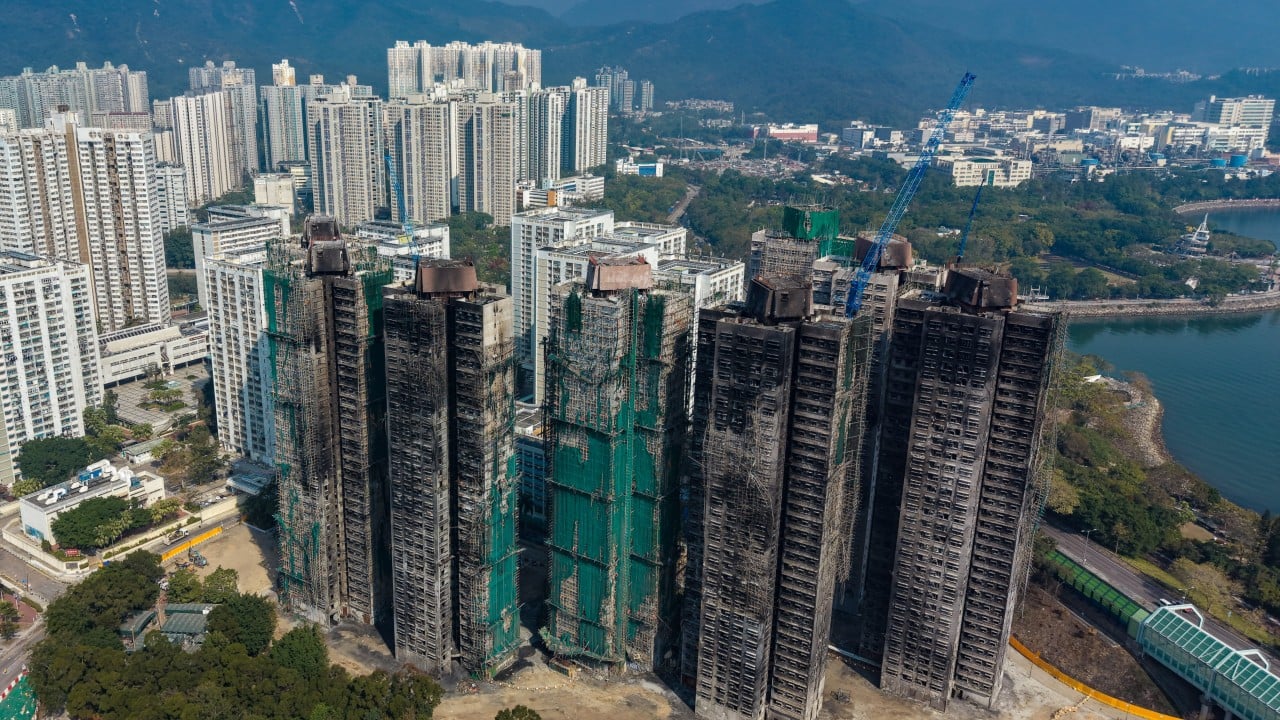
The rapid destruction of the residential unit in Tai Po, where flames ascended from the ground level to the roof in under 90 seconds, represents a failure of passive fire protection systems rather than a statistical anomaly. In high-density urban environments, the transition from a localized compartment fire to a full-building vertical conflagration is governed by three specific physical mechanisms: the Coandă effect, the stack effect, and the breakdown of exterior thermal barriers. Analyzing this event requires moving beyond the "90-second" headline to quantify the thermal energy transfer that bypasses traditional internal suppression systems.
The Physics of Rapid Vertical Propagation
Traditional fire safety models often focus on horizontal containment—the ability of walls and doors to prevent a fire from moving between rooms. However, the Tai Po event demonstrates a vertical velocity that suggests the primary path of travel was external. When flames exit a window, they do not simply move "up"; they adhere to the building’s facade due to the Coandă effect. This fluid dynamics principle describes the tendency of a gas jet to be attracted to a nearby surface.
As the fire plume hugs the exterior wall, it creates a feedback loop of pre-heating. The windows and structural materials directly above the ignition point are subjected to intense convective and radiant heat before the flames even reach them. This leads to:
- Thermal Stress on Glazing: Standard residential glass fails at approximately 250°C to 300°C. Once the first-floor windows shatter, the fire gains access to a fresh oxygen supply and a new set of combustible interior materials.
- The Chimney Effect in Light Wells: Many Tai Po residential blocks utilize narrow light wells or "re-entrant" corners for ventilation. These architectural features act as chimneys, funneling hot gases upward and increasing the velocity of the fire's ascent through concentrated buoyancy.
The Combustion Cycle and Time-to-Flashover
The 90-second timeline indicates that the fire reached a state of "flashover" almost immediately upon venting. Flashover occurs when the majority of the exposed surfaces in a space reach their auto-ignition temperature simultaneously. In the context of the Tai Po fire, the exterior facade likely acted as a bridge, allowing the fire to leapfrog from one interior flashover to the next.
The rate of heat release (RHR) is the critical metric here. If the building’s exterior cladding or window frames contained combustible polymers (such as unrated Aluminum Composite Panels or PVC), the RHR would increase exponentially. Each floor serves as a fuel booster, contributing its own thermal load to the rising column of fire. This creates a vertical "conveyor belt" of energy that overwhelms standard firefighting response times, which typically average 5 to 8 minutes in dense urban areas.
Structural Deficiencies in Legacy High-Rise Design
The rapid spread suggests a compromise in the "fire-rated assembly" of the building. In modern engineering, a building is designed with "fire stoppings"—non-combustible seals placed in the gaps between the floor slab and the exterior curtain wall. If these seals are degraded, missing, or bypassed by external flames, the building's vertical integrity vanishes.
- External Encroachments: Illegal structures, such as unauthorized drying racks, plastic awnings, or balcony enclosures, provide a continuous fuel path.
- Thermal Bridging: Metal window frames that conduct heat directly into the interior of the floor above, igniting curtains or furniture even before the glass breaks.
- Ventilation Path Management: The way air flows through a building during a fire—often influenced by open stairwell doors or rooftop vents—can either starve a fire or supercharge it. In this instance, the vertical ascent suggests a strong upward draft, likely facilitated by the building's internal geometry or open windows on higher floors creating a pressure differential.
Quantifying the Risk of Residential High-Density Blocks
To assess the probability of a repeat event, we must look at the "Fire Load Density" of these units. Small residential spaces in Hong Kong often have high concentrations of synthetic materials (polyurethane foam in mattresses, MDF furniture, and electronics). When these burn, they produce thick, toxic smoke and high heat flux.
The relationship between the volume of the room ($V$) and the vent area ($A$) determines the fire's duration and intensity. In many Tai Po units, the ratio of window size to floor area is high, meaning the fires are "ventilation-controlled." Once a window breaks, the sudden influx of oxygen causes a "backdraft" or a massive surge in flame production, which explains the visual evidence of flames "shooting" upward.
The Failure of Active Suppression Systems
The fact that the fire reached the roof in 90 seconds implies that any existing sprinkler systems or fire hydrants were either non-functional or insufficient for the scale of the exterior spread. Sprinklers are designed to control fires inside a room; they are almost entirely ineffective against a fire climbing the outside of a building.
The "defensive" strategy for firefighters in this scenario is shifted from internal suppression to "exposure protection"—spraying water on the buildings or floors not yet ignited to keep their temperature below the ignition point. However, when the spread velocity exceeds 1 meter per second vertically, human intervention becomes reactive rather than preventative.
Strategic Reconfiguration of Urban Fire Safety
The Tai Po event serves as a data point proving that current fire codes may be underestimating the speed of vertical propagation in older, high-density residential stock. Moving forward, the focus must shift from "occupant response" to "structural resistance."
- Retrofitting Intumescent Seals: Installing materials that expand when exposed to heat to seal gaps in the building envelope.
- Mandatory Non-Combustible Exterior Requirements: Removing any PVC or unrated plastic elements from the building's facade, including illegal structures that facilitate "fuel bridging."
- Automated Facade Drenchers: In extreme high-risk blocks, exterior drenching systems that create a water curtain on the building's skin may be the only way to counteract the 90-second ascent window.
The immediate strategic priority for property managers and urban planners is the audit of "re-entrant" corners and light wells. These areas must be treated as high-velocity fire corridors. The installation of fire-rated glass in these specific zones and the removal of all combustible material within 3 meters of these vertical shafts is the only viable method to break the thermal chain of command seen in the Tai Po incident.
Would you like me to generate a comparative risk assessment table for different types of urban building facades?