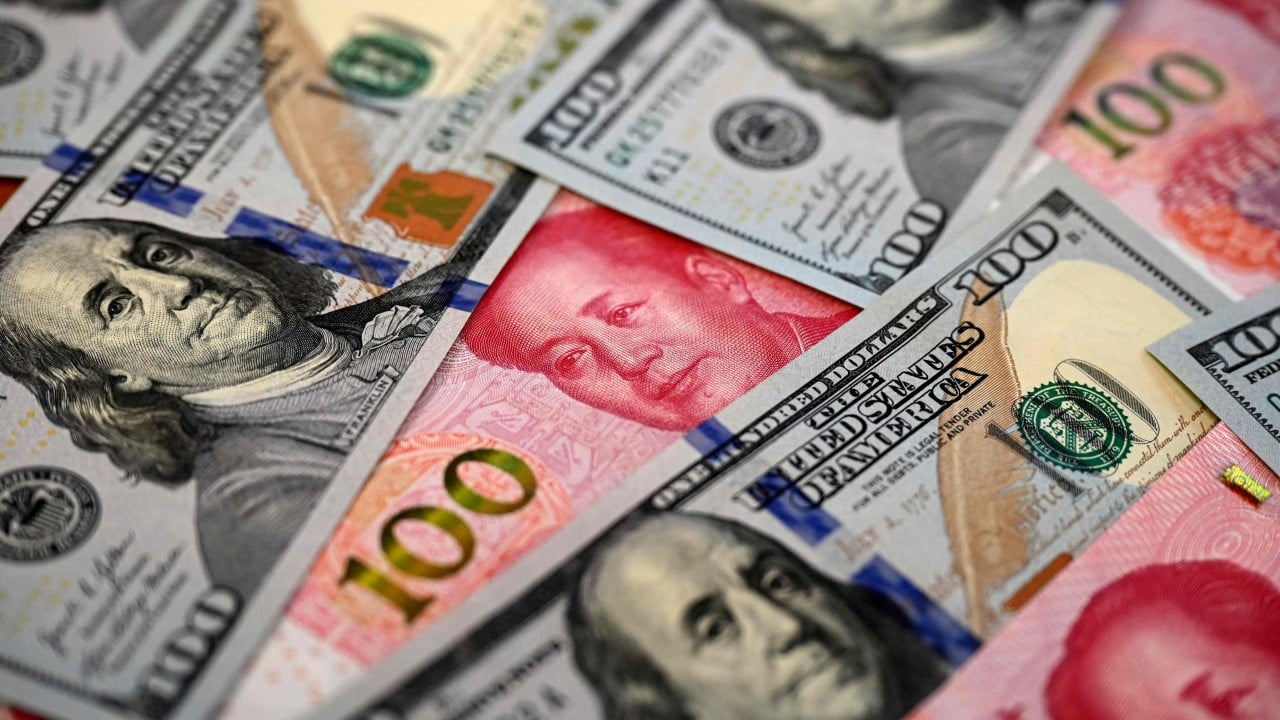
China has spent the last decade quietly engineering an exit ramp from the Western financial system. By building a domestic payments infrastructure that functions entirely independent of the U.S. dollar, Beijing has achieved more than just consumer convenience. It has created a blueprint for a world where Washington can no longer use the global financial plumbing as a weapon of diplomacy. This isn't just about apps or QR codes. It is about the systemic dismantling of the dollar’s monopoly over how value moves across borders.
The strategy relies on a trifecta of state-backed initiatives: the dominance of mobile payment giants, the aggressive rollout of the e-CNY central bank digital currency, and the expansion of CIPS, a clearing house designed to bypass the SWIFT messaging network. This infrastructure allows China to settle trade in its own currency, shielding its economy from the threat of frozen assets or secondary sanctions that have crippled other nations.
The Weaponization of the Ledger
For decades, the United States has enjoyed what French leaders once called the "exorbitant privilege" of the dollar. Because most international trade—from oil to microchips—is priced in dollars and cleared through American banks, the U.S. Treasury effectively sits at the center of a global surveillance and control hub. If a country falls out of favor with Washington, it can be disconnected from the Society for Worldwide Interbank Financial Telecommunication (SWIFT).
Being cut off from SWIFT is the financial equivalent of having your oxygen supply cut.
China watched the 2014 sanctions against Russia and the subsequent total freezing of Russian central bank reserves in 2022 with cold pragmatism. The lesson was clear. If you do not own the pipes, you do not own your money. To counter this, Beijing accelerated the Cross-Border Interbank Payment System (CIPS). While CIPS still uses SWIFT for some messaging, it is capable of running its own dedicated lines. It is a shadow rail system, built to ensure that even if the U.S. pulls the plug, Chinese trade continues to flow.
Beyond the QR Code
Western observers often mistake China’s payment revolution for a simple tech story about Alibaba and Tencent. That is a mistake of scale. While AliPay and WeChat Pay transformed daily life for 1.4 billion people, their true value to the state was the data and the habit of digital-first transactions. They killed cash, making the transition to a state-controlled digital currency significantly easier.
The e-CNY, China’s Central Bank Digital Currency (CBDC), is the final piece of the puzzle. Unlike the money in your bank account, which is a private liability of a commercial bank, e-CNY is a direct liability of the People's Bank of China. It is "programmable" money.
In a hypothetical scenario where a government wants to stimulate the economy, it could issue digital yuan that expires if not spent within thirty days. This level of control is impossible with physical cash or traditional credit systems. More importantly, e-CNY does not require a bank account to function. It allows for "peer-to-peer" transfers that settle instantly. When applied to international trade, this removes the need for intermediary "correspondent" banks in New York or London, stripping away the layers where the U.S. typically exerts its influence.
The Belt and Road Digital Overlay
Beijing isn't just building this for itself. It is exporting the stack. Through the Belt and Road Initiative, China is providing the hardware and software for digital governance to emerging markets across Southeast Asia, Africa, and the Middle East.
When a nation adopts Chinese 5G kits, Chinese smart city surveillance, and Chinese payment rails, they aren't just buying products. They are joining an ecosystem. This creates a "gravity well" effect. If your biggest trading partner is China, and China offers a faster, cheaper, and sanction-proof way to settle trades in yuan, the incentive to stay within the dollar zone weakens.
We are seeing the birth of a bifurcated internet and a bifurcated economy. On one side, the Western system built on transparency, private banking, and the rule of law (as interpreted by the G7). On the other, a high-efficiency, state-led system that prioritizes sovereignty and insulation from Western political pressure.
The Friction of Transition
It would be a mistake to assume this transition will be smooth or that the dollar is doomed next Tuesday. The yuan still accounts for a fraction of global reserves. Most of the world’s debt is still denominated in dollars. The greenback remains the "least bad" option for investors because of the deep liquidity and the perceived independence of the Federal Reserve.
However, liquidity is a lagging indicator of power.
China’s challenge is the "Triffin Dilemma." To make the yuan a global reserve currency, China would have to allow more money to flow out of its borders, potentially destabilizing its own capital controls. Beijing wants the world to use the yuan, but it also wants to keep a tight grip on its value. You cannot have both.
Instead of trying to replace the dollar as the singular global reserve, China appears content to create a "Yuan Zone." This is a defensive perimeter. By making the yuan the primary medium for regional trade and energy purchases, China ensures its own survival in a world of increasing geopolitical friction.
The Hidden Cost of Autonomy
The efficiency of the Chinese system comes with a steep price in privacy and decentralized power. In the Western model, a bank might freeze your account, but there is usually a legal process to challenge it. In a CBDC-driven system, the state has a "God View" of every transaction.
They see the coffee you bought this morning. They see the donation you made to a cause they might dislike.
This level of granular surveillance is the ultimate tool for social engineering. If a citizen’s "social credit" falls, their digital wallet could simply stop working at transit turnstiles or grocery stores. This isn't science fiction; it is the logical conclusion of a payment system that is an extension of state police power rather than a service provided by a neutral third party.
Realities of the New Financial Cold War
The U.S. response has been sluggish. While the Federal Reserve debates the merits of a digital dollar, China has already conducted trials involving billions of dollars in transactions. The U.S. relies on the legacy of the 1944 Bretton Woods agreement, but that legacy is fraying.
The threat to the U.S. is not that the yuan becomes the world's favorite currency. The threat is that the dollar becomes optional.
Once the dollar is optional, the U.S. loses its most potent non-kinetic weapon. Sanctions only work if the target has nowhere else to go. By building the door, the frame, and the hallway leading away from the dollar, China has ensured that the next time a global crisis hits, the old rules of financial warfare will no longer apply.
The infrastructure is already in place. The nodes are connected. The only thing left is for the rest of the world to decide how much they value the convenience of the new system against the risks of leaving the old one. If you want to understand the future of global power, stop looking at aircraft carriers and start looking at the code behind the digital wallet.
The age of financial monoculture is over.
Audit your supply chain’s exposure to dollar-clearing intermediaries and begin testing multi-currency settlement systems before the next round of geopolitical de-risking makes it a requirement rather than an option.