The Baloch Liberation Army (BLA) recently coordinated a massive offensive across Pakistan’s southwestern province, striking police stations, railway links, and highway security posts in a display of tactical sophistication that Islamabad can no longer dismiss as mere banditry. This was not a localized skirmish. It was a synchronized demonstration of force designed to prove that the Pakistani state lacks the "monopoly on violence" it claims to possess over its largest, most resource-rich territory. For the BLA, the objective is no longer just survival; it is the systematic decapitation of the infrastructure supporting the China-Pakistan Economic Corridor (CPEC).
The sheer scale of these attacks indicates a shift from hit-and-run tactics to territorial disruption. By targeting the main arteries connecting Balochistan to the rest of the country, the insurgents are forcing a choice upon the central government. Either Islamabad must escalate to a full-scale military occupation that risks international condemnation, or it must watch its multi-billion-dollar promises to Beijing crumble under the weight of an uncontainable rebellion. The "why" behind this escalation is rooted in a decades-long grievance regarding resource extraction, while the "how" reveals a modern militant organization that has mastered social media recruitment and precision logistics.
The Strategy of Economic Asphyxiation
The BLA has moved beyond the era of the tribal chieftain leading a band of irregulars. Today, it operates with a cold, corporate efficiency. Their current strategy focuses on turning Balochistan into a "no-go zone" for foreign investment, specifically aimed at the $60 billion CPEC. By targeting the railway bridge in the Bolan Pass and blocking several arterial highways simultaneously, the BLA has effectively cut off the port of Gwadar from the industrial heartland of Punjab.
This is not a random act of terror. It is a calculated move to demonstrate to Chinese investors that the Pakistani military cannot guarantee the safety of their projects. When a bridge is blown or a road is blocked for 48 hours, it is a message to the boardroom in Beijing. The message is simple: Your investment is a liability. The BLA understands that if it can make the cost of security outweigh the profit of extraction, the foreign players will eventually fold.
The Pakistani government’s response has historically been a blunt instrument. Mass arrests, disappearances, and increased military presence are the standard playbook. Yet, this has only served to radicalize a new generation of Baloch youth. These are not just disgruntled tribesmen; they are educated, urban, and increasingly tech-savvy individuals who view the state’s presence as a colonial occupation.
Why Conventional Counterinsurgency is Failing
The military’s reliance on "enforced disappearances" and the "pick-and-dump" policy has created a cycle of vengeance that feeds the BLA’s recruitment. For every militant killed, the state creates ten more sympathizers among the families of the "disappeared." This is a classic insurgency trap. The more the state squeezes, the more the local population identifies with the rebels.
Furthermore, the BLA has decentralized its command structure. Gone are the days when neutralizing a single leader could paralyze the movement. Today, autonomous cells operate with high levels of initiative. They use encrypted communication and crowdsourced intelligence from local sympathizers who track troop movements in real-time. The state is fighting an invisible enemy with a highly visible army, a recipe for a long, grinding stalemate that Pakistan’s fragile economy cannot afford.
The Geopolitical Price of a Failing Province
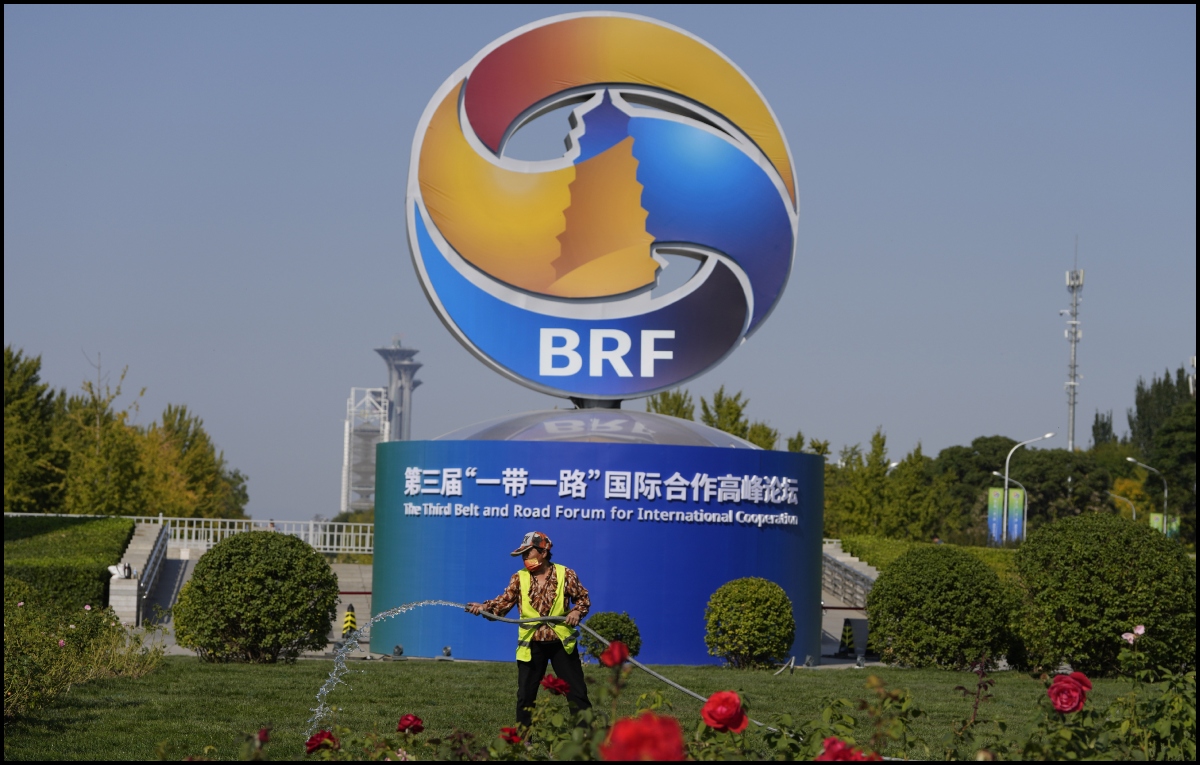
The implications of this unrest extend far beyond the borders of Balochistan. China’s "Belt and Road Initiative" relies on the Gwadar port as its crown jewel. If the BLA continues to demonstrate that it can shut down the province at will, the entire geopolitical rationale for the corridor vanishes. Beijing is already showing signs of fatigue. There are reports of Chinese officials demanding their own security details on the ground, a move that would be a humiliating blow to Pakistani sovereignty.
If the BLA succeeds in making Balochistan ungovernable, it doesn't just hurt Pakistan. It creates a vacuum that other regional players may look to fill. The proximity of the Iranian border and the ongoing instability in Afghanistan provide a backdrop of constant volatility. Weapons from the former Afghan National Army have flooded the black market, and it is no secret that the BLA has acquired advanced equipment that gives them a parity they never had in the early 2000s.
The Myth of Foreign Hand vs. Internal Failure
Islamabad frequently blames "foreign hands" for the unrest, pointing to India or other regional rivals. While it is true that intelligence agencies often meddle in their neighbors' backyards, this narrative ignores the glaring internal failures that have fueled the fire. Balochistan remains the poorest province in Pakistan despite sitting on massive reserves of gold, copper, and natural gas.
When the local population sees gas pipelines being built to heat homes in Lahore while they cook over wood fires, the "foreign hand" argument loses its sting. The BLA’s strength is a direct result of the state’s failure to provide a social contract. You cannot build a multi-billion-dollar port in a city that lacks clean drinking water and expect the locals to cheer for "progress."
The central government’s persistent refusal to allow Balochistan a fair share of its own natural resources is the primary driver of this conflict. This is not a radical observation; it is a basic economic reality. Until the revenue from the Saindak copper-gold project or the Sui gas fields is visibly reinvested into Baloch schools, hospitals, and infrastructure, the BLA will always have a fertile ground for recruitment.
Logistics of the Latest Offensive
The recent series of attacks was notable for its coordination. It wasn't just one bomb or one ambush. It was a province-wide blackout of state authority. This level of planning requires a sophisticated logistical network. It means the BLA has safe houses, weapon caches, and a transportation network that the Pakistani intelligence services have failed to map or dismantle.
The BLA’s Majeed Brigade, their elite suicide squad, has also become more active. They have shown a willingness to engage in high-risk, high-reward operations that demand significant training and psychological conditioning. This evolution from a guerrilla force to a semi-conventional entity with specialized units marks a dangerous turning point for the Pakistani security forces.
The Infrastructure War
The targeting of the railway infrastructure is particularly telling. Railways are the lifeblood of a modern state’s internal trade. By blowing up the bridge at Kolpur, the BLA didn't just stop a train; they severed a psychological link between Quetta and the capital. These types of repairs take months, and they are vulnerable to secondary attacks during the reconstruction phase.
This strategy of "infrastructure war" is designed to make the province a financial sinkhole. The cost of protecting every mile of track, every bridge, and every electrical pylon is astronomical. If the BLA can sustain this pressure for another year, the Pakistani military will be forced to divert troops from the eastern border with India or the western border with Afghanistan, further stretching an already thin defense budget.
A Broken Political Dialogue
Is there a political solution? Currently, the answer appears to be no. The Pakistani government has attempted to "reconcile" with minor rebel factions in the past, often through cash payments or promises of local political power. These efforts have largely failed because they don't address the core demand of the BLA: total autonomy or independence.
The political leadership in Islamabad is too weak, and the military leadership is too entrenched in its "security-first" mindset to offer the kind of radical devolution of power that might actually quell the unrest. Meanwhile, the mainstream Baloch political parties, which try to work within the Pakistani system, are being squeezed out. They are seen as "sell-outs" by the insurgents and as "crypto-separatists" by the state. This leaves a massive void where a middle ground should be.
The Role of the Diaspora and Digital Warfare
The BLA has also mastered the digital battlefield. They release high-definition videos of their operations, often within hours of the event. These videos serve two purposes: they act as a recruitment tool for a disillusioned youth and as a propaganda weapon to demoralize the rank-and-file soldiers of the Pakistani Army.
The Baloch diaspora in Europe and North America also plays a role, lobbying international human rights organizations and keeping the issue of "disappeared persons" on the global agenda. This multi-front war—kinetic, digital, and diplomatic—is something the Pakistani state was not prepared for twenty years ago. They are playing catch-up in a game where the rules have changed.
The Financial Brink
Pakistan’s economy is currently on life support, relying on IMF bailouts and loans from friendly nations. The cost of maintaining a massive security apparatus in Balochistan is a drain that the treasury can ill-afford. If the BLA continues its offensive, the "security premium" on all CPEC projects will rise, potentially leading to the suspension of key initiatives.
If China decides to pull back, the Pakistani economy could face a catastrophic collapse. The BLA knows this. Their strategy is to hit the state where it hurts most: its wallet. Every time a foreign worker is kidnapped or a mine is attacked, the insurance premiums go up, and the appetite for investment goes down.
A Provincial Deadlock
The situation in Balochistan has reached a deadlock. The state cannot win militarily without destroying the very province it wants to save, and the BLA cannot win a conventional war against a nuclear-armed state. However, the BLA doesn't need to "win" in the traditional sense. They only need to avoid losing and keep the province in a state of permanent chaos.
This state of permanent chaos is the BLA’s greatest weapon. It prevents the state from consolidating its gains and it makes the province an unattractive partner for international development. As long as the smoke continues to rise from the highways of Balochistan, the dream of a prosperous trade corridor will remain a fantasy on a map.
The Pakistani state must realize that a security-only approach is a proven failure. Without a radical shift toward genuine economic partnership with the Baloch people—not just the tribal elite—the cycle of violence will only accelerate. The BLA has already proven they can strike at the heart of the state’s ambitions; the question now is whether the state is capable of learning from its own history before the province becomes truly irrecoverable.
The BLA’s recent offensive is the clearest warning yet that the status quo is dead. The "security" being provided by the military is an illusion that evaporates the moment a few coordinated cells decide to shut down the highways. If Islamabad continues to ignore the underlying systemic issues, they are not just fighting an insurgency; they are managing the slow-motion loss of an entire province.