Chancellor Friedrich Merz has signaled a sharp departure from the reactive posturing of his predecessor by stating a hard reality most Western leaders only whisper behind closed doors. Bombing Iran is an exercise in futility. This isn't a statement born of pacifism or a lack of resolve. It is a cold assessment of hardened geography, distributed technology, and the law of diminishing returns. Berlin now acknowledges that the tactical window for a decisive "surgical strike" closed years ago, replaced by a complex web of underground facilities that no conventional bunker-buster can reliably reach.
The core of the problem lies in the shift from centralized nuclear hubs to a decentralized, subterranean network. When Israel struck Iraq’s Osirak reactor in 1981, they targeted a single point of failure. Iran watched that video. They learned. Today, the Iranian nuclear program is a hydra. You can destroy a cooling tower or a centrifuge hall, but you cannot delete the institutional knowledge or the blueprints stored in the minds of thousands of domestic scientists. Merz is betting that a kinetic approach won't just fail to stop the clock; it will shatter the clock and scatter the pieces where we can no longer see them.
The Physical Impossibility of Total Neutralization
To understand why Merz is right, one must look at the dirt. Specifically, the hundreds of meters of rock sitting atop the Fordow Fuel Enrichment Plant. This facility is bored into the side of a mountain, shielded by enough granite to make most conventional munitions look like firecrackers. Even the GBU-57 Massive Ordnance Penetrator (MOP), the heaviest bunker-buster in the American arsenal, faces a math problem it cannot solve.
The logistics of a sustained bombing campaign are staggering. This wouldn't be a "one and done" mission. To actually degrade Iran’s capabilities, an air campaign would need to last weeks, targeting not just nuclear sites, but air defenses, command and control centers, and the manufacturing base that builds the drones and missiles. The moment the first bomb drops, the Iranian leadership moves their most critical assets—their scientists and their enriched material—even deeper into the shadows. We are no longer dealing with a nascent program that can be decapitated. We are dealing with a mature infrastructure designed to survive a localized apocalypse.
The Knowledge Trap
The most dangerous part of Iran's program isn't the uranium. It is the human capital. Unlike the Libyan program under Gaddafi, which was largely imported and easily dismantled, Iran has built a domestic pipeline of nuclear physics and engineering expertise. You cannot bomb a formula. You cannot assassinate every person who knows how to calibrate a P-2 centrifuge.
A strike would provide the ultimate justification for Iran to withdraw from the Non-Proliferation Treaty (NPT) and move toward a "breakout" with full national mobilization. Currently, the presence of IAEA inspectors—however restricted—provides a baseline of intelligence. Once the missiles fly, those inspectors leave. We go from "limited visibility" to "total darkness." The intelligence gap that follows would be the greatest security failure of the century. Merz understands that an Iran working in the light of partial inspections is infinitely safer than an Iran working in a cratered silence.
The Collapse of the Global Oil Buffer
Beyond the tactical failure of the strikes themselves, the economic blowback would be a self-inflicted wound the West cannot afford. The Strait of Hormuz is a geographic choke point that Iran can close with low-tech tools. They don't need a blue-water navy to do it. Thousands of sea mines, fast-attack boats, and shore-based anti-ship missiles can turn the waterway into a graveyard for tankers.
Approximately 20% of the world’s liquid petroleum passes through that narrow gap. If Merz were to support a strike, he would be signing a death warrant for the German industrial recovery. Energy prices would not just rise; they would verticalize. The global economy is still brittle from the shocks of the mid-2020s. A $150-per-barrel reality would trigger a depression that would make the 2008 financial crisis look like a minor market correction.
The Asymmetric Response Network
Iran's "Forward Defense" strategy means the war wouldn't stay in the Middle East. For decades, Tehran has cultivated proxies that act as a regional insurance policy. A strike on Natanz would likely be met with a barrage of precision missiles from Lebanon, drone swarms from Yemen, and cyberattacks on Western power grids and banking systems.
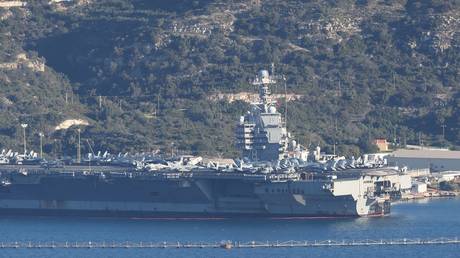
This isn't speculative fiction. We have seen the blueprint in the Red Sea. Small, inexpensive drones can tie up billion-dollar carrier groups. Iran has perfected the art of the "cheap kill." They can force the West to spend millions of dollars on interceptor missiles to shoot down drones that cost less than a used sedan. This attrition is a battle the West is currently losing on a balance-sheet level.
The Myth of Regime Collapse
Proponents of military action often argue that a strike would weaken the clerical establishment and spark a popular uprising. This is a profound misunderstanding of Persian nationalism. History shows that when a foreign power bombs a nation, the population tends to rally around the flag, regardless of how much they dislike the current administration.
The internal dissent we have seen in Iran over the last few years is real, but it is focused on domestic reform and economic mismanagement. Foreign intervention would instantly change the narrative from "people versus government" to "nation versus invader." It would hand the hardliners the perfect excuse to crush all internal opposition under the guise of national security. Merz is looking at the long game. He knows that the only lasting change in Iran must come from within, and a bombing campaign is the surest way to delay that change by another generation.
Diplomatic Deadlocks and the China Factor
The geopolitical landscape has shifted. This is no longer a unipolar world where Washington or Berlin can dictate terms without consequence. Iran has deepened its strategic partnership with Beijing and Moscow. China, in particular, views Iran as a critical node in its energy security and the Belt and Road Initiative.
A strike would push Iran fully into the arms of an Eastern bloc that is increasingly capable of providing the economic and military shield necessary to weather Western sanctions. Merz’s pragmatism recognizes that Germany cannot risk a total break with its trade interests in Asia over a military venture that has no clear "day after" plan. There is no Marshall Plan for a post-strike Iran. There is only chaos, and chaos is a vacuum that China is more than happy to fill.
The Failure of "Maximum Pressure"
We have a decade of data on what happens when you try to squeeze Tehran into submission. It doesn't work. The "Maximum Pressure" campaigns of the past only resulted in Iran increasing its enrichment levels and shortening its breakout time. They moved from 3.67% enrichment to 60% as a direct response to perceived aggression.
Every time the West has turned up the heat, the Iranians have turned up the centrifuges. It is a predictable cycle of escalation that leads to a dead end. Merz is signaling that Germany will no longer participate in a strategy that produces the exact opposite of its intended result. If the goal is a non-nuclear Iran, the current path is a proven failure.
The Technical Debt of Warfare
Military hardware has a shelf life, and the cost of replacement is skyrocketing. The West’s stockpiles are already strained by ongoing regional conflicts. Opening a new, high-intensity front against a sophisticated adversary like Iran would deplete strategic reserves in months.
We must also consider the cyber dimension. Iran possesses some of the most capable offensive cyber units in the world. A kinetic strike would almost certainly be met with "wiper" malware attacks on European and American critical infrastructure. These aren't just inconveniences; they are attacks on water treatment plants, hospitals, and air traffic control. The battlefield of the 21st century has no borders, and the "front line" is your neighborhood transformer.
Why Engagement is the Only Hard Choice
The easy choice is to talk tough and threaten "all options on the table." It plays well in domestic polls and satisfies the urge for a decisive solution. But as Merz has correctly identified, there are no decisive solutions in this theater—only managed outcomes.
The path forward requires a level of diplomatic grit that is far more demanding than a bombing run. It involves building a framework that recognizes Iran's regional influence while strictly limiting its nuclear ambitions through verifiable, multi-layered transparency. This isn't about trust; it’s about a cold-eyed exchange of interests.
The West must offer a clear path to economic reintegration in exchange for permanent, intrusive monitoring. This won't happen overnight, and it won't be a "perfect" deal. But a flawed, monitored peace is objectively superior to a catastrophic, uncontained war that fails to achieve its primary objective.
The Finality of the Dead End
We are at a point where military options are no longer just "risky"—they are obsolete. The technological and geographic realities on the ground have outpaced the doctrines of the early 2000s. Friedrich Merz is simply the first major Western leader to say the quiet part out loud: the military tool is broken for this specific job.
To continue pretending that a few sorties can solve the Iranian nuclear question is more than a delusion; it is a dereliction of duty. The only way to win this game is to refuse to play by the outdated rules of the past and start dealing with the world as it actually exists, not as we wish it to be.
Investigate the feasibility of the current monitoring protocols yourself. Ask why, despite years of sanctions, the enrichment continues. The answers won't be found in a cockpit, but in the grueling, unglamorous work of high-stakes diplomacy that Merz is now signaling a willingness to lead.