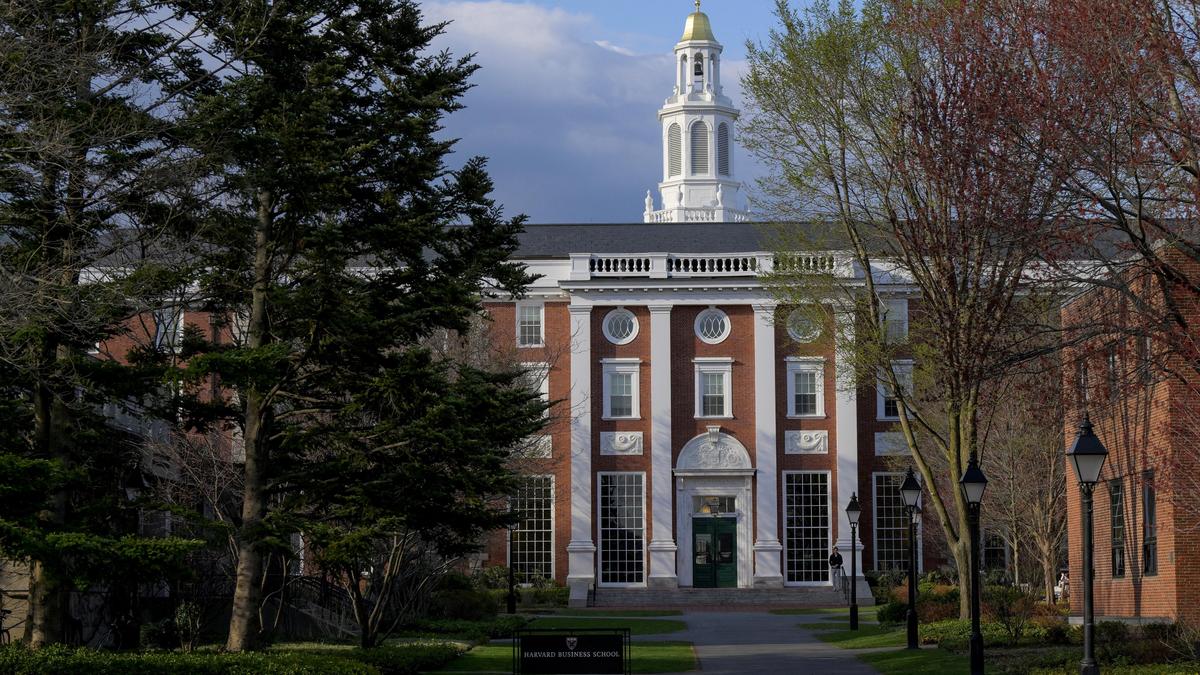
The red bricks of Harvard Yard have a way of absorbing sound. They have stood for centuries, muffled by ivy and the weight of inherited prestige, creating a vacuum where the outside world is supposed to fade into intellectual abstraction. But lately, the silence in those corridors has become heavy. It is not the silence of deep thought. It is the silence of breath held in the back of a throat, the quiet of a student looking over their shoulder before entering a lecture hall, and the chilling stillness of an administration that forgot its primary duty is to protect the people within its walls.
Now, that silence is being shattered by the roar of a federal lawsuit. For a closer look into this area, we recommend: this related article.
The Trump administration has officially moved against Harvard University, alleging a systemic failure to protect Jewish and Israeli students from a pervasive environment of harassment and discrimination. This isn't just a legal filing or a dry exchange of summons. It is a demand for billions of dollars in federal funding to be clawed back. It is an indictment of an American institution that, for many, represented the pinnacle of enlightenment, now accused of presiding over a dark age of exclusion.
The Face in the Hallway
Consider a hypothetical student named Eliana. She didn't come to Cambridge to be a political lightning rod. She came for the 2:00 AM debates about bioethics and the crisp morning walks past Widener Library. She is a junior, a biology major, and a granddaughter of survivors. For two years, the campus was her sanctuary. For additional background on this topic, comprehensive analysis is available on Al Jazeera.
Then, the air changed.
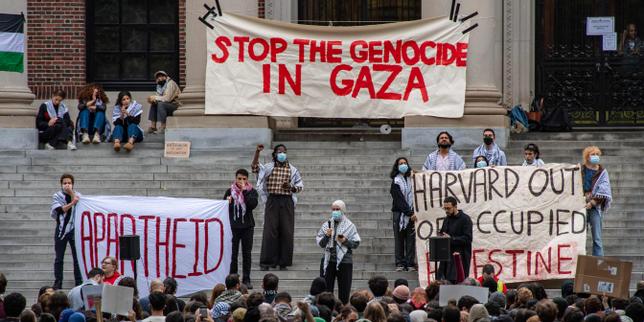
Suddenly, the walk to her lab involves passing through a gauntlet of protesters where the rhetoric isn't just about policy, but about her right to exist. She sees posters of kidnapped children torn down and replaced with slogans that feel like a physical blow. When she raises her hand in a seminar to offer a perspective rooted in her identity, the room goes cold. The professor looks at the ceiling. Her peers look at their laptops.
Isolation.
This is the "human element" the legal documents attempt to quantify. The lawsuit argues that what Eliana feels isn't just a social friction; it is a violation of Title VI of the Civil Rights Act of 1964. The law is clear: any institution receiving federal money must ensure an environment free from discrimination based on race, color, or national origin. If the university fails to act—if it watches the harassment and simply offers a "task force" as a band-aid—it is effectively subsidizing hate with taxpayer dollars.
The Ledger of Neglect
The numbers involved are staggering. We are talking about billions. To the average person, a billion dollars is a mathematical abstraction, but to a university, it is the lifeblood of research, faculty salaries, and global influence. By targeting this funding, the administration is aiming for the only place that seems to trigger a response in modern academia: the endowment’s nervous system.
For years, critics have argued that elite universities have become ivory towers that are increasingly disconnected from the foundational values of the country that supports them. The lawsuit alleges that Harvard displayed "gross negligence" and "deliberate indifference." These are heavy legal terms, but in plain English, they mean the school saw the fire and decided it wasn't worth the effort to pick up the extinguisher.
The irony is thick. Harvard prides itself on being a leader in "inclusion" and "belonging." Yet, the complaint suggests that this belonging is conditional. If you fit into the currently favored narrative of identity, the umbrella is wide. If you are a Jewish student feeling the sting of ancient prejudices dressed in modern political garb, the umbrella is suddenly retracted.
Why the Stakes Are Invisible
Most people see this as a partisan skirmish—a conservative administration taking a swing at a liberal bastion. That is the surface-level noise. Look deeper. The real stakes are about the contract between an individual and an institution.
When a parent sends a child to a university, there is an unspoken agreement. The parent provides the tuition (or the taxpayers provide the grants), and the university provides a safe crucible for growth. You are supposed to be challenged intellectually, yes. You are supposed to encounter ideas that make you uncomfortable. But you are never supposed to be hunted. You are never supposed to feel that your physical safety or your right to learn is secondary to the school’s desire to avoid a difficult conversation with a vocal mob.
The lawsuit claims that Harvard allowed "mobs" to harass students, blocked pathways to classes, and created a "separate and unequal" experience for Jewish learners. If true, the "Invisible Stake" here is the death of the American Meritocracy. If an institution as storied as Harvard cannot maintain a neutral, safe ground for all its students, then the very concept of the university as a marketplace of ideas is dead. It becomes merely a high-priced sorting machine for the loudest voices.
The Weight of the Past
History has a cruel way of rhyming. In the early 20th century, Harvard and other Ivy League schools famously implemented "quotas" to limit the number of Jewish students. They didn't do it with signs that said "No Jews Allowed." They did it through "holistic" admissions and "character" assessments—vague metrics designed to exclude a specific group without saying the name out loud.
Today’s crisis feels like a haunting echo. The methods have changed, but the result is a familiar sense of "othering." When the administration is asked to condemn calls for violence and they respond with talk about "context," they aren't being nuanced. They are being cowards. And that cowardice has a price tag.
The Trump administration's move to seek billions in damages is an attempt to make cowardice expensive. It’s a gamble that the threat of bankruptcy—or at least severe financial pruning—will force a moral clarity that thousands of hours of student testimony could not.
A Fracture in the Foundation
It is confusing to watch a place of such immense intelligence act with such profound stupidity. It is scary to realize that the adults in the room, the deans with the PhDs and the provosts with the decades of experience, might actually be afraid of nineteen-year-olds with megaphones.
But that is where we are.
The lawsuit details specific instances where Israeli students were followed, recorded, and intimidated. It speaks of a "pervasive" atmosphere where the school’s own rules were ignored to accommodate "expressive conduct" that crossed the line into targeted harassment.
Imagine being a student who has worked their entire life to get into that one specific zip code. You have sacrificed, studied, and dreamt of the doors that a Harvard degree would open. Then you arrive, and you find that the door is only half-open. You find that your identity is a liability. You realize that the institution you thought would be your champion is actually your silent bystander.
The lawsuit is the sound of that bystander being dragged into the light.
The Cost of Rebuilding
Even if the government wins, even if the billions are shifted and the policies are rewritten, the damage to the "brand" of the elite university is perhaps irreparable. We are witnessing a Great Decoupling. People are beginning to ask if these institutions are truly worth the prestige they claim if they cannot satisfy the most basic requirement of a civilized society: the equal protection of all its members.
This isn't just about Harvard. It is a warning shot across the bow of every university in the country. It says that the era of the "hands-off" administration is over. It says that if you take the public’s money, you are accountable to the public’s laws.
The red bricks of the Yard are still there. The ivy still grows. But the atmosphere has turned cold. As the legal battle moves forward, the world is watching to see if Harvard will fight to maintain the status quo or if it will finally do the hard work of looking in the mirror.
A student walks alone across the grass, her bag heavy with books, her eyes focused on the ground. She passes a group of people shouting slogans that suggest she doesn't belong here. She keeps walking because she has a midterm. She keeps walking because she still believes in the power of an education. But for the first time in a long time, she isn't alone. Behind her, for better or worse, is the full weight of the federal government, demanding to know why she was ever made to feel alone in the first place.
The silence is finally over.