State-sponsored psychological operations have abandoned the era of grainy satellite broadcasts for a more volatile medium. Iran's recent deployment of AI-generated imagery and video—specifically targeting high-profile figures like Donald Trump and Israeli leadership—is not merely a stunt by bored propagandists. It represents a calculated pivot toward low-cost, high-frequency digital harassment designed to erode the perceived dignity of its adversaries. While Western media often focuses on the "cringe" factor of seeing a "Teletubby Trump" or a hagiographic rendering of Ali Khamenei, the strategic intent lies in the normalization of deepfake mockery as a diplomatic tool.
This is a war of attrition played out in pixels. By flooding social channels with surrealist depictions of American and Israeli leaders in humiliating or absurd contexts, Tehran is testing the boundaries of platform moderation and international response. These videos are not intended to convince a savvy global audience of a specific truth. Instead, they serve to signal defiance to a domestic base and to poke holes in the armor of Western psychological dominance. If you liked this piece, you might want to check out: this related article.
The Mechanics of State Sponsored Mockery
Propaganda used to be about prestige. During the 20th century, states invested millions in high-production films and massive monuments to project power. AI has flipped that script. Now, a mid-level operative in an office in Tehran can generate a dozen disparaging clips in a single afternoon. The "Teletubby" imagery is a deliberate choice of infantilization. It attempts to strip away the "strongman" persona of Donald Trump, replacing it with something soft, ridiculous, and fundamentally non-threatening.
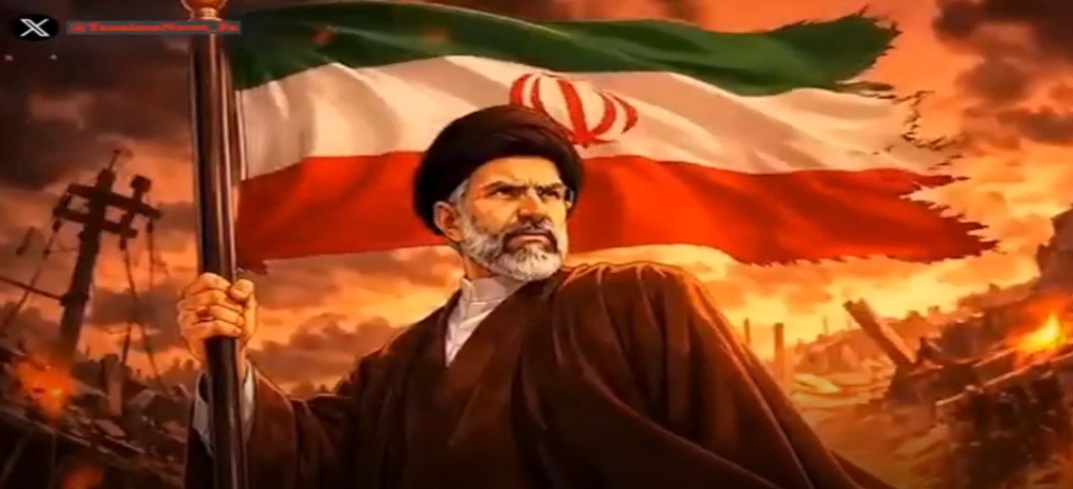
On the flip side, the AI depictions of Supreme Leader Ali Khamenei rising from the rubble of Gaza or Damascus are designed to evoke the miraculous. These images rely on the "uncanny valley" to create a sense of religious or historical destiny. The contrast is stark. The enemy is portrayed as a joke, while the self is portrayed as an eternal, indestructible force. This binary creates a closed-loop information environment where the regime’s supporters feel a sense of technological and moral superiority. For another perspective on this story, refer to the recent update from The Guardian.
The Low Cost of Digital Dissent
Why use AI? Because it is cheap. Sanctions have squeezed Iran’s traditional media budgets, but the barrier to entry for generative AI is virtually non-existent. Open-source models and stolen software allow the Islamic Revolutionary Guard Corps (IRGC) to bypass the need for expensive CGI studios. They are playing a volume game. If one video gets banned, ten more are ready to take its place. This creates a "whack-a-mole" scenario for security agencies and social media giants.
The technical quality often remains poor. Distorted hands, shimmering backgrounds, and erratic movements are common. However, for the purpose of a viral "shitpost," quality is secondary to the speed of the message. The goal is to occupy the headspace of the adversary. Every time a Western news outlet covers a bizarre AI video, the creators have won. They have successfully hijacked the news cycle with a few prompts and a laptop.
The Psychological Toll on Diplomacy
Traditional diplomacy relies on a certain level of decorum. When a state begins using AI to produce memes that look like they originated on an anonymous message board, it signals a total breakdown of formal communication. This "meme-ification" of the IRGC's foreign policy suggests they are no longer interested in the optics of a responsible state actor. They are embracing the role of the regional disruptor.
Israel faces a similar challenge. The AI videos showing Israeli cities in flames or IDF soldiers in retreat are not meant to be tactically accurate. They are meant to instill a sense of inevitable decline. For a country that prides itself on its "Startup Nation" image and its own high-tech military, being the target of primitive but effective AI mockery is a specific kind of psychological sting. It suggests that their technological edge is being democratized and turned against them.
Countering the Surrealist Narrative
The West has struggled to respond. If a government issues a formal condemnation of a "Teletubby" video, they look ridiculous. If they ignore it, they allow the imagery to circulate and define the narrative in the Global South. This is the trap of the modern information era. The IRGC understands that the American political system is highly sensitive to mockery and image. By targeting Trump, they are directly intervening in the domestic cultural fissures of the United States.
Intelligence agencies are now forced to monitor "cringe" content as a serious indicator of state intent. We are seeing the birth of a new doctrine where the absurdity of the content is its greatest strength. A serious lie is easy to debunk. A surrealist joke is much harder to fight because it doesn't make a factual claim; it makes an emotional one.
The Infrastructure of the Iranian Botnet
Behind these videos lies a sophisticated network of bot accounts and state-aligned "influencers" who ensure the content finds its way into the feeds of Western users. This is not a grassroots movement of Iranian citizens making memes. It is a top-down operation. The IRGC’s electronic warfare units have been trained to identify the trending hashtags and cultural touchpoints of their enemies.
They use VPNs to bypass domestic internet restrictions, ironically using the very tools their citizens use to escape the regime's digital iron curtain. They target specific demographics in the US and Israel, hoping to fan the flames of internal division. A video of Trump as a Teletubby might be viewed as funny by his detractors, but the IRGC's goal is not to help the American Left. Their goal is to make the American political process look like a circus to the rest of the world.
The Role of Third Party Platforms
Telegram and X (formerly Twitter) have become the primary battlegrounds for this content. Telegram’s lack of moderation makes it a perfect repository for the original high-resolution files, while X provides the reach. The current state of platform moderation is ill-equipped for this. Most AI-detection tools are designed to catch sophisticated deepfakes meant to trick people into believing something real happened. They are not built to flag obvious, satirical, or surrealist propaganda that uses AI as a stylistic choice.
This loophole is where the IRGC operates. By making the content obviously fake, they avoid the "misinformation" labels that might be applied to a more realistic forgery. They can claim it is satire or art, even as it serves a clear geopolitical function.
The Shift from Persuasion to Harassment
Historically, propaganda was an attempt to persuade the neutral. The "Hearts and Minds" campaigns of the Cold War were about proving that one system was better than the other. Iran has largely given up on this. Their AI strategy is about harassment and demoralization. It is a digital version of the "Death to America" chants—a ritualized performance of hostility that doesn't expect to win converts but aims to exhaust the opponent.
This exhaustion is the real danger. When the digital landscape is flooded with nonsense, the public becomes cynical about all information. We enter a state of "post-truth" where even real events are dismissed as AI-generated. By polluting the information ecosystem with "Teletubby Trump," the Iranian state contributes to a general sense of unreality that benefits authoritarian regimes everywhere.
Tactical Absurdity as a Shield
There is also a defensive element to this. When the Iranian regime is criticized for human rights or its nuclear program, it can point to the absurdity of the digital war as a way to deflect. They paint themselves as the victims of Western "media hegemony" while simultaneously using that same media to troll their enemies. It is a cynical, effective, and deeply modern form of asymmetric warfare.
The "Khamenei rising" videos serve a different purpose. They are the digital version of a state-commissioned oil painting. They are designed for an audience that wants to believe in the supernatural resilience of the Islamic Republic. In these videos, the AI is used to smooth over the cracks of reality. It removes the signs of aging from the Supreme Leader and adds a cinematic glow to scenes of destruction. It is the use of high technology to promote a medieval worldview.
The Escalation Ladder of Generative Media
We are only at the beginning of this trend. As AI models become more capable of generating consistent, long-form video with synchronized audio, the IRGC and its proxies will likely move beyond short clips. We should expect to see full-length "documentaries" or "interviews" where Western leaders appear to confess to crimes or admit defeat. These won't be intended to fool the CIA; they will be intended to flood the social media feeds of millions of people in the Middle East and beyond.
The defense against this cannot be purely technological. No AI-detection algorithm can stop a video from being "funny" or "insulting." The defense must be a more sophisticated understanding of the "why" behind the pixels. We need to stop treating these videos as isolated incidents of "cringe" and start seeing them as the opening volleys of a new kind of conflict.
The Democratization of Disruption
The real irony is that the tools developed in Silicon Valley to help people make cat videos and digital art are now being used by the IRGC to undermine the very society that created them. This is the paradox of the open internet. The same systems that allow for the free exchange of ideas also allow for the industrial-scale production of ridicule. Iran is simply the first state actor to fully lean into the "shitposting" aesthetic as a matter of national policy.
This isn't a game of "fake news" anymore. It's a game of "fake reality." The goal isn't to make you believe the lie; it's to make you stop caring about the truth. When everything is a meme, nothing is serious. And when nothing is serious, the guy with the most bots and the fastest GPU wins the day.
Monitor the metadata of the next viral "absurd" video from the region. Don't look at the face of the politician being mocked; look at the narrative the mockery is trying to protect. If you can see the hand of the state behind the "joke," the joke loses its power. Awareness of the source is the only filter that actually works in an age where the eyes can no longer be trusted.