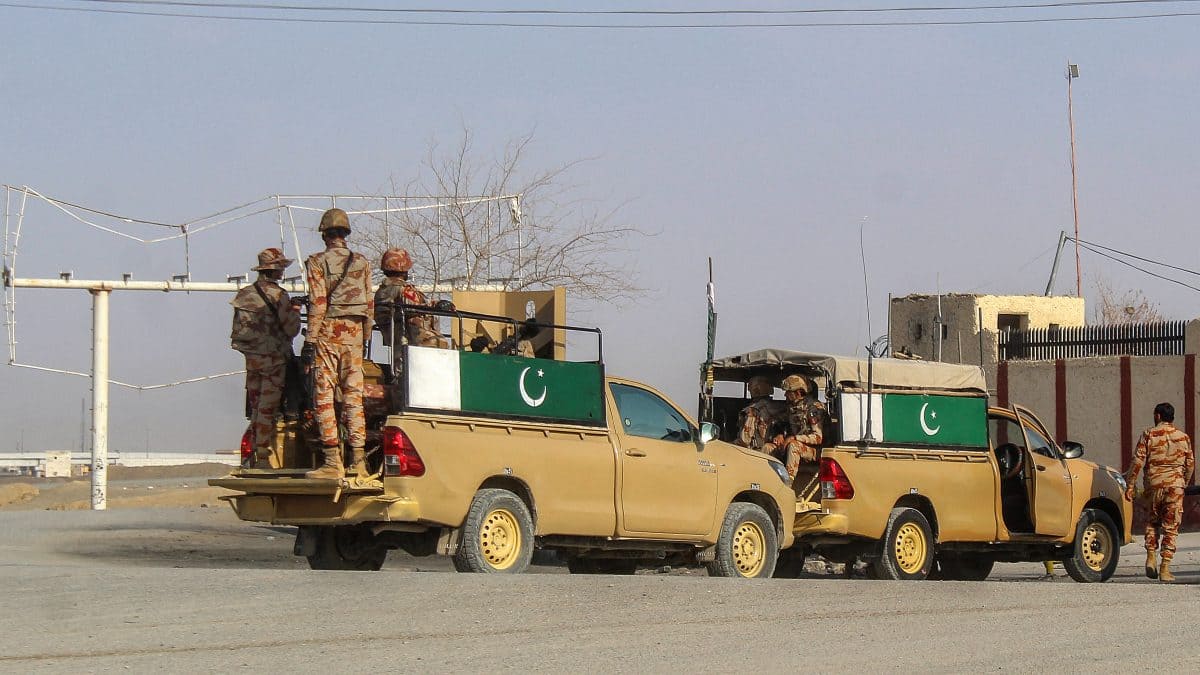
The Durand Line is screaming again, and this time, the world isn't just watching a few border guards trade potshots. We're seeing Pakistani jets over Kabul and Kandahar, Taliban drone strikes hitting garrison towns like Kohat, and a humanitarian crisis that's displaced over 100,000 people in just a few weeks. It’s an "open war" that nobody expected to get this ugly this fast.
Right in the middle of it stands Beijing, playing the role of the stressed-out middleman. China’s special envoy, Yue Xiaoyong, has been burning through jet fuel shuttling between Islamabad and Kabul. Over the last few days, Foreign Minister Wang Yi has been on the phone constantly, trying to get both sides to put the guns down.
If you're wondering why China is suddenly acting like the region's 911 operator, it isn't out of the goodness of its heart. It’s about survival—economic and physical.
The Trillion Dollar Panic
China has $65 billion sunk into the China-Pakistan Economic Corridor (CPEC). They’ve also signed massive mineral and oil deals with the Taliban. For Beijing, Afghanistan and Pakistan were supposed to be the twin pillars of their westward expansion. Instead, those pillars are currently trying to knock each other down.
Every time a Pakistani drone hits a target in Paktika or the Taliban retaliates against a border post, a Chinese investor somewhere loses sleep. Beijing’s dream of a "CPEC 2.0" that pulls Afghanistan into a massive trade network is evaporating. You can’t build highways and pipelines when the people meant to use them are busy firing artillery at each other.
Why the Fighting Won't Just Stop
This isn't a simple misunderstanding. It’s a deep, jagged rift over two things: the TTP (Tehrik-e-Taliban Pakistan) and the Durand Line.
- The TTP Problem: Islamabad is furious. They claim the Afghan Taliban are giving the TTP a safe place to hide, plan, and launch attacks into Pakistan. In 2025 alone, terror attacks in Pakistan jumped by 34%. Pakistan's message is clear: "If you won't stop them, we will."
- The Border Dispute: The Taliban don’t recognize the Durand Line—the 2,600km border drawn by the British in 1893. To them, it’s a fake line that splits the Pashtun people. On March 7, 2026, the Taliban Defence Minister made it crystal clear: this border is the "primary friction point."
The Taliban are in a tough spot. If they hand over TTP fighters to Pakistan, they look like puppets and risk a massive internal revolt. If they don’t, Pakistan keeps bombing them.
China’s Invisible Leverage
You’d think with all that money, China could just snap its fingers and end this. It’s not that easy. China’s leverage is almost entirely economic, but the drivers of this war are ideological and tribal.
Wang Yi has been pushing for "face-to-face talks" and a "return to the negotiating table," but he’s fighting against decades of blood feuds. While other mediators like Qatar or Turkey are distracted by the chaos in the Middle East, China has become the only major player left in the room.
Beijing is also worried about its own people. There are now roughly 4,000 Chinese nationals in Afghanistan. Attacks on Chinese workers in the region have been rising, and the East Turkestan Islamic Movement (ETIM) is still a massive red flag for Chinese security. They need a stable border to keep their own backyard safe.
What Happens if Mediation Fails
We aren't looking at a full-scale invasion—Pakistan isn't going to try and occupy Afghanistan. But we are looking at a "new normal" of constant, high-intensity skirmishes.
- Economic Collapse: The Torkham and Chaman crossings are the lifeblood of trade. When they close, food prices skyrocket and people starve.
- Refugee Pressure: Pakistan sent back nearly 3 million Afghans in 2025. If this war scales up, that flow will reverse, and the region can't handle another massive displacement.
- The India Factor: Don't think for a second that New Delhi isn't watching this. A weakened Pakistan, distracted on its western front, changes the entire security balance of South Asia.
The Reality Check
Honestly, China is desperate because they’ve realized that "connectivity" doesn't stop bullets. They assumed that if they built enough roads, everyone would be too busy making money to fight. They were wrong.
If you’re tracking this, watch the trilateral dialogue meetings over the next month. If China can’t force a ceasefire soon, the Durand Line might become the most dangerous place on the planet by summer.
Your next move should be monitoring the status of the Torkham border crossing. It’s the ultimate barometer for this conflict. If it stays closed for more than a week, expect another round of airstrikes.