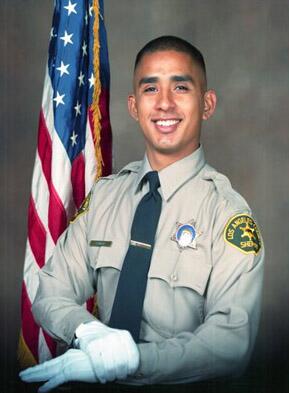
The death of a law enforcement officer is usually framed as a tragic sacrifice in the line of duty. However, when Deputy Carlos Lopez and two of his colleagues were killed by a grenade, the narrative shifted from a freak accident to a damning indictment of systemic institutional failure within the Los Angeles County Sheriff’s Department (LASD). This was not a tactical error in the heat of a gunfight. It was the result of a culture that prioritized the accumulation of military-grade hardware over the basic safety protocols required to handle it. The widow of Deputy Lopez is now pulling back the curtain on a department that she claims sent her husband to his death through sheer administrative incompetence and a blatant disregard for explosives safety.
The core of the issue lies in how the LASD managed its specialized units and the dangerous equipment assigned to them. Investigations into the incident reveal a pattern of sloppy inventory management and a lack of rigorous training that turned a standard training exercise into a kill zone. While the department initially attempted to characterize the explosion as an unavoidable mishap, the mounting evidence suggests a long chain of ignored red flags and bypassed safety checks.
The Myth of the Unavoidable Accident
Law enforcement agencies often wrap themselves in the flag of "inherent risk" to deflect from operational negligence. In the case of the grenade explosion that claimed three lives, that defense is crumbling. Grenades do not just go off. They require a specific set of failures to detonate in a non-combat environment. To understand how this happened, one must look at the procurement and storage habits of the LASD’s specialized details.
For years, the department had been vacuuming up surplus military equipment. This influx of high-powered weaponry often outpaced the department's ability to train its personnel on how to maintain it. When you hand a soldier a grenade, they are backed by months of intensive, specialized demolition training. When you hand a deputy a grenade in a domestic policing context, the oversight is often a fraction of that. The Lopez family’s legal challenge highlights a specific, haunting reality: Carlos Lopez was likely working with equipment that should have been decommissioned or, at the very least, stored in a manner that prevented accidental ignition.
A Legacy of Tactical Hubris
The LASD has long struggled with an internal culture that borders on the paramilitary. This "warrior" mindset often leads to a relaxation of the very rules designed to keep officers alive. In many large departments, there is a sense that the rules are for the rank-and-file, while elite units can operate with a degree of "cowboy" autonomy. This autonomy is deadly when it involves live explosives.
Insiders suggest that the unit involved had a history of "off-the-books" training methods. These weren't necessarily malicious, but they were unauthorized. By bypassing the standard safety officers and the rigorous paperwork required for handling ordnance, the unit created a vacuum where a single mistake could be catastrophic. The department's leadership cannot claim ignorance. If the brass didn't know these protocols were being ignored, they were guilty of a failure of supervision. If they did know and let it slide, they are complicit in the deaths of their own men.
The Paper Trail of Broken Safety Shields
Documents surfacing from the aftermath of the blast show a disturbing lack of recent inspections for the equipment involved. In any other high-hazard industry—mining, construction, or commercial demolition—this level of oversight would result in immediate shut-downs and massive federal fines. Yet, in the world of law enforcement, the "blue wall" often extends to the records room.
- Missing Logs: There is no clear record of when the specific ordnance involved was last inspected for stability.
- Improper Storage: Reports indicate that the grenades were being transported in a vehicle not rated for explosive transport.
- Inadequate PPE: The deputies were not wearing the appropriate blast-shielding gear for the exercise they were conducting.
This wasn't just one mistake. It was a failure at every level of the hierarchy. From the sergeant who authorized the transport to the captain who signed off on the training plan, the system failed Carlos Lopez long before the pin was pulled.
The Human Toll of Bureaucratic Silence
For the families left behind, the grief is compounded by the department's defensive posture. Instead of transparency, the widow of Deputy Lopez has been met with a wall of legal maneuvers designed to shield the county from liability. This is a common tactic in municipal litigation: delay, deny, and wait for the public interest to fade. But the public interest should not fade when the "accidental" death of three deputies points to a systemic rot.
The department’s refusal to take full responsibility speaks to a broader crisis of accountability. When a private company kills three employees through safety violations, the CEO often faces a congressional hearing or a criminal probe. When a sheriff's department does it, they hold a somber press conference and talk about the "dangers of the job." This framing is a lie. This wasn't the danger of the job; it was the danger of a poorly run organization.
Rethinking the Militarization of Local Police
The death of Deputy Lopez should serve as the final warning against the unchecked militarization of local police departments. There is a fundamental difference between a police officer and a soldier. When police departments acquire military tools without military-grade discipline and oversight, tragedies are inevitable.
The LASD’s obsession with high-end tactical gear has created a situation where the tools themselves pose a greater threat to the deputies than the criminals they are meant to pursue. We are seeing a "kit-first" mentality where the acquisition of cool gadgets takes precedence over the boring, expensive work of safety training and administrative rigor. If a department cannot safely store and transport a grenade, they have no business owning one.
The Cost of Professionalism vs. The Price of Gear
Budgets are finite. Every dollar spent on a surplus armored vehicle or a crate of flashbangs is a dollar not spent on the de-escalation training or mental health support that actually keeps deputies safe. The Lopez case shows that the hidden cost of this "free" military gear is paid in blood. The county will likely pay out millions in a settlement, but that money won't fix the underlying culture that allowed the accident to happen.
True reform requires a total audit of how specialized ordnance is tracked within the LASD. It requires an independent body—not the department’s own Internal Affairs—to oversee training exercises involving live explosives. Without external pressure, the department will simply wait for the next news cycle to move on, leaving the next set of deputies at risk of the same avoidable fate.
The Path to Accountability
The widow's lawsuit is more than a claim for damages. It is a demand for a fundamental shift in how the LASD operates. She is asking the questions that the department’s own leadership is too afraid to answer. Why were these men in that vehicle with that equipment? Who authorized the departure from standard safety procedures? And why, after the tragedy, did the department try to hide behind the "unforeseeable accident" label?
Accountability starts with naming the failures. It continues with firing the individuals who allowed those failures to become standard practice. And it ends with a department that values the lives of its officers more than its tactical image.
The LASD needs to stop pretending this was an act of God. It was an act of negligence. It was a failure of leadership. It was a betrayal of the men who put on the uniform. Until the department admits that, every training exercise is a gamble with the lives of its employees.
Demand a full, independent investigation into the LASD’s explosives handling protocols.