The iron gate did not creak. It stayed shut with a heavy, metallic finality that felt louder than any sound the Old City had heard in half a century.
Jerusalem is a city built on the echoes of footsteps. Usually, on the morning of Eid al-Fitr, those footsteps are a rhythmic, surging tide. You hear the rustle of new silk robes, the frantic clicking of polished shoes on ancient limestone, and the breathless laughter of children clutching small handfuls of coins. The air usually smells of cardamom coffee and the heavy, sweet scent of oud.
But this morning, the air was thin. Empty.
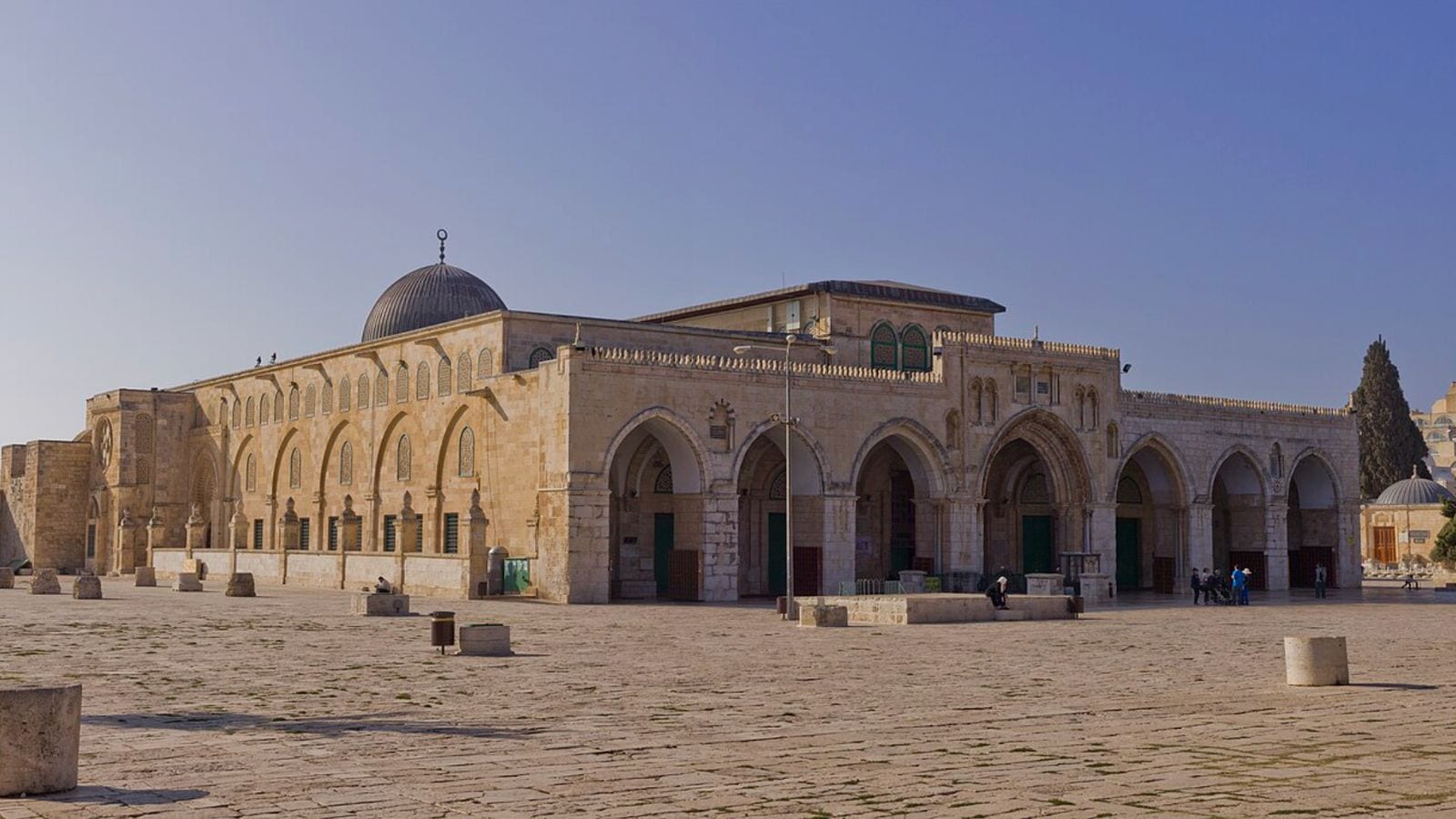
For the first time in sixty years, the Al-Aqsa Mosque—the silver-domed heartbeat of this city—sat in a vacuum. There were no crowds. There were no rows of thousands bowing in unison, a human wave of devotion that usually spills out from the prayer halls onto the vast stone courtyards.
Imagine a man named Omar. He is seventy years old, with skin like parchment and eyes that have seen regimes rise and fall like the desert sun. Every year since he was a boy, he has performed the same ritual. He wakes before the light touches the Mount of Olives, washes himself with cold water, and walks through the Lion’s Gate. To Omar, the mosque isn't just a building; it is the physical manifestation of his community’s soul.
This year, Omar stood at the edge of a police barricade, looking at a horizon he was forbidden to touch. He wasn't alone in his exclusion, but he was alone in his grief. The "why" of the closure—a global pandemic that turned every breath into a potential threat—made logical sense to the mind, but it did nothing to soothe the spirit.
The Weight of a Broken Chain
History is often measured in decades, but it is felt in moments. To understand why a closed gate matters, you have to understand the unbroken chain of the last sixty years. Since 1967, through wars, uprisings, and political tremors that would have leveled lesser cities, the prayers at Al-Aqsa remained a constant. They were the one thing people could count on.
When you remove a constant, you create a psychological vertigo.
The closure wasn't just a logistical hurdle; it was a rupture in the temporal fabric of the city. For the Palestinian worshippers who view the compound as the third holiest site in Islam, the empty plaza was a haunting sight. The stones, polished smooth by millions of foreheads over the centuries, sat dry and cold under the Mediterranean sun.
Logic dictates that a prayer said at home is technically the same as a prayer said in a mosque. The theology supports it. The safety of the living, after all, is a foundational tenet of the faith. But humans are not purely logical creatures. We are creatures of place. We are creatures of gathering.
When you take away the gathering, you leave only the silence. And in Jerusalem, silence is rarely peaceful. It is heavy.
The Invisible Stakes of a Ghost Town
Walking through the Suq—the market—leading up to the holy site during a normal Eid is an exercise in sensory overload. You are pushed and pulled by the sheer mass of humanity. This year, the shopkeepers sat on stools outside their shuttered storefronts, staring at the ground.
The economic cost is a statistic. You can measure it in lost shekels and unsold kilos of ma’amoul cookies. But the human cost is the look on a baker's face when he realizes he has no one to feed.
Consider the "invisible stakes." This isn't just about a missed holiday. It’s about the erosion of a sense of belonging. For many in East Jerusalem and the surrounding territories, the mosque is the only place where they feel a sense of true sovereignty over their own lives and spirits. When that gate is locked, the world feels smaller. Tight. Restrictive.
The authorities cited the need to prevent a "mass casualty event" due to the virus. They weren't wrong. The math of a pandemic is brutal and indifferent to sanctity. If twenty thousand people gathered to pray, the infection rates would have spiked with mathematical certainty.
Yet, for the person standing outside the fence, the math of the heart is different. They see empty space where there should be brothers. They see an absence where there should be an abundance.
A Different Kind of Pilgrimage
Because the gates were closed, the prayer moved. It didn't disappear; it fractured and relocated to the asphalt of the streets and the cramped balconies of nearby apartments.
Small groups of men stood six feet apart on the sidewalks, their colorful prayer rugs laid out on the gray pavement. They bowed toward the closed gates, their foreheads touching the rough ground of the city instead of the smooth marble of the sanctuary. It was a makeshift sanctity.
There is a specific kind of beauty in that resilience, but it is a tragic beauty. It is the beauty of a bird singing in a cage.
The younger generation, those who had never known a year without the "Big Prayer," looked confused. They asked their fathers when they could go inside. The fathers, usually the pillars of certainty, had no answers. They could only point toward the Dome of the Rock, shimmering in the distance like a mirage that refused to be reached.
The Echo in the Empty Plaza
Inside the compound, the scene was surreal. A few dozen clerics and mosque employees stood in vast, lonely rows. Their voices, usually drowned out by the roar of a hundred thousand people, bounced off the walls of the Al-Qibli Chapel.
The microphones were on. The call to prayer—the Adhan—went out over the loudspeakers as it always does. It rolled over the hills of Jerusalem, through the valleys of Silwan and the heights of the Mount of Olives. But it felt like a call without an answer.
When the Imam’s voice cracked during the sermon, it wasn't because of the heat. It was the sound of a man speaking to a ghost.
We often think of holy sites as static monuments, museums of the past. They are not. They are living organisms that breathe through the people who visit them. Without the people, Al-Aqsa felt like a body without a pulse.
The closure served as a stark reminder of how fragile our "unbreakable" traditions truly are. We assume the sun will rise and the gates will open. We assume that the things our grandfathers did, we will do, and our children will do after us.
But then a microscopic traveler crosses a border, and sixty years of habit vanishes in a weekend.
The Shadow of the Future
As the sun climbed higher on that silent Eid, the heat began to shimmer off the white stones of the city. The prayers ended quickly. There were no long celebrations, no communal feasts in the streets, no handing out of sweets to strangers.
People folded their rugs and walked back to their homes in silence.
The significance of this moment will be debated by historians and political scientists. They will talk about the precedent it set, the security implications, and the public health outcomes. They will look at the data.
But for Omar, and for the thousands like him, the data doesn't matter. What matters is the memory of the year the gates stayed shut. What matters is the feeling of being a stranger in your own holy city.
The stones of Jerusalem have seen many things. They have seen fire, they have seen blood, and they have seen gold. But they have rarely seen a silence this profound.
It was a silence that spoke of a world in transition, a world where the things we take for granted can be stripped away in the name of the very life we are trying to preserve.
The mosque did not go anywhere. It still stands, its golden dome reflecting the harsh light of a changing world. But for one day, for the first time in sixty years, it was a hollow crown.
A king without a people is just a man in an empty room. A mosque without a crowd is just a building on a hill. And a city that cannot pray together is a city that is holding its breath, waiting for the day it is finally allowed to exhale.
The gates will eventually open again. The rugs will be spread. The cardamom coffee will be poured. But the memory of the silence will remain, tucked into the cracks of the limestone like a secret no one wanted to learn.
Jerusalem remembers everything. And it will remember the year it forgot how to hum.