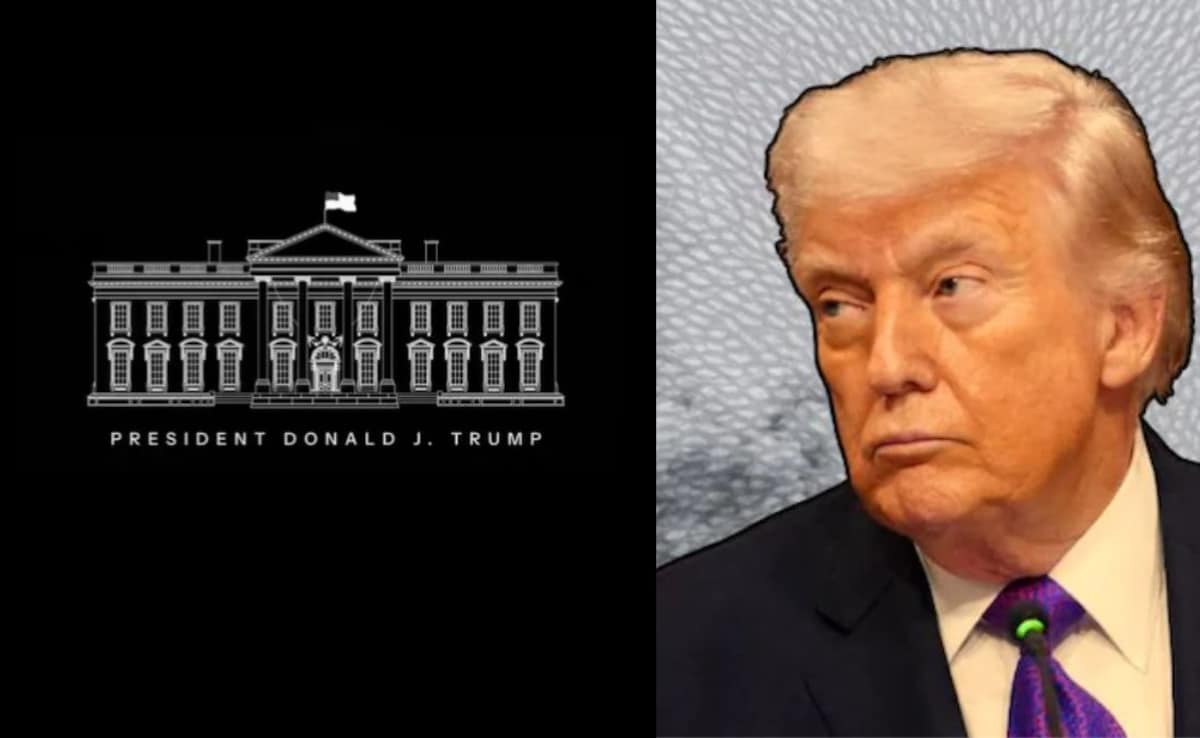
Modern political communication often feels like a sequence of scripted rituals, but a recent post from the White House social media team has shattered that predictability. What appeared to be a standard, perhaps even mundane, video clip transformed into a digital firestorm once the internet began playing the audio in reverse. This was not a technical glitch. It was a calculated move that tapped into a century-old psychological phenomenon to bypass the standard news cycle and land directly in the center of the zeitgeist.
The strategy relies on a concept known as auditory pareidolia. This is the tendency for the human brain to find patterns, specifically words or phrases, in random or ambiguous noise. By releasing a clip with specific rhythmic cadences, the administration triggered a collective "Easter egg" hunt. Users did not just watch the video; they interrogated it. They manipulated the file, slowed it down, and reversed it. In doing so, they gave the content more attention than any traditional policy announcement could ever hope to garner.
The Engineering of Ambiguity
The clip in question features a layered soundscape where background noise and speech overlap in a way that feels intentional. High-end audio engineering allows for the manipulation of phonemes, the smallest units of sound in speech. When these are arranged with precision, they can sound like one thing when played forward and something entirely different when reversed.
This isn't just about "backmasking," a term popularized by 1970s rock bands and 1980s moral panics. It is about engagement metrics. When a government entity posts something that appears cryptic, they are essentially gamifying the democratic process. They know that the skeptic and the supporter alike will spend hours trying to "solve" the mystery.
Consider the mechanics of the viral spread. A standard press release is shared. It has a half-life of roughly six hours on social platforms. A "cryptic" post, however, spawns threads on Reddit, deep-dives on TikTok, and analysis by independent audio engineers. The lifespan of the content is extended by days, if not weeks. The "meaningless" nature of the forward audio is the bait; the "meaning" found in reverse is the hook.
The Psychological Power of the Hidden Message
Psychologically, humans are hardwired to value information they believe they have "discovered" over information that is simply handed to them. This is the IKEA effect applied to political messaging. If a citizen spends twenty minutes using an audio editor to find a hidden phrase, they feel a sense of ownership over that discovery. They are far more likely to believe the "hidden" message is the "true" intent of the administration, even if the message itself is an accidental byproduct of reversed speech patterns.
Professional skeptics argue that this is a dangerous game. By encouraging the public to look for hidden meanings in official communications, the White House risks fueling the very conspiracy-minded thinking they often claim to combat. If you train an audience to play every video backward to find the "real" story, you lose control of the narrative the moment the audience finds a phrase you didn't intend to put there.
There is also the matter of subliminal perception. While the scientific community remains divided on whether reversed audio can actually influence behavior, the perception of its influence is a potent tool. It creates an aura of "insider knowledge." It makes the viewer feel like they are part of a secret club that understands the true language of power.
Why the Traditional Newsroom Failed to See This Coming
For decades, political journalism focused on the "what" and the "who." Reporters looked at the text of a bill or the background of a cabinet pick. They were unprepared for an era where the "how"—the technical delivery of the message—is more important than the content itself.
The White House digital team is no longer composed of just writers and PR flacks. It includes UX designers, algorithm specialists, and sound engineers. They understand that in a saturated attention economy, clarity is the enemy of reach. If a message is clear, it is digested and forgotten. If it is muddled, it is debated.
This shift represents a fundamental change in how the executive branch interacts with the public. We have moved from the "Fireside Chat," designed to provide comfort and clarity, to the "Digital Puzzle," designed to provoke and occupy. It is a transition from transparency to translucency, where the government provides just enough light to see a shape, but not enough to identify what it is.
The Risks of Gamified Governance
There is a thin line between clever marketing and the erosion of trust. When the official voice of a nation begins using the tactics of an "alternate reality game" (ARG), the weight of that voice is diminished. It becomes just another piece of content in the feed, competing for clicks alongside influencers and brand advertisements.
The real danger is not what is heard in reverse. The danger is the normalization of ambiguity. When the public expects their leaders to speak in riddles or hide messages in the metadata, the baseline for truth shifts. Facts become something to be "decoded" rather than reported.
Furthermore, the technical barrier to entry creates a divide. Not everyone has the tools or the time to reverse audio files. This creates a class of "interpreters" who gain outsized influence by telling the rest of the public what the "secret" message actually says. These interpreters are rarely neutral. They bring their own biases to the audio editor, hearing exactly what they want to hear in the static.
The Future of the Audio Arms Race
Expect to see this tactic refined. We are entering an era of multi-directional messaging. A politician might give a speech that sounds like a call for unity when played normally, but contains specific buzzwords for their base when processed through certain filters or played in reverse.
This isn't science fiction. With the rise of AI-generated speech, the ability to weave multiple layers of meaning into a single audio file is becoming trivial. We are looking at a future where political ads are "tuned" to different subsets of the population based on how they listen.
The White House post was a trial balloon. It proved that the public is hungry for mystery and willing to do the legwork to find it. The "meaningless" post was, in fact, one of the most successful pieces of communication in recent memory, not because of what it said, but because of what it forced the audience to do.
The next time a government agency releases a video that seems a little too quiet, or a little too noisy, don't just listen to what they are saying. Look at the waveform. Check the metadata. Turn it backward. The message is no longer in the words; it is in the hunt.
Stop looking for the transcript and start looking for the frequency.


