The air in Biarritz usually carries the salt of the Atlantic and the faint, expensive scent of pine. But when the black sedans begin to choke the narrow streets of a French seaside town, the atmosphere changes. It thickens. You can feel the static electricity of power before you see a single flag. This isn't just another summit. It is a collision of worlds.
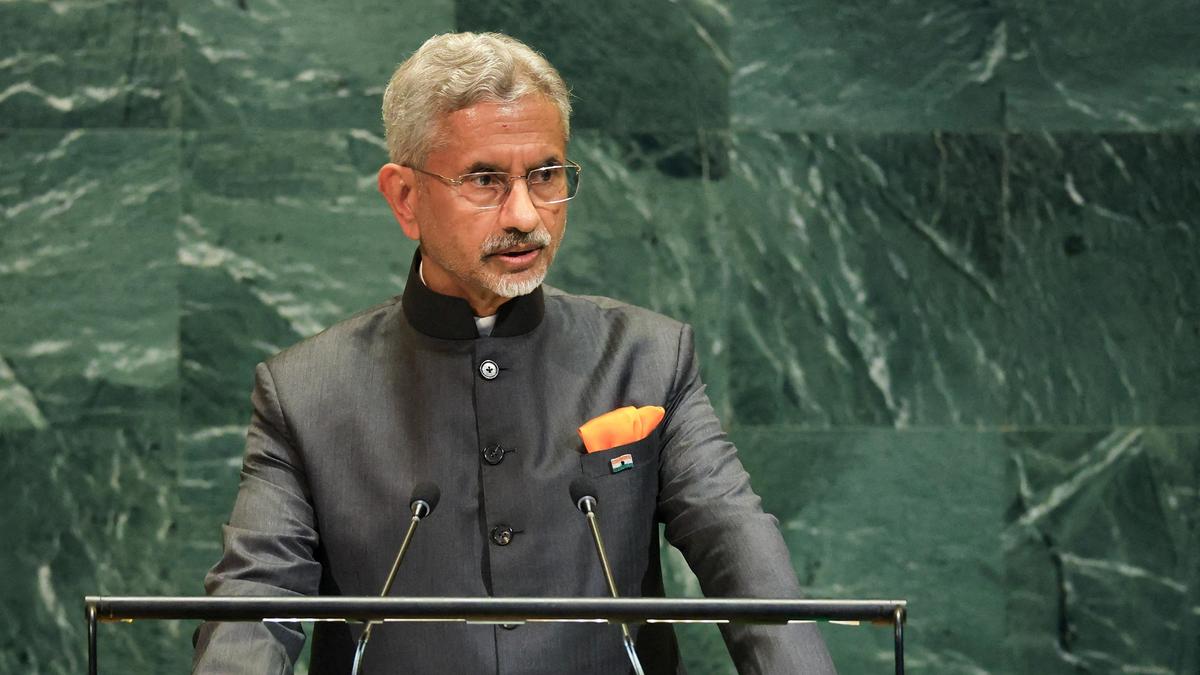
S. Jaishankar does not walk into these rooms to make small talk. He walks in because the map of the world is currently on fire, and India is one of the few players with enough water to keep the flames from jumping the fence. As he touches down in France for the G7 gathering, the headlines will tell you about agendas and bilateral cooperation. They will use words like "strategic" and "multilateral." Those words are hollow shells.
The reality is much more visceral.
Imagine a merchant in a small stall in the Levant, perhaps in a city whose name currently appears on news tickers in angry red font. This merchant—let’s call him Elias—doesn't care about the communique drafted in a five-star hotel overlooking the Bay of Biscay. Elias cares that the supply lines for his grain are severed. He cares that the sky above his home is no longer a source of weather, but a source of dread. The crisis in West Asia is not a "topic" for Elias. It is the ceiling falling in on his life.
When Jaishankar sits across from his French counterpart, Jean-Noël Barrot, or moves through the gilded halls to speak with the G7 elite, he is carrying Elias’s reality into the room. He is carrying the reality of millions of Indian citizens living and working in the Gulf, whose remittances keep entire states back home from sliding into poverty. The stakes are not abstract. They are as real as a bank transfer or a shipping container.
The G7 used to be a club for the old masters of the universe. It was a place where a handful of nations decided how the rest of the world would behave. That world is dead. It died some time ago, but the news is only now reaching the further corners of the parlor. France knows this. That is why India is here.
India is no longer a guest at the table; it is the person holding the table steady.
The conversation shifts to the Red Sea. For months, the waters have been a graveyard of ambition. Rebels, drones, and the sheer, unblinking chaos of a region pushed to the edge have made the Suez Canal look less like a global artery and more like a tourniquet. You don’t need to be an economist to understand the math. When a ship cannot pass, the cost of a bag of rice in Mumbai goes up. The cost of a heater in Paris goes up.
There is a strange, quiet intimacy to these meetings. We think of them as grand speeches and flashbulbs, but the real work happens in the lean-in. It’s the way Jaishankar adjusts his glasses and waits for the silence to stretch just long enough to make his point. India’s position is notoriously difficult for the West to swallow because it refuses to be simple. It refuses to pick a team in a game where both teams are losing.
Consider the tension between the immediate and the eternal. In the G7 rooms, there is a desperate need for a "statement." Leaders want to condemn. They want to draw lines in the sand. But the sand in West Asia is shifting too fast for ink to dry. India’s approach is a colder, harder pragmatism. It is about de-escalation, not because it sounds good in a press release, but because a regional war is a black hole that swallows every economy it touches.
The relationship between Paris and New Delhi has become a rare constant in a world of variables. It is a bond forged in hardware—Rafale jets and Scorpene submarines—but it is sustained by a shared skepticism. Both nations have an allergy to being told what to do by superpowers. They both value their "strategic autonomy," which is just a fancy way of saying they want to keep their own keys to their own front doors.
Why does this matter to someone sitting in a coffee shop in London or a suburb in New Jersey? Because these meetings are where the permission for the future is negotiated. If Jaishankar and the G7 can find a way to stabilize the energy markets, your commute stays affordable. If they can’t, the spiral continues.
The tragedy of modern news is that it separates the "diplomacy" from the "dinner table." We are told about the "West Asia crisis" as if it were a weather pattern we can do nothing about. But diplomacy is the act of building a roof while it’s raining.
India’s role in this particular storm is unique. It has the ear of the Global South—the nations that have been forgotten by the G7 for decades—and it has the respect of the old guard. It is the bridge. But bridges are meant to be walked on. They take the weight. They endure the friction.
As the sun sets over the Atlantic in Biarritz, the cameras will capture the handshakes. The reporters will scramble to find a "winner" or a "breakthrough." They will look for a dramatic shift that rarely comes. Real change is slower. It is the sound of a gear clicking into place after years of being jammed.
The real story isn't the communiqué. It’s the silence that follows the meeting, when the leaders realize that the old maps no longer work, and the person holding the new one is the man who just flew in from New Delhi.
The merchant, Elias, is still waiting. He doesn't know Jaishankar's name, and he likely doesn't know where Biarritz is on a map. But if the grain starts moving again, if the drones stop coming, and if the price of bread stabilizes, it will be because of the quiet, grueling work done in rooms where the air is thick with the scent of salt and the pressure of a world that can't afford to break.
The shadows on the French coast are long, stretching out toward a horizon that feels more uncertain than ever. In the end, these summits are not about the leaders. They are about the millions of people who will never see the inside of those rooms, but whose lives are the only reason those rooms exist.
Would you like me to analyze the specific economic impacts of the Red Sea shipping disruptions on Indian trade routes for you?