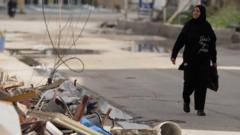
The streets of Tyre should be humming with the sound of coffee grinders and the scent of saltwater. Instead, they echo with the low rumble of drones and the sudden, chest-rattling thud of nearby strikes. This isn't just another flare-up in a long history of border skirmishes. We're watching a fundamental shift in the conflict between Israel and Hezbollah, and the people trapped in the middle are living through a reality that news headlines can't quite capture. If you think this is just a repeat of 2006, you're missing the bigger picture.
Southern Lebanon is currently a landscape of ghost towns and defiance. While thousands have fled north toward Beirut, those who stay aren't just stuck. They're making a conscious, often terrifying choice to remain in a war zone. It's a mix of bone-deep exhaustion and a refusal to be displaced again. You see it in the eyes of the shopkeepers who open their doors even when the shelves are half-empty. They aren't just selling bread; they're claiming their right to exist on that specific patch of earth.
The Reality of Living Under Constant Surveillance
Living in a city like Tyre or the surrounding villages means living under the "MK"—the local nickname for Israeli drones. The buzzing is constant. It’s a physical weight. Imagine trying to sleep, eat, or talk to your kids while a mechanical hum reminds you that you’re being watched from the clouds. It’s psychological warfare in its purest form.
When an airstrike hits, it doesn’t just destroy a building. It shatters the collective psyche of a neighborhood. I’ve spoken with people who can now tell the difference between an interceptor missile and a direct hit just by the frequency of the blast. That’s a level of "expertise" nobody should ever have to acquire. The war in southern Lebanon has turned civilians into ballistics experts by necessity.
The escalation we’re seeing now is different because the "red lines" have effectively vanished. In previous years, there was a predictable, if violent, rhythm to the exchanges. Hezbollah would hit a military post; Israel would strike a launch site. Now, the targets are deeper, the weapons are heavier, and the civilian toll is climbing. The ambiguity of the frontline makes every car trip a gamble. You don't know if the road you're on will be the next target because of a suspected target nearby.
Why This Conflict Defies the 2006 Comparisons
Everyone wants to talk about the 2006 war. It’s the easy reference point. But that’s a mistake. In 2006, the world was different. The technology was different. Most importantly, the regional stakes weren't this high. Today, Hezbollah is vastly more experienced after a decade in Syria. Their arsenal isn't just bigger; it's smarter.
On the other side, Israel’s military doctrine has shifted. They aren't looking for a stalemate. The political pressure within Israel to "return the residents of the north" to their homes has created a situation where a ceasefire isn't just a diplomatic goal—it’s a domestic necessity for the Netanyahu government. This creates a dangerous paradox. To get peace, both sides feel they have to escalate to a point where the other side breaks. It’s a race to the bottom where the finish line is a pile of rubble.
The Economic Collapse Behind the Frontlines
Lebanon was already a failed state economically before the first rocket was fired in October. People often forget that. The Lebanese Lira is essentially wallpaper. Savings were wiped out years ago. So, when war intensified, there was no safety net. No government checks are coming to help the displaced.
If you leave your home in the south, you're often moving into an overcrowded school or a rented apartment you can't afford. This economic desperation fuels the "defiance" you hear about. Many stay because they literally have nowhere else to go that's any better. If you’re going to be hungry and scared, you might as well be hungry and scared in your own house.
The Disconnect Between Global Diplomacy and Local Fear
While diplomats in New York or Paris talk about Resolution 1701, the people in southern Lebanon are looking at the sky. There’s a massive gap between the "diplomatic solutions" being floated and the reality on the ground. You can’t implement a buffer zone when the people living there have nowhere to go. You can't talk about de-escalation while both sides are moving their most advanced hardware to the border.
The fear isn't just about dying. It's about the "what then?" What happens if the house is gone? What happens if the school doesn't reopen for another three years? The war in southern Lebanon is stealing the future from a generation that has already survived a port explosion, a pandemic, and a total financial meltdown.
The Role of Hezbollah in the Social Fabric
To understand the defiance, you have to understand that Hezbollah isn't just a militia to the people in the south. They're a political party, a social service provider, and a primary employer. This makes the conflict incredibly messy. When Israel targets "Hezbollah infrastructure," they're often hitting targets embedded deep within the social and physical geography of these towns.
The civilian support for the "resistance" isn't always about ideology. Sometimes it’s about the fact that when the state disappeared, this organization was the only one left standing. That reality makes "uprooting" the group—as some Israeli officials suggest—an almost impossible task without destroying the entire region.
What the Media Gets Wrong About the Border
Most reports focus on the "blue line" and the exchange of fire. They show maps with red dots representing strikes. What they don't show is the psychological toll of the "gray zone"—the periods of silence between the blasts. That silence is often scarier than the noise. It’s the period where you wonder if the "big one" is coming.
We also see a lot of talk about "calculated responses." Let’s be real. There’s nothing calculated about a family jumping into a car with ten minutes' notice because a warning was posted on social media. The human cost is being treated as a secondary variable in a geopolitical equation.
The intensity of the Israel-Hezbollah war has reached a point where "returning to the status quo" isn't an option. The border as we knew it is gone. The trust—what little there was—is incinerated.
Moving Forward in a Landscape of Uncertainty
If you're looking for a silver lining, you won't find one in the current trajectory. The situation demands a level of diplomatic courage that's currently nowhere to be found. But for those watching from the outside, the first step is recognizing that this isn't a localized "border issue." It's a regional crisis centered on a population that has been pushed to the absolute brink.
The next few weeks are critical. Watch the movement of heavy artillery and the rhetoric regarding a ground incursion. If a ground war starts, the current "defiance" will be replaced by a humanitarian disaster that will dwarf anything we've seen in the region recently.
Keep an eye on the internal Lebanese political scene too. The pressure on the central government to distance itself from the conflict is growing, but their ability to actually do anything is zero. They’re spectators in their own country.
Stay informed by looking at local sources and ground-level reporting rather than just official military briefings. The truth of this war isn't in the press releases. It's in the empty schools of Tyre and the crowded shelters of Beirut. The people of southern Lebanon don't need more "thoughts and prayers." They need a reality where they can wake up without checking the sky for drones.