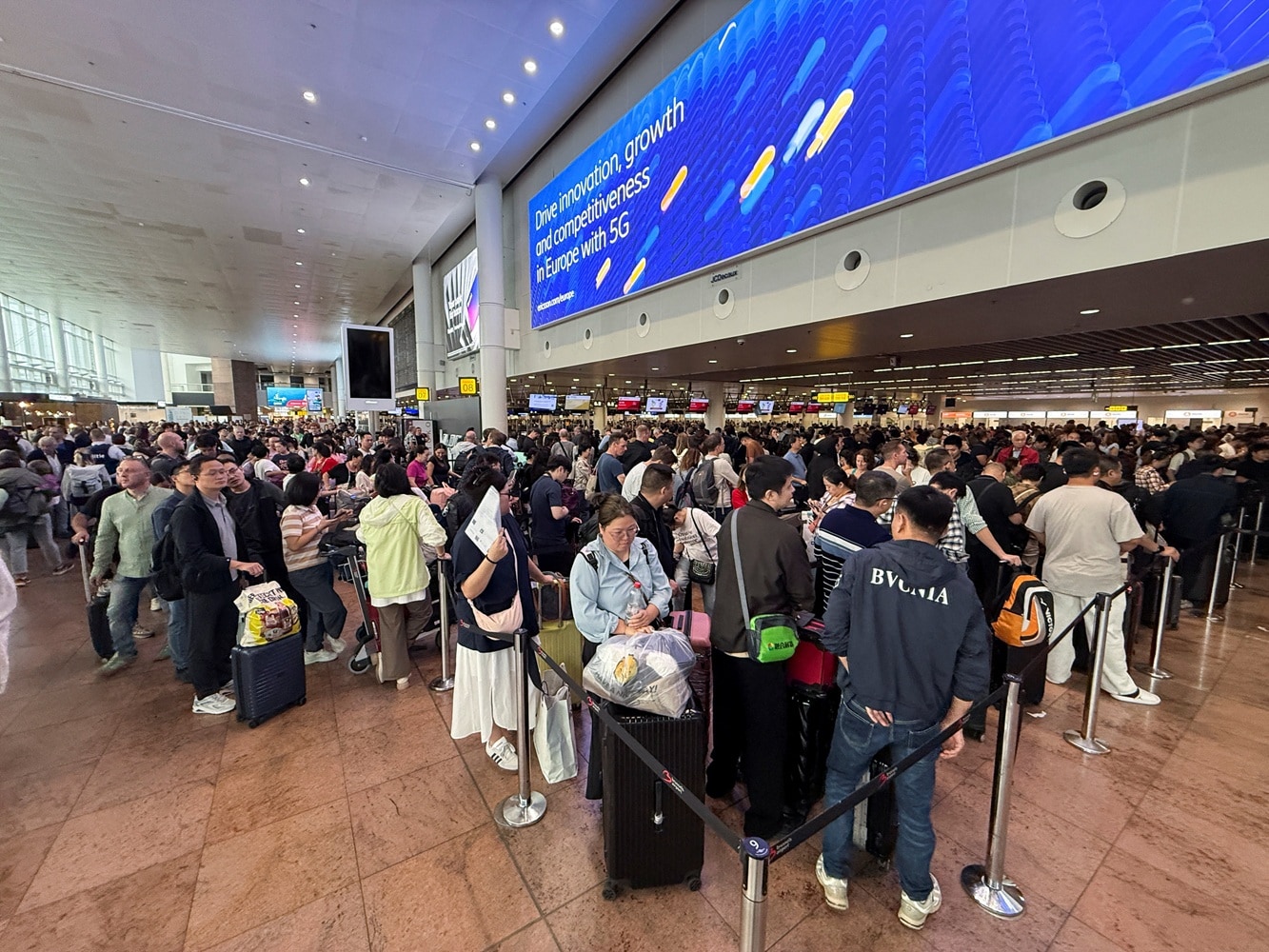
The national media loves a good airport apocalypse. Whenever a partial government shutdown hits or a staffing "crisis" reaches the front page, the narrative is identical: exhausted TSA agents, endless security lines snaking through terminals, and a travel industry on the brink of collapse. It’s a predictable script designed to trigger high-stress clicks.
But here is the truth the talking heads won't tell you: The "efficiency" you are screaming for is the greatest threat to your actual safety.
Most travelers view the TSA as a customer service organization. It isn't. It is a security layer. When lines get long, the public perceives it as a failure of management. In reality, those delays are often the only thing standing between a functioning aviation system and total chaos. If we "fixed" the lines the way the public wants—by rushing people through to meet a flight schedule—the entire security apparatus would be nothing more than expensive theater.
The Myth of the Staffing Crisis
The common argument claims that if we just threw more money at the problem or kept the government funded 365 days a year, the lines would vanish. This assumes that more bodies equals more speed without a trade-off.
It’s a fundamental misunderstanding of operational throughput.
Security isn't a retail checkout. In a retail environment, more cashiers mean more sales. In security, more speed almost always correlates with a higher "False Negative" rate. When agents are pressured by massive crowds and screaming travelers to "keep it moving," the cognitive load increases. They miss things.
The TSA’s own internal testing—covert audits where the Department of Homeland Security (DHS) tries to sneak contraband past checkpoints—has historically shown failure rates that would make your blood run cold. Reports from the Office of Inspector General have pointed to failure rates as high as 95% in some historical tests.
When the lines are long, it means the system is actually attempting to do its job under duress. The moment we prioritize "short lines" over "rigorous screening," we have already lost.
Why You Want the Shutdown Stress
During a partial government shutdown, the media highlights the "blue flu"—TSA agents calling out sick because they aren't getting paid. The narrative is one of a crumbling infrastructure.
I’ve spent twenty years analyzing high-stakes logistics. I can tell you that a stressed system is a more honest system. When the TSA is understaffed, they don't just "go faster." They are forced to consolidate checkpoints. This creates a bottleneck that, while infuriating for your vacation plans, actually allows the remaining veteran officers to maintain a tighter perimeter.
The chaos of a shutdown exposes the "security theater" for what it is. If the system can still function with 20% fewer people, it means we were overstaffed with low-skill observers to begin with. If the system slows to a crawl, it proves that the current technology is not a substitute for human intuition.
We are currently addicted to the "PreCheck" lifestyle—a system where we pay for the privilege of being less scrutinized. We’ve been conditioned to believe that speed is a right. It’s not. It’s a vulnerability.
The Hidden Cost of "Seamless" Travel
The industry's obsession with "frictionless" travel is a marketing lie. "Friction" is exactly what catches a threat.
Imagine a scenario where a major airport implements high-speed biometrics and AI-driven baggage scanning that reduces wait times to zero. The public would rejoice. But a sophisticated adversary doesn't look for the strongest link; they look for the most predictable one. A high-speed, automated system is highly predictable.
Human-induced friction—the grumpy agent asking you where you’re headed, the manual bag search that takes ten minutes—is unpredictable. That unpredictability is a deterrent.
By demanding shorter lines during a staffing shortage, you are effectively asking the TSA to lower the barrier to entry. You are asking for a "security lite" experience so you can grab a Cinnabon before your flight.
Stop Asking the Wrong Questions
People always ask: "How can we make TSA lines shorter during a shutdown?"
That is a loser's question. It assumes the goal of an airport is to be a mall.
The real question is: "Why is our aviation security so dependent on a manual labor force that we haven't automated the actual detection of explosives yet?"
We are still taking off shoes because of a failed attempt in 2001. We are still throwing away water bottles because of a plot in 2006. We are fighting yesterday’s wars with tomorrow’s labor strikes.
The "long line" is a symptom of a deep technological stagnation. We use human beings to perform repetitive, soul-crushing tasks that they are biologically unsuited for. The human eye is terrible at looking at X-ray screens for eight hours straight. Concentration wanes after twenty minutes.
The Brutal Reality of TSA PreCheck
The biggest scam in modern travel is the commoditization of trust. TSA PreCheck and Global Entry are essentially "pay-to-play" security. We have decided that if you can pass a basic background check and fork over $85, you are suddenly less of a risk.
This creates a two-tier system that actually makes the "standard" lines slower. By pulling the most "trusted" (read: wealthiest and most frequent) travelers out of the main pool, you leave the standard lines filled with "infrequent" travelers—the ones who forget to take out their laptops, who wear boots with twenty eyelets, and who try to bring a gallon of salsa through the scanner.
The shutdown-induced long lines are exacerbated by this segregation. When staffing drops, the TSA often closes PreCheck lanes, forcing the "elites" back into the general population. The resulting outrage isn't about security; it's about the loss of perceived status.
How to Actually Navigate a Staffing Crisis
If you find yourself in a three-hour line during a government spat, stop blaming the guy in the blue shirt. He’s the one who showed up to work for a deferred paycheck while his colleagues stayed home.
Instead, change your operational math:
- Stop checking bags. The biggest bottleneck in any airport isn't the body scanner; it’s the luggage. Every checked bag is a data point that must be tracked, screened, and moved. If you can’t fit it in a carry-on, you are part of the congestion.
- Fly from secondary hubs. People complain about lines at ATL or ORD but refuse to drive forty minutes to a regional airport. If you value your time, stop flying through the world's most obvious targets.
- Acknowledge the trade-off. If you want a 10-minute wait, accept a 10% lower security efficacy. If you want 100% security, accept a 4-hour wait. You cannot have both. Anyone telling you otherwise is selling you a campaign promise or a travel credit card.
The next time you see a news report about "unprecedented" wait times and staffing shortages, realize that you are watching a system finally being honest about its limitations. The lines aren't a sign that the system is broken. The lines are the system's last remaining defense mechanism against its own incompetence.
If the government stays shut down and the lines keep growing, good. Maybe it will finally force us to move past the theater of "looking for things" and toward a technological infrastructure that doesn't rely on the morale of underpaid federal employees.
Until then, put your shoes in the bin, shut up, and be glad the line is moving slowly. Speed is the enemy of survival.
Go to the airport four hours early and stop acting like your schedule is more important than a sealed perimeter.