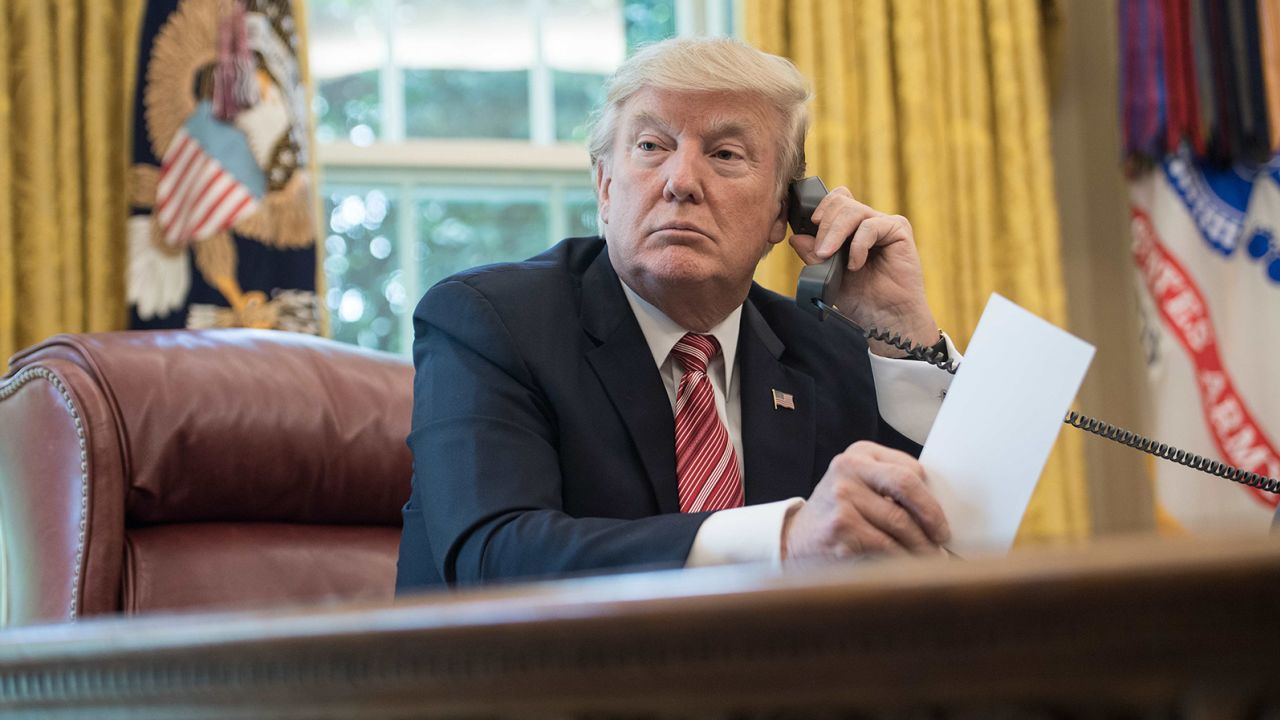
The mainstream media is obsessed with a ghost hunt. They are tripping over themselves to fact-check whether Donald Trump is talking to a "top person" in Iran or if he’s snubbing the Supreme Leader. They frame it as a gaffe, a delusion, or a breach of protocol.
They are missing the entire point. For an alternative perspective, check out: this related article.
In the world of high-stakes leverage, the identity of the person on the other end of the line doesn't matter. What matters is the perception of an alternative channel. By signaling that he is bypassing the traditional clerical hierarchy to speak with a "top person," Trump isn't failing at diplomacy; he is effectively devaluing the Supreme Leader’s monopoly on Iranian foreign policy.
It is a classic corporate raider move: ignore the CEO, talk to the majority shareholders, and let the board of directors panic about their dwindling relevance. Related analysis regarding this has been published by The Guardian.
The Myth of the Monolithic Iran
The lazy consensus among analysts is that Iran is a monolithic entity where Ali Khamenei’s word is the beginning and the end. If you aren't talking to him, you aren't talking to Iran.
That is a fundamental misunderstanding of how power functions in a pressured state.
Iran is a fractured web of competing interests: the IRGC (Islamic Revolutionary Guard Corps), the pragmatic merchant class, the technocrats, and the ultra-hardliners. When an American leader claims to be in contact with a "top person" who isn't the Supreme Leader, they are throwing a grenade into the middle of those factions.
Why the "Official Channel" is a Trap
Standard diplomacy is a slow-motion car crash. It relies on:
- Years of "confidence-building measures."
- Rigid hierarchies where everyone has veto power.
- Public posturing that makes compromise impossible without losing face.
I have watched executives burn through quarterly budgets trying to follow "proper channels" with competitors, only to realize the real deals were happening in the hotel bar between junior VPs. Trump’s approach—whether the "top person" is a specific human or a strategic fiction—operates on the same logic. It bypasses the bureaucracy designed to say "no."
The Logic of Strategic Ambiguity
Critics demand a name. "Who is the top person?" they cry.
If Trump gave a name, the strategy would die instantly. That individual would be arrested, executed, or forced to issue a scathing denial. The power lies in the unverifiable threat of a side deal.
Imagine you are a hardline cleric in Tehran. You hear the former (and potentially future) U.S. President is whispering to someone in your inner circle. You don't know who. You start looking at your colleagues with suspicion. Trust erodes. The internal cohesion required to maintain a "Maximum Resistance" posture begins to crack.
This isn't a failure of communication. It is a masterclass in psychological destabilization.
The Math of Backchannels
In game theory, this is a variation of the "Prisoner's Dilemma" played at a civilizational scale. If the Iranian leadership stays united, they maintain a unified front against sanctions. But if one "top person" decides to cut a side deal to save their own assets or secure their family's future, the first mover wins everything.
By claiming a backchannel exists, the U.S. increases the "Defection Incentive" for every high-ranking Iranian official.
Dismantling the "Logan Act" Obsession
Legal pundits love to trot out the Logan Act—an 18th-century relic that has resulted in exactly zero convictions—whenever a private citizen or candidate engages in foreign policy.
It’s a distraction.
In the real world, power doesn't wait for an inauguration. Shadow diplomacy is the bedrock of every major geopolitical shift in the last century.
- The 1968 Nixon/Chennault Affair: Disrupting Vietnam peace talks.
- The 1980 October Surprise Theory: Allegations regarding the Iranian hostage release.
- The Backchannel to Cuba: Decades of unofficial talks before the 2014 "thaw."
The "status quo" crowd hates this because it removes the gatekeepers. It removes the State Department lifers who view "process" as more important than "results." If you can move the needle with a phone call and a headline, you’ve rendered a billion-dollar diplomatic apparatus obsolete.
The Downside: High Variance Diplomacy
Is there a risk? Absolutely.
The downside to this contrarian approach is the lack of a safety net. When you dismantle the formal process, you lose the institutional memory that prevents minor misunderstandings from turning into kinetic conflicts.
However, the current "formal process" with Iran has yielded:
- A nuclear program closer to breakout than ever.
- A regional proxy war spanning four countries.
- Sanctions that squeeze the middle class but leave the elite untouched.
When the "safe" route leads to a cliff, the "risky" off-road path is the only logical choice.
Stop Asking "Who" and Start Asking "Why"
People Also Ask: Is Trump violating protocol by speaking to Iran?
The question is flawed. "Protocol" is the set of rules losers use to explain why they didn't win. In geopolitics, the only protocol that matters is the one that prevents your adversary from building a bomb while keeping your own economy dominant.
If the goal is to keep the Iranian regime off-balance, the current strategy is working perfectly. The Supreme Leader is forced to wonder if his own generals are hedging their bets. The IRGC has to check the phone logs of its billionaires.
The Reality of the "New" Supreme Leader
The competitor article makes a big deal about Trump not speaking to the "new" Supreme Leader.
First, there isn't a "new" Supreme Leader yet—Khamenei is still breathing. Second, even when a successor is named, they will be at their most vulnerable point. A new leader needs total loyalty. By broadcasting that the U.S. is already talking to "top people," Trump is poisoning the well for the next regime before it even starts.
It is a pre-emptive strike on the legitimacy of the succession.
The Actionable Truth
If you are waiting for a signed treaty on White House stationery to believe diplomacy is happening, you are living in the 1990s.
Modern leverage is built on:
- Disruption of Internal Trust: Making the enemy fear their own shadow.
- Economic Realism: Understanding that everyone has a price, even in a theocracy.
- Bypassing Mediaries: Talking directly to the power brokers, not the figureheads.
Stop listening to the "experts" who are offended by the lack of a teleconsultation. They are mourning the death of their own relevance. The "top person" doesn't need a name to be a nightmare for the Iranian status quo.
Don't look for the transcript. Look for the cracks in the regime's unified front. That's where the real deal is being brokered.
Go find the person in your own industry who everyone says is "unreachable" through official channels. Ignore their assistant. Find their silent partner. Call them. Tell the world you're talking. Watch the hierarchy crumble.
Burn the protocol manual. It was written by people who want you to stay in line.