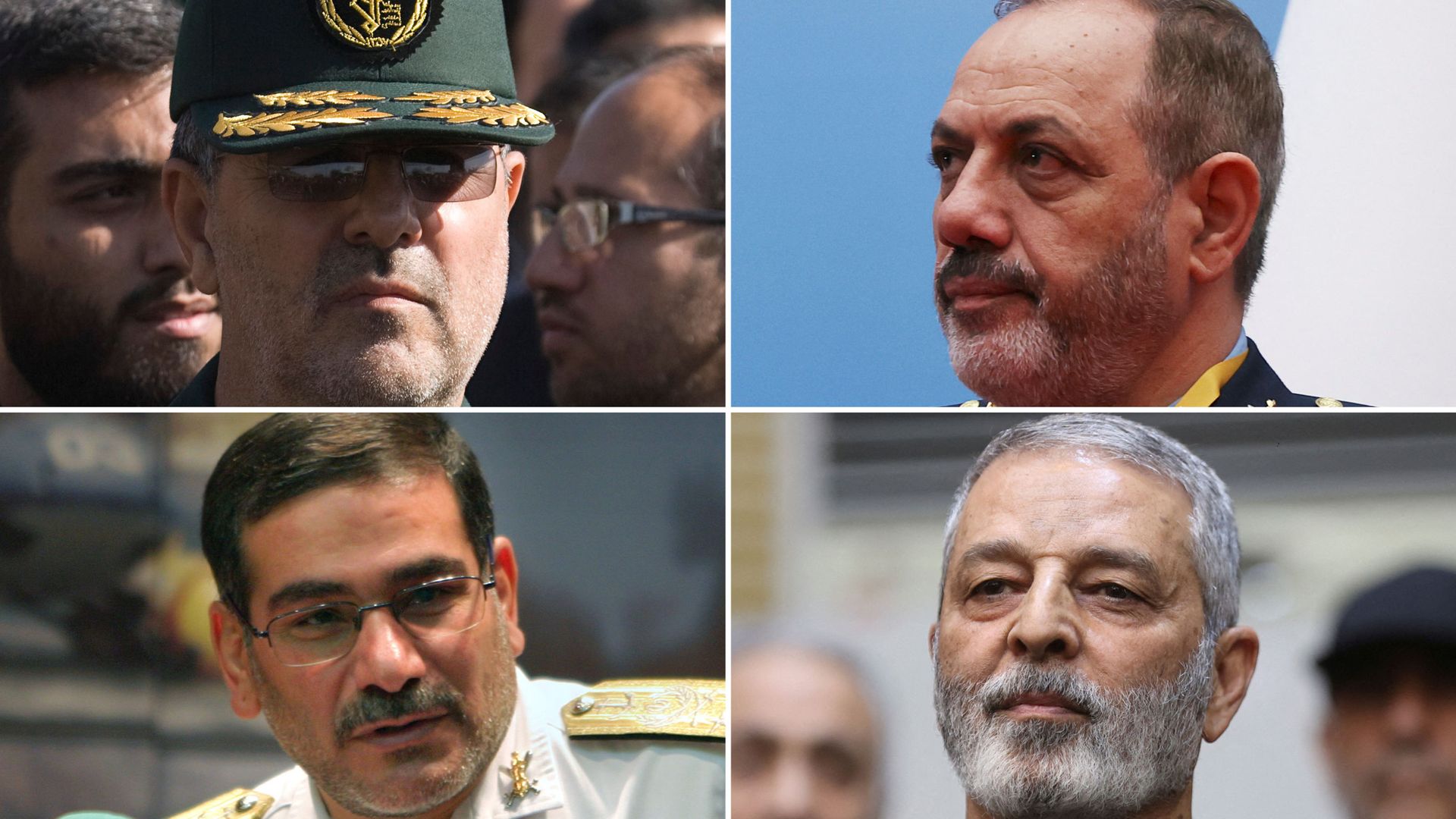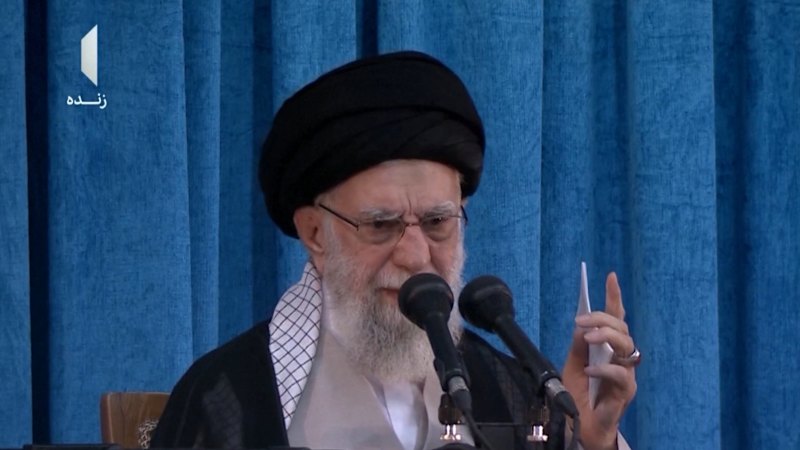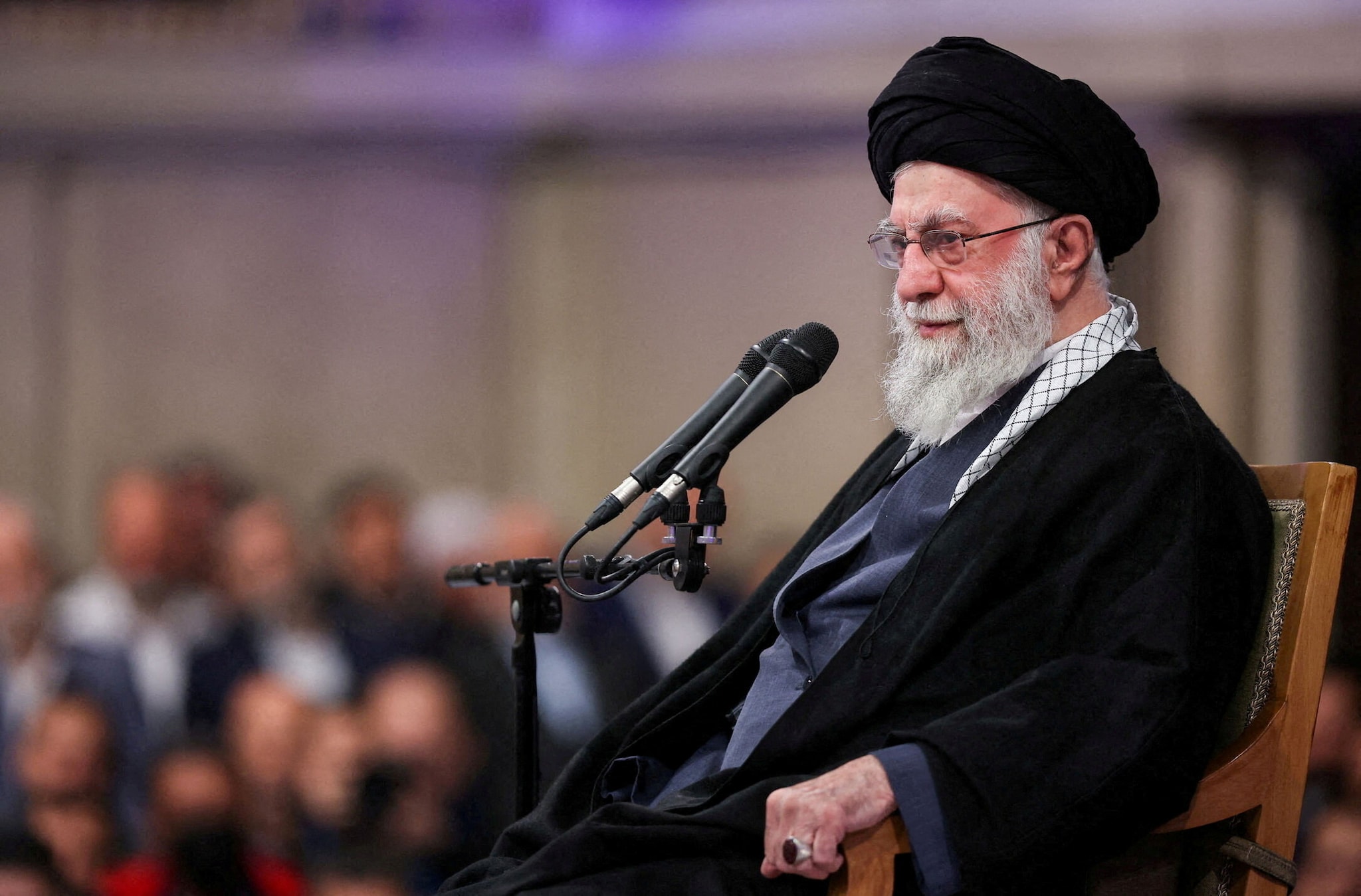
The Middle East has entered a state of frantic, high-stakes uncertainty following President Donald Trump’s public assertion that Iranian Supreme Leader Ayatollah Ali Khamenei was killed during a series of coordinated military strikes. While the White House remains steadfast in its claim of a successful decapitation strike against the Islamic Republic’s leadership, the silence from Tehran is deafening. There has been no official confirmation, no state funeral announcement, and—most tellingly—no proof of life.
This intelligence gap represents the most dangerous moment in regional geopolitics since the 1979 Revolution. If Khamenei is dead, the foundational pillar of the Iranian state has collapsed without a clear architectural replacement. If he is alive, the delay in responding suggests a catastrophic breakdown in the regime's command and control infrastructure. In either scenario, the era of the "Shadow Commander" is over, and the scramble for what remains of the Iranian apparatus has begun. Expanding on this idea, you can find more in: Why the Green Party Victory in Manchester is a Disaster for Keir Starmer.
The Strike and the Silence
Military operations of this scale do not happen in a vacuum. Reports indicate a massive, multi-vector assault involving deep-penetration munitions and cyber-disruption intended to blind the Islamic Revolutionary Guard Corps (IRGC) long enough for kinetic assets to reach their high-value targets. The administration's confidence suggests a level of SIGINT (Signals Intelligence) or HUMINT (Human Intelligence) that confirms the presence of the Supreme Leader at a specific coordination center.
Yet, we must look at the mechanics of Iranian state media. In the past, when senior figures like Qasem Soleimani were eliminated, the regime pivoted to martyrdom narratives within hours to galvanize the public. The current paralysis suggests something different. It suggests a decapitation so thorough that those left in the bunker are more concerned with their own survival and the looming succession battle than with public relations. Analysts at Al Jazeera have provided expertise on this matter.
The IRGC is not a monolith. It is a sprawling corporate and military hydra with competing factions. Without the final word of the Rahbar (Leader), these factions are likely pointing guns at one another behind closed doors, debating whether to escalate into a full-scale regional war or attempt a desperate diplomatic pivot to save the system.
The Succession Crisis No One Is Prepared For
Iran’s constitution provides a roadmap for succession, but the reality on the ground is far messier. The Assembly of Experts is tasked with choosing a successor, but the leading candidate for years has been Mojtaba Khamenei, the Ayatollah’s son. His path to the throne is fraught with accusations of "hereditary rule," a concept the revolution was supposed to have abolished.
If the Supreme Leader is indeed gone, the Assembly of Experts is likely under immense pressure from the IRGC to rubber-stamp a candidate who will maintain the military’s economic interests. We are witnessing the potential transformation of Iran from a clerical theocracy into a naked military autocracy.
The regional implications are staggering.
- Hezbollah loses its primary ideological and financial north star.
- The Houthi movement in Yemen may find its supply lines and strategic guidance severed.
- Iraqi militias face a choice between local nationalist interests and continued loyalty to a fractured Iranian core.
These proxy groups have long relied on the personal authority of Khamenei to mediate their internal disputes. Without him, the "Axis of Resistance" risks fracturing into localized insurgencies with no central command, making them more unpredictable and potentially more violent in the short term.
The Intelligence Gamble
President Trump’s decision to announce the death before Tehran has spoken is a classic psychological operations move. By framing the narrative early, the U.S. forces the Iranian regime into a "lose-lose" position. If they produce a grainy, pre-recorded video of Khamenei, it will be dismissed as a deepfake or old footage. If they remain silent, the rumors of his demise become a self-fulfilling prophecy, emboldening domestic protesters who have been waiting for a moment of perceived weakness at the top.
The risk, of course, is the "Zarkawi effect." Declaring a leader dead only to have them resurface creates a massive credibility gap for Western intelligence and provides a propaganda victory for the adversary. However, the scale of the recent strikes suggests that even if Khamenei survived, the physical infrastructure of his rule—the bunkers, the communication arrays, the trusted inner circle—has been shredded.
Tracking the Money and the Missiles
While the world watches the news tickers, the real story is in the movement of capital and hardware. Internal reports suggest a massive flight of capital from Tehran-linked accounts in regional hubs. Simultaneously, satellite imagery shows IRGC missile units moving out of permanent bases and into "hide sites" in the mountains. This isn't just a defensive posture; it’s a survival reflex.
The economic reality is that Iran was already on the brink. Sanctions had hollowed out the middle class, and the regime was surviving on a mix of black-market oil sales and ideological repression. A power vacuum at the top acts as a catalyst for total systemic failure. When the man who claims to speak for God is suddenly silenced, the fear that keeps a population in check begins to evaporate.
The Domestic Powderkeg
We cannot ignore the Iranian people. For years, the slogan "Death to the Dictator" has echoed through the streets of Tehran and Isfahan. The death of Khamenei—whether by an Israeli-US strike or natural causes accelerated by the stress of war—removes the singular figurehead of their oppression.
The danger for the West is assuming that a post-Khamenei Iran is naturally a democratic one. History shows that when a long-standing autocrat falls, the best-organized and most heavily armed group usually takes the prize. In this case, that is the IRGC. They have the guns, they have the industry, and they have the most to lose from a true democratic transition. They will likely fight to the last to ensure that whatever "Republic" remains is one that keeps them in power and out of a courtroom.
Verification in the Age of Chaos
How will we know for sure?
Watch the religious centers in Qom. If the high-ranking clerics begin to flee or if there is a sudden movement of security forces to the holy sites, it indicates a shift in the theological power structure. Watch the official state television for the "Black Banner"—the traditional sign of mourning. If the screen remains filled with standard programming and patriotic songs while the President of the United States claims the leader is dead, the disconnect is the story.
This is not a standard news cycle. It is the dismantling of a forty-year geopolitical architecture in real-time. The lack of a denial from Tehran is currently the strongest piece of evidence we have. In the brutal world of Middle Eastern power politics, if you are alive, you show your face. If you are silent, you are either dead or you have lost the ability to speak.
The next forty-eight hours will determine if the Middle East recalibrates toward a precarious peace or descends into a multi-polar civil war that ignores national borders. The strikes have landed; the fallout is only just beginning to settle on the streets of Tehran.
Keep your eyes on the IRGC's naval movements in the Strait of Hormuz. That is where the first physical manifestation of Iranian desperation or transition will likely appear.