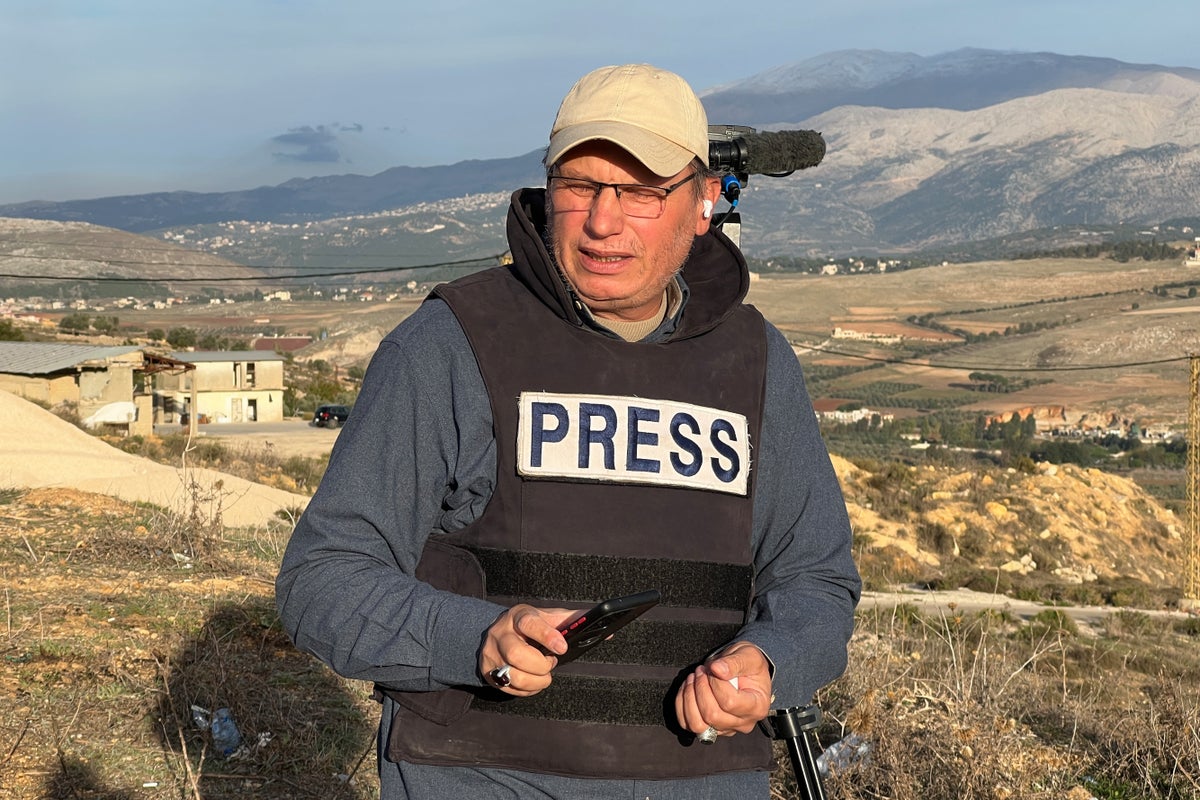
The death of three journalists in an Israeli airstrike on Hasbaya, South Lebanon, is not a statistical anomaly of war. It is a calculated erasure of the witnesses who remain. Ghassan Najjar, Mohamed Reda, and Wissam Qassem were sleeping in a compound specifically known to house media crews when the missiles struck. There was no active combat in the immediate vicinity of the guesthouse. There were no warning shots. The strike was a surgical removal of the eyes and ears that provide the world with a window into the escalating ground invasion.
For those of us who have spent decades tracking the shifting ethics of modern warfare, this event marks a terminal point for the "safe zone" concept. When journalists are killed in their beds at a location they had explicitly coordinated with international authorities, the message is clear. The goal is no longer just to win the war on the ground, but to control the narrative by removing anyone with a camera who isn't embedded with an advancing army.
The Myth of the Accidental Strike
Military spokespeople often rely on the fog of war to explain away the deaths of non-combatants. They speak of "misfires" or "unidentified targets." In Hasbaya, that defense holds no water. The compound consisted of several bungalows housing reporters from various international and local outlets, including Al-Mayadeen and Al-Manar.
Modern precision munitions are designed to hit specific coordinates within a meter. To believe this was an accident, one must believe that one of the most technologically advanced militaries in the world failed to identify a cluster of vehicles marked with "PRESS" and a building filled with known media personnel. The reality is more clinical. The strike was an execution of a target that had been identified as a strategic nuisance.
We have seen this pattern before. From the 2003 shelling of the Palestine Hotel in Baghdad to the more recent killing of Shireen Abu Akleh, the mechanism of denial remains the same. First comes the claim of "crossfire." Then, the "internal investigation." Finally, silence. By the time the truth is begrudgingly admitted, the news cycle has moved on, and the chilling effect on the ground has already taken hold.
The Strategy of Information Blackouts
Why target a guesthouse in a relatively quiet town like Hasbaya? The answer lies in the geography of the conflict. As Israeli forces push deeper into Lebanese territory, they require a vacuum. They need to move without the scrutiny of independent observers who can document civilian casualties or the destruction of infrastructure.
When you kill a cameraman, you don't just stop one person from filming. You force every other journalist in the region to weigh the value of the story against the certainty of their own death. Many news organizations, fearing for their staff, will pull back. They will rely on official press releases or verified social media clips, both of which are easily manipulated.
This creates a "sanitized" war. Without independent verification, the narrative becomes a contest of government-issued infographics. We are entering an era where the only "truth" available is the one that has been scrubbed by a military censor.
The Cost of Being Local
There is a distinct hierarchy in how the world reacts to the killing of journalists. When a Western correspondent for a major American or European network is harmed, the diplomatic pressure is immense. However, for local Lebanese or regional Arab journalists, the reaction is often a shrug of the shoulders and a footnote in a human rights report.
Ghassan Najjar and Mohamed Reda were veterans of their craft. Wissam Qassem was a technician whose job was to ensure the signal reached the satellites. These men were not "collateral." They were the infrastructure of information. By treating local journalists as expendable, the international community grants a silent license to those who wish to keep their actions in the dark.
The Failure of International Protections
The Geneva Conventions are explicit. Journalists in war zones are to be treated as civilians. Deliberately targeting them is a war crime. Yet, these legal frameworks feel increasingly like relics of a more honorable age.
The United Nations and various press freedom groups issue statements of "grave concern" with mechanical regularity. These statements have no teeth. Without a mechanism for independent, international criminal investigations that can actually lead to indictments, the laws of war are merely suggestions.
We are witnessing the total collapse of the "Press" vest as a shield. It has instead become a bullseye. If a journalist's presence can be framed as "incitement" or "support for terrorism" by the attacking force, the legal barriers to killing them vanish in the eyes of the perpetrator. This shifting of definitions is a dangerous precedent that will be used by every authoritarian regime and warring faction in the coming decades.
Beyond the Immediate Horizon
The strike in Hasbaya is part of a broader campaign that has seen over 120 journalists killed in the region over the last year. This is the highest death toll for media professionals in any conflict in recorded history.
This isn't just about Lebanon or the Middle East. It is about the future of global accountability. If a state can kill journalists with impunity while receiving diplomatic and military support from the world's leading democracies, then the concept of a "free press" is dead.
The industry is at a breaking point. Reporters are being asked to walk into kill zones where their status as non-combatants is no longer recognized. When the cameras finally stop rolling because the people holding them have been eliminated, the only version of history that survives will be the one written by the victors.
The craters in Hasbaya are not just holes in the ground. They are gaps in our collective understanding of what is happening on the front lines. Every time a missile finds a journalist's bedroom, the world grows a little more blind. We must stop pretending these are errors of judgment. They are deliberate choices made by commanders who value secrecy over human life.
Demand the release of the flight data and the target selection logs for the Hasbaya strike. Anything less than a transparent, third-party audit of the mission is a confession of guilt.

.png?width=1200&auto=webp&trim=0%2C125%2C0%2C75)