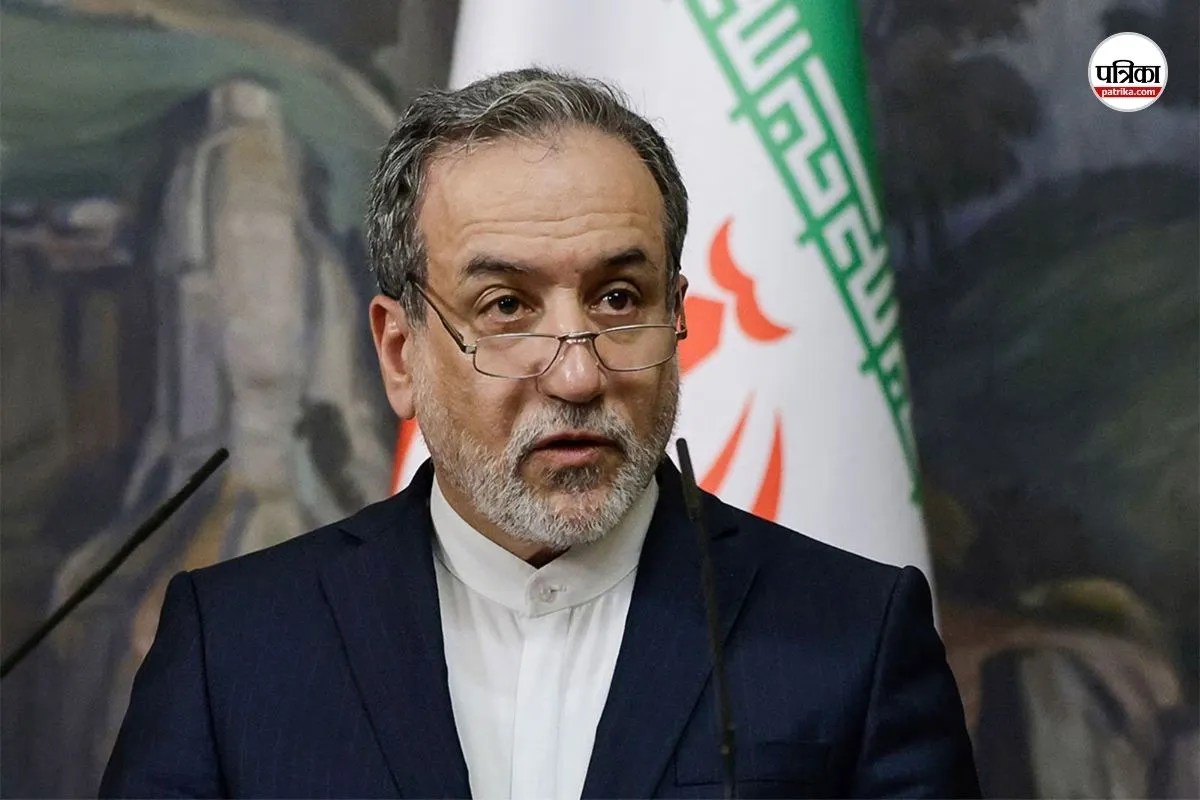
The elevation of Mojtaba Khamenei within the Iranian political hierarchy represents more than a familial transition; it is the formalization of a "deep state" continuity model designed to bulletproof the Office of the Supreme Leader against both internal factionalism and external kinetic pressure. When Foreign Minister Abbas Araghchi asserts that Iran "will not back down," he is not merely issuing a diplomatic platitude. He is signaling that the strategic doctrine of "Forward Defense"—the practice of engaging adversaries far from Iranian borders—is now decoupled from the personhood of any single leader and has become an institutionalized imperative.
The Triad of Power Consolidation
The transition of authority in Tehran functions through three distinct structural pillars. Understanding these is essential to predicting how the Araghchi-Khamenei era will manage regional escalation.
- Ideological Continuity: The selection of a successor who has spent decades embedded within the clerical and intelligence apparatus ensures that the "Export of the Revolution" remains a budgetary priority. This minimizes the risk of a "thaw" that could destabilize the internal security architecture.
- Military-Industrial Integration: Mojtaba Khamenei’s long-standing ties to the Islamic Revolutionary Guard Corps (IRGC) create a frictionless command structure. This reduces the latency between political decision-making and proxy mobilization in the Levant and Yemen.
- Diplomatic Shielding: Araghchi’s role is to provide the "rational actor" veneer. By maintaining a hardline stance in public while managing the technicalities of the nuclear file, he provides the space necessary for the military wing to operate without triggering a total collapse of back-channel communications with the West.
The Araghchi Doctrine and Risk Calculus
Araghchi’s recent statements reflect a specific shift in Iranian risk calculus. Historically, Iran utilized "strategic patience." However, the current geopolitical friction points—specifically the degradation of Hezbollah’s leadership and the direct exchanges with Israel—have forced a pivot toward "active deterrence."
The logic of "not backing down" is rooted in the prevention of a power vacuum during the succession phase. If Iran appears vulnerable during a leadership transition, the internal cost of maintaining the status quo increases exponentially. Therefore, aggressive rhetoric serves as a low-cost defensive mechanism to prevent perceived weakness.
The Mechanism of Forward Defense
The Iranian strategy relies on a cost-imposition model. The goal is not to win a conventional war, which the Iranian leadership recognizes as a losing proposition, but to make the cost of opposition higher than the adversary is willing to pay.
- Asymmetric Leverage: Utilizing the "Axis of Resistance" to create multiple fronts. This forces adversaries to dilute their intelligence and military resources.
- Threshold Management: Operating just below the level that would trigger a full-scale US intervention. Araghchi’s diplomatic maneuvers are designed to calibrate this threshold with precision.
- Internal Legitimacy: For Mojtaba Khamenei, maintaining a hardline foreign policy is a requirement for domestic survival. The security services, which form his primary power base, require a state of perpetual external friction to justify their economic and social dominance.
Economic Resilience and Strategic Autonomy
A significant bottleneck for any new leadership in Tehran is the Sanctions-Resistance Loop. The Iranian economy has been restructured to function under high-pressure constraints. This "resistance economy" is the financial bedrock of the Araghchi-Khamenei doctrine.
- Parallel Financial Systems: The use of front companies and illicit networks to maintain oil exports to non-aligned nations.
- Regional Integration: Strengthening ties with Russia and China to bypass Western-led financial infrastructure (SWIFT, etc.).
- Domestic Industrialization: Reducing reliance on high-tech imports by developing a robust, albeit less efficient, local military-industrial base.
This economic structure implies that the "cost" of not backing down is already priced into the Iranian state budget. Sanctions, while damaging to the Iranian public, have reached a point of diminishing returns in terms of their ability to change state behavior.
The Strategic Path Ahead
The intersection of Mojtaba Khamenei’s rise and Araghchi’s public-facing diplomacy creates a new, more rigid Iranian posture. The "red lines" for the Islamic Republic are no longer about individual leaders but about the survival of the clerical-military system itself.
The immediate tactical priority for the Iranian leadership will be the restoration of deterrence through proxy reinforcement. Expect an increase in the transfer of precision-guided munitions and a diversification of the "Forward Defense" theater. The messaging from Araghchi is a clear indication that the Iranian state has completed its internal realignment and is now prepared for a period of sustained friction.
The strategic play for any actor interacting with this new Iranian reality is to recognize that the succession process is not a moment of weakness, but a phase of intense, defensive consolidation. Tehran is signaling that its geopolitical footprint is non-negotiable, and its willingness to absorb external pressure is at an all-time high.


