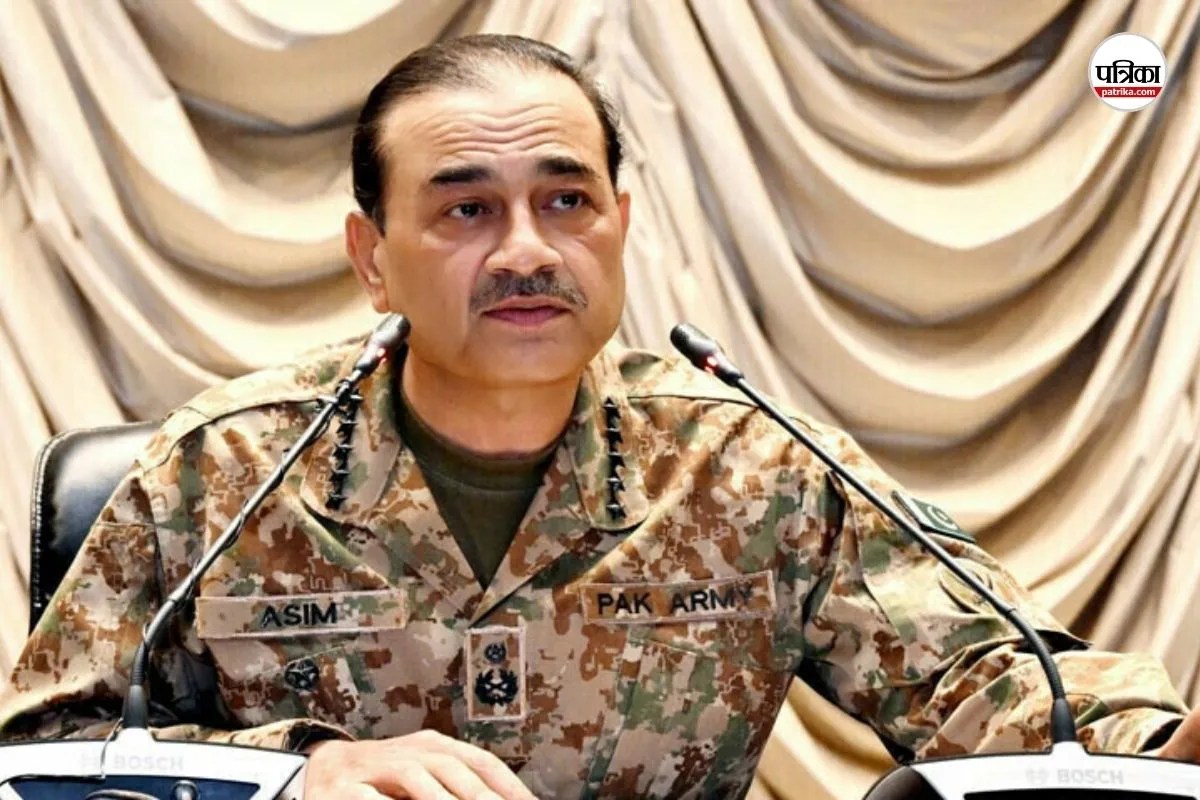
The persistence of Pakistan as a global epicenter for synchronized militant activity is not an anomaly of geography but a direct output of a specific internal governance architecture. When international monitoring bodies or indices rank Pakistan at the zenith of terror-related risk, they are measuring the visible symptoms of a deep-seated "Dual-Track Sovereignty" model. In this framework, the state maintains a formal veneer of counter-terrorism cooperation for international consumption while simultaneously managing a shadow infrastructure of non-state actors to project influence beyond its borders. Understanding this dynamic requires moving past emotive headlines and into a cold analysis of the fiscal, kinetic, and ideological variables that sustain this equilibrium.
The Triad of Institutionalized Instability
The ecosystem that allows militant groups to thrive within Pakistan is supported by three distinct pillars. If any one of these pillars were removed, the cost of maintaining high-intensity militancy would become prohibitive for the state.
1. The Strategic Depth Doctrine
Since the 1980s, the Pakistani security establishment has viewed militant proxies as "force multipliers." In a conventional military sense, the cost of maintaining a standing army capable of achieving parity with regional rivals is economically unsustainable. By outsourcing kinetic operations to irregular groups, the state converts low-cost ideological fervor into high-impact geopolitical leverage. This creates a "Protected Proxy" loop: the state provides sanctuary, and the proxy provides deniable external pressure.
2. The Informal Value Transfer System
Terrorism requires a specific liquidity profile. High-value international banking is too easily monitored by the Financial Action Task Force (FATF). Consequently, Pakistan’s reliance on the Hawala and Hundi systems—informal money transfer networks based on trust and local brokers—provides the necessary circulatory system for militant financing. These networks operate outside the visibility of standard fiscal audits, making the "grey-listing" of the country a frequent occurrence but rarely a terminal blow to the underlying cash flow.
3. The Controlled Radicalization Pipeline
The education sector, specifically the unregulated Madrasa system, acts as a human capital incubator. When the state fails to provide a viable public education infrastructure, it cedes the intellectual development of the youth to private religious institutions. This creates a steady supply of recruits who are ideologically aligned with the state’s external objectives, effectively lowering the "acquisition cost" for militant organizations.
The Cost Function of Counter-Terrorism Theater
To maintain international legitimacy and access to IMF credit facilities, the Pakistani state must periodically engage in visible "cleansing" operations. However, these operations typically follow a predictable decay curve. Kinetic actions like Zarb-e-Azb or Radd-ul-Fasaad target "anti-state" militants (those who attack the Pakistani military) while leaving "pro-state" assets (those who operate externally) untouched.
This bifurcation creates a massive internal security paradox. The groups that the state considers "assets" and the groups it considers "liabilities" often share the same logistical networks, safe houses, and ideological DNA. When the military strikes one branch of the network, it inadvertently creates a vacuum that another branch—often one with a more radicalized anti-state agenda—fills. The result is a perpetual state of "mow the grass" counter-insurgency that prevents total collapse but ensures the environment remains conducive to terror.
Economic Erosion and the Sovereignty Debt Trap
The long-term consequence of prioritizing a militant-aligned security posture is the degradation of the national balance sheet. The "Terrorism Risk Premium" affects the economy through three primary channels:
- Foreign Direct Investment (FDI) Stagnation: Capital is inherently risk-averse. When a country is consistently ranked at the top of terror indices, the "hurdle rate" (the minimum return an investor requires) becomes impossibly high. Investors do not just fear physical attacks; they fear the unpredictable regulatory shifts and international sanctions that accompany state-sponsored militancy.
- Brain Drain and Human Capital Flight: The most mobile and highly skilled segments of the population are the first to exit. This leaves the state with a shrinking tax base and a workforce that is increasingly susceptible to radicalization due to lack of economic opportunity.
- The IMF Dependency Cycle: Because the domestic economy cannot generate enough surplus to service its debt or fund its military, the state becomes a "geopolitical rent-seeker." It leverages its instability to extract bailouts from global powers who fear the "nuclear-armed collapse" scenario.
The Technical Breakdown of the TTP-Taliban Nexus
The resurgence of the Tehrik-i-Taliban Pakistan (TTP) following the 2021 shift in Kabul illustrates the failure of the "Strategic Depth" model. The Pakistani establishment expected a friendly regime in Afghanistan to secure its western border. Instead, the ideological affinity between the Afghan Taliban and the TTP has created a cross-border sanctuary that the Pakistani military cannot easily penetrate without risking a full-scale interstate conflict.
This creates a kinetic bottleneck. The TTP utilizes sophisticated weaponry left behind by Western forces, including night-vision optics and encrypted communication tools, which has shifted the tactical advantage in the mountainous border regions. The Pakistani state now finds itself in a position where its historical "assets" in Kabul are providing the logistical foundation for its greatest domestic "threats."
Systematic Constraints on Reform
The barrier to shifting away from this high-risk model is not a lack of awareness but a lack of institutional incentive. The security establishment's dominance over the political process is predicated on the existence of an existential external threat. If the state were to successfully dismantle the militant infrastructure and normalize relations with its neighbors, the justification for the military's outsized share of the national budget would evaporate.
Furthermore, the "Civil-Military Asymmetry" ensures that any civilian leader attempting to fundamentally alter the national security doctrine is quickly sidelined or removed. This structural rigidity makes "reform" a rhetorical tool used for international negotiations rather than an operational goal.
The Strategic Play for Regional Stability
The only viable path forward for a stable Pakistan—and by extension, a reduction in its terror-list ranking—requires a transition from a "Geopolitical Pivot" state to a "Geo-economic Hub." This shift is not a matter of policy but of survival. The current model has reached its fiscal limit.
- Full Decoupling of the Proxy Asset Class: The state must move beyond the "good militant/bad militant" binary. This involves the total dismantling of the safe-haven infrastructure, regardless of the proxy’s external utility. This is a high-risk maneuver that could trigger a short-term spike in internal violence as formerly aligned groups turn on the state.
- Fiscal Transparency and Digitalization: Transitioning the informal economy into a regulated digital framework is the only way to permanently disrupt the financing of militancy. This requires dismantling the Hawala networks and enforcing strict AML (Anti-Money Laundering) protocols across all tiers of the banking sector.
- Educational Reclamation: The state must regain the monopoly on the intellectual development of its youth. This necessitates a massive reinvestment in secular public education and the strict regulation of the Madrasa curriculum to prevent the weaponization of ideology.
Failure to execute this pivot will result in a "failed state" trajectory where the central government maintains control over the urban centers and the nuclear arsenal, while the periphery remains under the de facto control of various militant factions. This fragmentation is already visible in the increasing frequency of attacks in Balochistan and Khyber Pakhtunkhwa. The strategic play is no longer about winning a regional influence game; it is about preventing the terminal cannibalization of the state by the very forces it helped create.