The closure of Dubai International Airport (DXB) following military escalation between the United States, Israel, and Iran is not merely a localized transport delay; it is a systemic failure of the "Hub-and-Spoke" aviation model under kinetic geopolitical stress. When the world's busiest international terminal ceases operations, the resulting kinetic friction exposes a critical vulnerability in global supply chains and passenger mobility. This shutdown serves as a case study in how centralized infrastructure, designed for maximum efficiency in a globalized era, becomes a high-magnitude liability during regional conflict.
The Architecture of Hub Vulnerability
The dominance of DXB relies on a specific geographic advantage: the ability to connect 80% of the world’s population within an eight-hour flight. However, this concentration of traffic creates a singular point of failure. The mechanism of the shutdown can be decomposed into three primary operational stressors.
1. Airspace Contraction and The Corridor Problem
Modern aviation depends on predictable, high-throughput corridors. When the U.S. and Israel engage in strikes against Iranian assets, the immediate result is the "sterilization" of vast swaths of Persian Gulf and Middle Eastern airspace.
- The Buffer Zone Paradox: Civil aviation requires a significant safety buffer from active missile defense systems and electronic warfare (EW) environments.
- GPS Spoofing and Signal Interference: Beyond the physical threat of projectiles, the deployment of high-powered signal jamming near conflict zones renders standard navigation unreliable for commercial hulls, forcing mass groundings.
- Rerouting Friction: As Iranian and neighboring airspaces close, traffic is diverted into narrow corridors over Saudi Arabia or Egypt. These corridors lack the bandwidth to handle the sudden 300% to 500% increase in diverted traffic, leading to systemic saturation.
2. The Feedback Loop of Ground Congestion
A hub like Dubai operates on a "flow-through" basis. Unlike origin-destination airports, where passengers exit the terminal, a hub’s capacity is defined by its ability to transfer passengers between gates.
- Gate Stagnation: When outgoing flights are canceled due to airspace closures, incoming flights have no gates to dock at. This leads to "tarmac gridlock," where aircraft are forced to hold on taxiways, consuming fuel and timing out flight crews.
- The Crew Duty Cycle: Aviation regulations strictly limit the hours a pilot or cabin crew can work. Massive delays trigger a "duty-time domino effect," where crews reach their legal limits while waiting for clearance, leaving the airline with plenty of planes but zero legal operators to fly them.
3. Economic Displacement and Revenue Leakage
The cost of a total shutdown at DXB is measured in hundreds of millions of dollars per hour. This includes lost landing fees, the burn rate of parked aircraft, and the massive logistical expense of re-accommodating hundreds of thousands of stranded travelers.
Quantifying the Chaos The Multiplier Effect
The disruption follows a non-linear progression. A four-hour closure does not result in four hours of delay; it results in 48 to 72 hours of recovery time. This is due to the Network Propagation Delay.
The Capacity Crunch
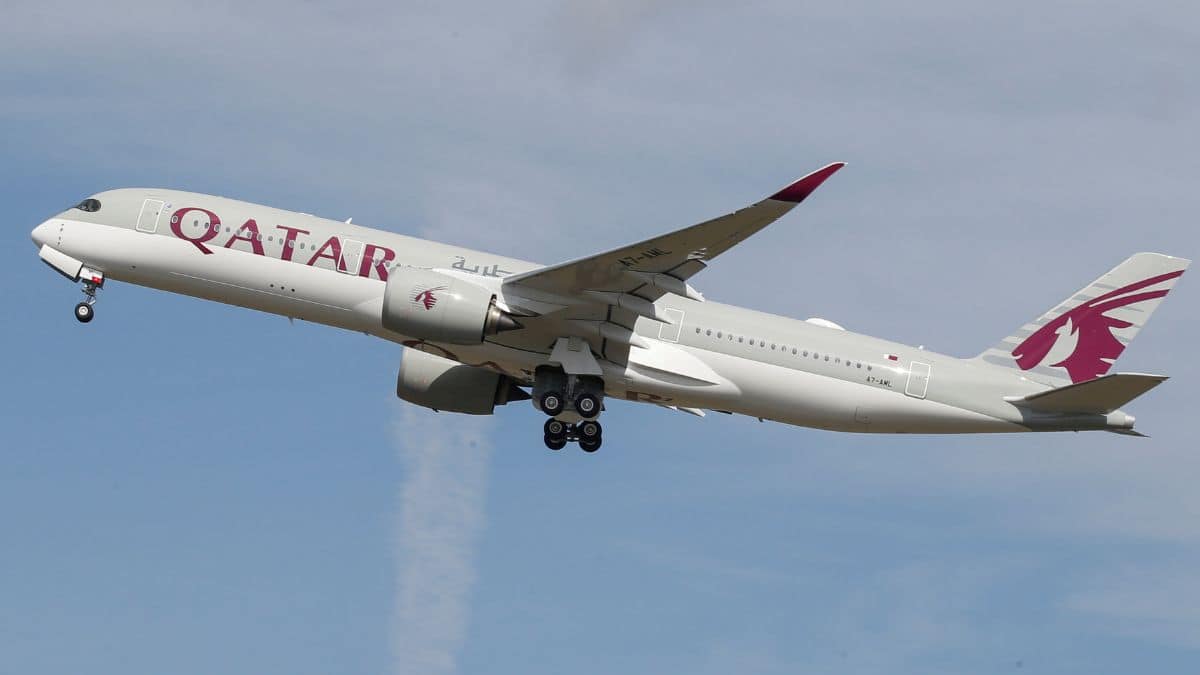
When DXB shuts down, the capacity of the entire "Middle East Big Three" (Emirates, Qatar Airways, and Etihad) is compromised. Because these airlines share similar flight paths, a strike on Iran effectively severs the main artery between Europe and Asia.
- Alternative Routing Constraints: Diverting to hubs like Singapore (SIN) or Istanbul (IST) is not a simple switch. These airports operate near peak capacity; they cannot absorb an extra 200,000 passengers daily without catastrophic service degradation.
- The Cargo Bottleneck: Dubai is a critical node for "belly cargo"—freight carried in the hold of passenger planes. The shutdown halts the movement of high-value electronics, pharmaceuticals, and time-sensitive components, triggering a secondary shockwave through global manufacturing.
Geopolitical Risk and Insurance Premiums
The aviation industry operates on razor-thin margins, and the cost of "War Risk" insurance is a decisive factor in route viability.
- Premium Spikes: Following military strikes, insurers immediately reclassify the Persian Gulf as a high-risk zone. This can increase insurance costs per flight by an order of magnitude, making some routes economically unviable even if the airspace remains technically open.
- The "Safe Haven" Flight: Capital and passengers begin to favor routes that bypass the region entirely, such as trans-Pacific routes or the "Great Circle" routes over the North Pole, despite the higher fuel burn. This represents a structural shift in passenger behavior that can outlast the actual conflict.
Tactical Deficiencies in Current Crisis Management
Current airline contingency plans are built for weather events, not kinetic warfare involving state actors. The "Standard Operating Procedure" (SOP) fails in three specific areas:
- Information Asymmetry: Airlines often receive airspace closure notices (NOTAMs) only minutes before they take effect, leaving aircraft in flight with dwindling fuel and limited diversion options.
- Communication Saturation: Passenger management systems are designed for localized issues. In a global shutdown, the volume of rebooking requests crashes legacy IT infrastructure, leaving passengers in a state of "information blackout."
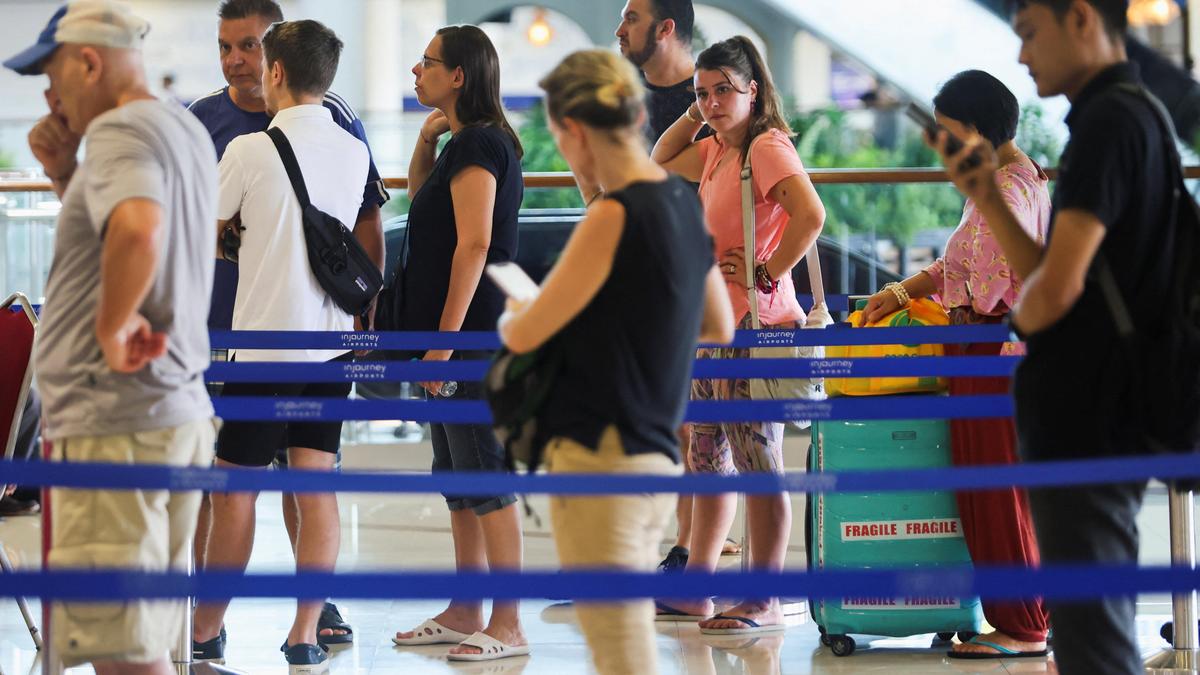
- Ground Support Scalability: Airports cannot scale their hotel and food infrastructure to match the needs of 100,000+ stranded individuals simultaneously.
Strategic Reconfiguration of the Aviation Map
The recurring instability in the Middle East demands a shift from Efficiency-Maximized networks to Resilience-Adjusted networks. For carriers and travelers alike, the strategic response involves a diversification of transit nodes.
- For Airlines: The development of "secondary hubs" in more stable regions (e.g., Central Asia or Northern Africa) provides a pressure valve. Investing in ultra-long-haul (ULH) aircraft, such as the Airbus A350-1000, allows carriers to fly directly between distant city pairs, bypassing conflict-prone hubs entirely.
- For Logistics and Cargo: Shifting from a total reliance on air-freight through the Gulf to multi-modal paths (rail-to-sea via the Middle Corridor) reduces the impact of a single-airport shutdown.
- For the Traveler: The "Hub-Avoidance" strategy becomes a premium service. Travelers will increasingly pay for direct flights or routes through politically neutral zones to avoid the risk of being stranded in a geopolitical crossfire.
The Dubai shutdown proves that the current concentration of global transit in a single, volatile geographic corridor is a systemic risk that can no longer be ignored. The "Master-Hub" era is facing its first true existential challenge, where the efficiency of the center is outweighed by the volatility of the surroundings.
Move all time-sensitive logistics to the trans-Siberian or trans-Pacific corridors immediately. For passenger operations, prioritize the activation of the "South-South" route—connecting Asia to Europe via Africa—as a permanent contingency. This is no longer a temporary disruption; it is the new baseline for global transit risk.
Would you like me to analyze the specific economic impact on the Emirates Group's quarterly revenue or map the alternative flight paths currently being utilized by European carriers to bypass the Persian Gulf?