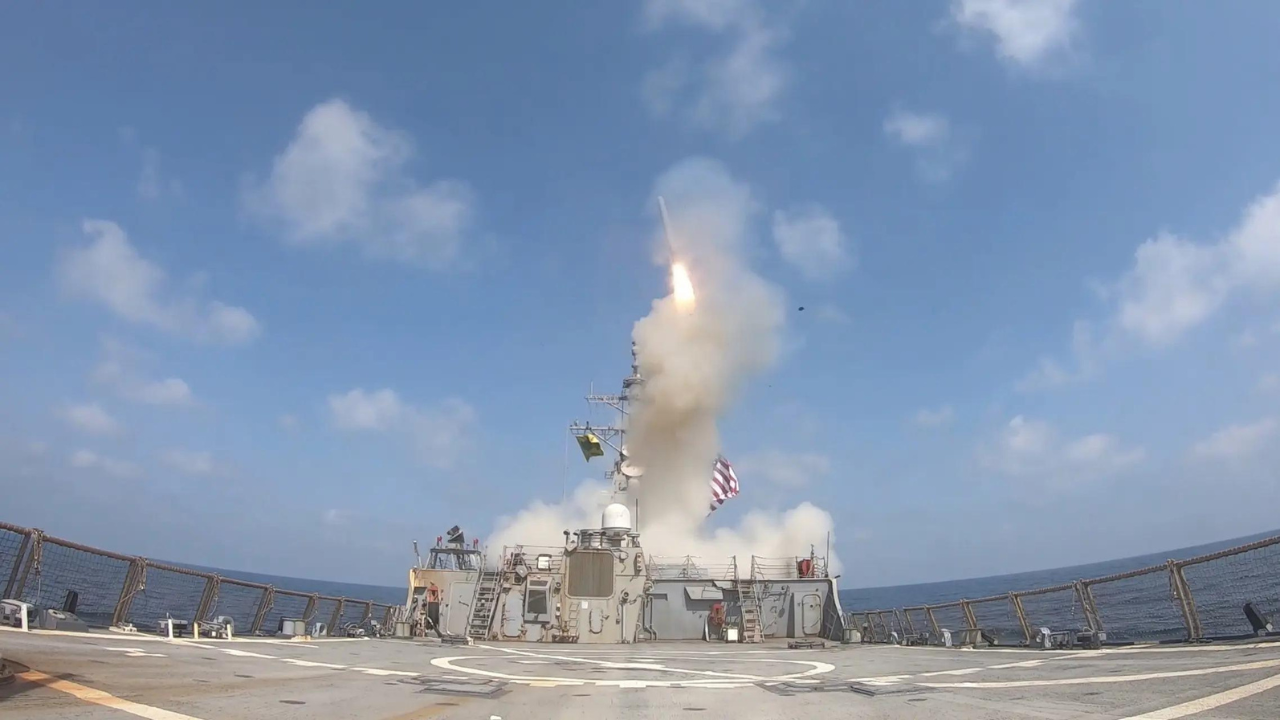
The death of three American service members during Operation Epic Fury represents a structural shift in the Middle Eastern security architecture, moving the conflict from a cycle of containment to a test of kinetic endurance. While media reports focus on the "fluidity" of the situation, a data-driven analysis reveals a deliberate attrition strategy employed by Iranian-aligned proxies. This engagement is not an isolated skirmish but a data point in a broader friction model designed to stress-test U.S. air defense saturation limits and political risk thresholds.
To understand the current theater, we must deconstruct the engagement into three primary analytical pillars: Technical Attrition, Geopolitical Signaling, and the Escalation Ladder.
The Mechanics of Defensive Saturation
The casualties sustained in Operation Epic Fury highlight a critical vulnerability in modern base defense: the cost-exchange ratio of interceptors versus loitering munitions. The "fluid" nature of the battlefield is a direct result of the proliferation of low-cost, high-precision Unmanned Aerial Systems (UAS).
The operational failure at the site likely stems from one of three technical bottlenecks:
- Identification Friend or Foe (IFF) Ambiguity: In high-traffic corridors where U.S. drones are returning to base simultaneously with incoming hostile threats, the temporal window for discrimination is measured in seconds. If a hostile UAS shadows a friendly return profile, the automated engagement logic may be suppressed to avoid fratricide.
- Electronic Warfare (EW) Gaps: Proxies have shifted toward inertial navigation and optical recognition, which bypass traditional GPS jamming. This renders standard "soft-kill" electronic countermeasures ineffective, forcing a reliance on "hard-kill" systems like the Phalanx CIWS or Coyote interceptors.
- Magazine Depth Exhaustion: There is a finite number of interceptors available at any remote outpost. By launching "swarms" or staggered waves of low-cost munitions, an adversary can force a defender to deplete their high-value inventory, leaving a window of vulnerability for a single, lethal strike to penetrate the perimeter.
The Cost Function of Proxy Warfare
Iran utilizes a "deniable escalation" framework. By delegating the kinetic execution of Operation Epic Fury to local militias, Tehran achieves strategic objectives while insulating its domestic infrastructure from direct retaliation. The cost function for the U.S. is asymmetric; the Pentagon spends millions of dollars in defensive sorties and high-end interceptors to negate a threat that costs the adversary less than $20,000 per unit.
This asymmetry creates a Strategic Debt. Every dollar spent on defending a stationary outpost in a secondary theater is a dollar diverted from Pacific deterrence or modernization. The adversary’s goal is not necessarily to "win" a traditional battle, but to make the American presence a net-negative asset through constant, low-level resource depletion.
The Escalation Ladder and Retaliation Thresholds
The U.S. response to the loss of life follows a predictable, yet increasingly risky, ladder of escalation. Historically, the threshold for a major kinetic response is the transition from "property damage" to "personnel loss."
Tier 1: Proportional Counter-Battery
This involves striking the specific launch sites or storage facilities used in the attack. While immediate, it rarely provides long-term deterrence because the infrastructure is mobile and easily replaced.
Tier 2: Leadership Decapitation
Targeting the command-and-control (C2) nodes of the specific militia involved. This disrupts the operational tempo but can trigger a "martyrdom" feedback loop that increases local recruitment.
Tier 3: Regional Hub Neutralization
Striking the logistical hubs outside of the immediate combat zone—specifically those where advisors or materiel are funneled. This is the highest risk level, as it brings U.S. forces into direct conflict with state-level actors rather than just proxy groups.
The Intelligence-Kinetic Loop
The "fluidity" referenced by officials is a symptom of a degraded intelligence-kinetic loop. For a defense to be effective, the sensor-to-shooter timeline must be shorter than the flight time of the incoming munition. In the case of Operation Epic Fury, the failure suggests a breakdown in the OODA Loop (Observe, Orient, Decide, Act).
- Observation: Sensors likely detected the threat, but the data may have been discarded as "noise" or "clutter" if the UAS profile matched commercial drones.
- Orientation: The local command must determine if the threat warrants the use of limited interceptor stock.
- Decision: The delay in authorizing a "hard-kill" engagement often stems from restrictive Rules of Engagement (ROE) designed to prevent regional escalation.
The Logic of Deterrence Decay
Deterrence is not a static state; it is a perishable commodity. When a red line (the death of soldiers) is crossed, the subsequent response must exceed the perceived "benefit" the adversary gained from the attack. If the U.S. response is viewed as merely "symbolic," it reinforces the adversary’s belief that they can continue to escalate without facing existential risk.
The current challenge is that the adversary has calibrated their aggression to sit just below the threshold of a full-scale regional war. They are betting that the U.S. is too distracted by domestic cycles and other global theaters to commit to a sustained campaign. Operation Epic Fury is a "stress test" of this hypothesis.
Structural Constraints on U.S. Strategy
The U.S. is operating under three primary constraints that the adversary is actively exploiting:
- The Base Vulnerability Paradox: To maintain influence, the U.S. must keep small, distributed outposts. However, these outposts are inherently harder to defend than large, centralized airbases.
- The Diplomatic Friction: Any massive strike by the U.S. risks alienating host-nation governments, who face internal pressure to expel foreign forces when those forces bring "the war" to their doorstep.
- The Intelligence Threshold: To strike "Iran-backed" targets, the U.S. requires a high degree of forensic certainty to satisfy international legal standards. Proxies exploit this by using "gray zone" tactics that blur the lines of responsibility.
The Shift to Autonomous Defense
The casualties in Operation Epic Fury will likely accelerate the transition toward autonomous, AI-driven defense layers. Human operators cannot maintain the 24/7 vigilance required to intercept low-RCS (Radar Cross Section) targets in a saturated environment. We are moving toward a "Sensor-Fused" reality where the decision to fire is delegated to an algorithm capable of processing thousands of data points per second.
This shift, while technically necessary, introduces a new layer of risk: the potential for algorithmic escalation. If an autonomous system misidentifies a civilian or friendly craft and engages, the resulting political fallout could achieve the adversary's goal of force expulsion without them firing a single shot.
Strategic Recommendation
The U.S. must abandon the reactive "tit-for-tat" model, which cedes the initiative to the adversary. Effective mitigation requires a shift toward Proactive Disruption. This involves the systemic neutralization of the supply chain—targeting the manufacturing and transit nodes of UAS components long before they reach the launch site.
The focus must move from defending the point of impact to compromising the network of origin. This requires a fusion of cyber-offensive operations to disable drone guidance software at the source and aggressive maritime interdiction to seize critical components. If the cost of the "delivery system" remains low, the U.S. will continue to bleed resources until the presence in the region becomes politically and economically untenable. The only path forward is to break the adversary's cost-efficiency advantage by making the production and deployment of these systems prohibitively expensive in terms of both capital and risk.