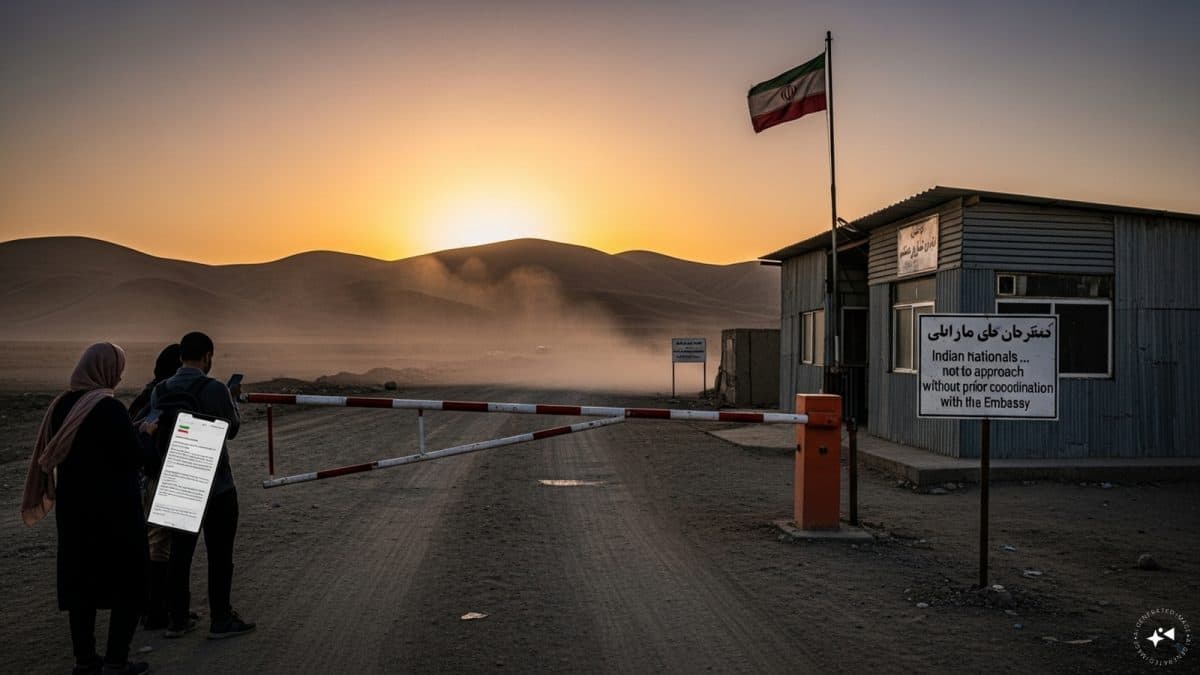
The Foreign Office is Not Your Concierge
Stop refreshing the Foreign, Commonwealth & Development Office (FCDO) website like it’s a luxury travel portal. The "major update" the media is feeding you isn’t a rescue plan; it’s a disclaimer. When regional tensions in the Middle East escalate—specifically involving the kinetic exchange between Israel and Iran—the British government isn't coming to pick you up with a fleet of private jets.
The media loves the "stranded Brit" narrative because it’s easy. It’s lazy. It paints the traveler as a victim of a sudden, unpredictable storm. But if you’re sitting in a departure lounge in Amman or Tel Aviv complaining that your budget flight was canceled due to "unforeseen circumstances," you’ve failed the most basic test of global situational awareness.
War is not a weather event. It is a predictable outcome of documented escalations. If you flew into a region where the airspace is routinely closed for "GPS spoofing" or ballistic missile trajectories, you didn't get stranded. You made a bet against the house and lost.
The Myth of the "Rescue Flight"
The general public operates under a delusion of perpetual safety. They believe that as long as they hold a burgundy (or post-Brexit blue) passport, the Royal Air Force is essentially an Uber for bad decisions.
Here is the brutal reality: The FCDO only organizes repatriation flights when commercial options are zero. As long as there is a single, overpriced, 14-hour indirect flight via a third-country hub, you are officially "not stranded." You’re just cheap.
I have watched travelers spend three days screaming at consulate staff in Istanbul because their £200 direct flight was canceled, while refusing to buy the £1,200 ticket available on a different carrier. This is a fundamental misunderstanding of personal risk. When you travel to a volatile region, your emergency fund should be larger than your holiday budget. If it isn't, you aren't an adventurer; you're a liability.
Airlines Are Not Your Protectors
Most people think airlines cancel flights out of an abundance of caution for passenger safety. That’s a half-truth. They cancel flights because their insurers, the actual titans who run the world's logistics, refuse to cover the hull.
A Boeing 787 costs roughly $250 million. If an insurance syndicate in London decides the risk of a missile strike over the Levant has crossed a specific mathematical threshold, they pull the coverage. The airline has no choice but to ground the fleet.
- The "Safety" Lie: Airlines will tell you they are prioritizing your wellbeing.
- The "Balance Sheet" Truth: They are prioritizing their assets against a total loss.
When the Foreign Office "issues an update," they are usually just echoing what the insurance markets have already decided forty-eight hours prior. If you want to know when your flight is actually going to be canceled, stop looking at government websites. Look at the premiums for war-risk insurance in the aviation sector.
The Logistics of Airspace is a Zero-Sum Game
Airspace isn't a highway; it’s a jigsaw puzzle where the pieces keep changing shape. When Iranian or Israeli airspace closes, every single flight path from Europe to Southeast Asia and Australia gets squeezed into narrow corridors over Iraq or Saudi Arabia.
This creates a massive logistical bottleneck. It’s not just about whether you can fly out of the zone; it’s about whether there is a slot for your plane to exist in the sky. When the FCDO tells you to "contact your airline," they know the airline’s customer service desk has no more information than you do. The decisions are being made by air traffic controllers and military liaisons three levels above the check-in desk.
Stop Asking the Wrong Questions
People ask: "When will the flights resume?"
The honest answer: "When the risk-to-profit ratio stabilizes."
People ask: "What is the government doing to help?"
The honest answer: "Drafting a press release so they don't look incompetent when you eventually have to pay for your own way home."
The premise that a "major update" from the Foreign Office changes your reality is flawed. It’s a reactive document. By the time it’s published, the situation on the ground has already evolved.
How to Actually Travel in a Combat Zone
If you find yourself in a region where the skies are closing, stop acting like a consumer and start acting like a strategist.
- Discard the Round-Trip Logic: Your return ticket is a sunk cost. Forget it. The moment the first missile flies, that ticket is a piece of digital trash.
- Land Routes are Your Only Friend: If the planes aren't flying, go to the nearest stable land border. Get to a hub that isn't dependent on the specific airspace under fire. I have seen people wait a week for a flight out of a conflict zone when a six-hour bus ride to a neutral neighbor would have put them on a plane in six hours.
- The "Second Tier" Carrier Strategy: Major flag carriers (British Airways, Lufthansa, etc.) are the first to pull out because they have the most to lose in terms of brand reputation and insurance. Local "second tier" airlines often fly much longer into a crisis. They know the terrain better, and their risk tolerance is higher. It’s uncomfortable, it’s expensive, but it gets you out.
The Cost of the "Indignant Tourist" Mindset
There is a specific type of traveler who believes that their indignation has market value. They stand at the boarding gate demanding "compensation" under UK261 or EU261 regulations while the sky is literally glowing with anti-aircraft fire.
Let’s be clear: "Extraordinary circumstances" is the legal loophole that airlines use to avoid paying you a penny when war breaks out. You are not getting a hotel voucher. You are not getting a meal deal. You are on your own.
The belief that you are entitled to a smooth exit from a geopolitical crisis is the ultimate form of Western privilege. It blinds you to the reality of the situation and prevents you from taking the necessary, often expensive, actions required to secure your own safety.
Expertise vs. Sentimentality
The "industry insiders" telling you to "stay calm and wait for instructions" are giving you advice that benefits the system, not you. They want to prevent a stampede at the airport. They want to manage the optics.
My advice? Don't be part of the herd. If you see the escalations moving from rhetoric to hardware, leave. Don't wait for the FCDO to change the color of their map from "Amber" to "Red." By the time the map turns red, the last affordable seat has been taken by someone who was watching the news, not the government updates.
If you are currently "stranded," stop waiting for a hero. The British government is a bureaucracy, not a rescue squad. They are currently calculating the political cost of your inconvenience against the diplomatic cost of intervention. Guess which one is cheaper?
Buy the ticket. Take the bus. Move now. Or stop complaining that the world didn't pause its oldest conflicts to accommodate your holiday schedule.
The sky is closing. Decide if you’re a passenger or a survivor.