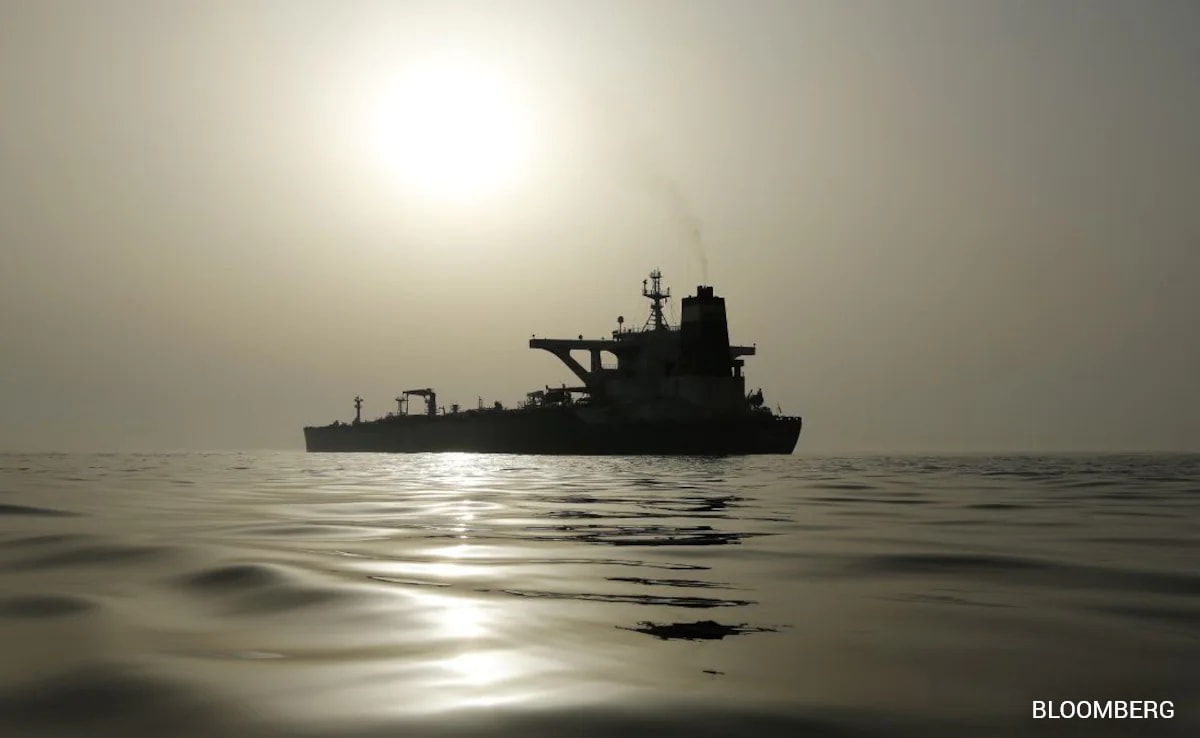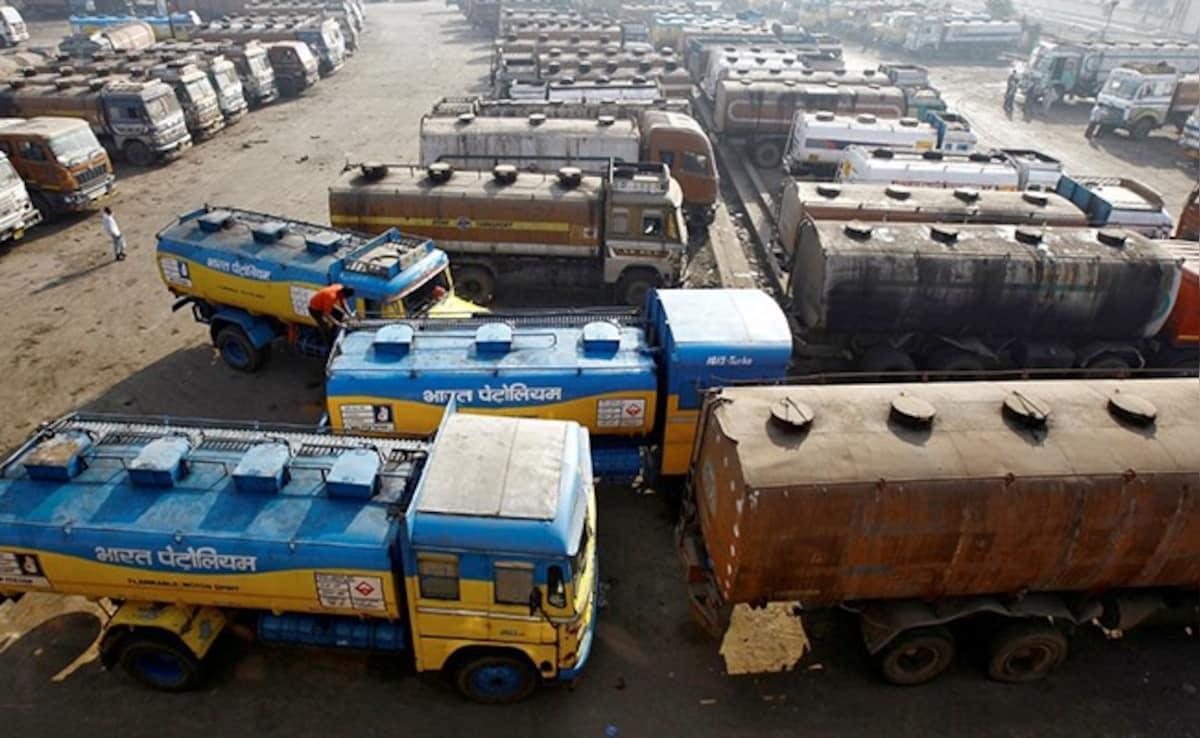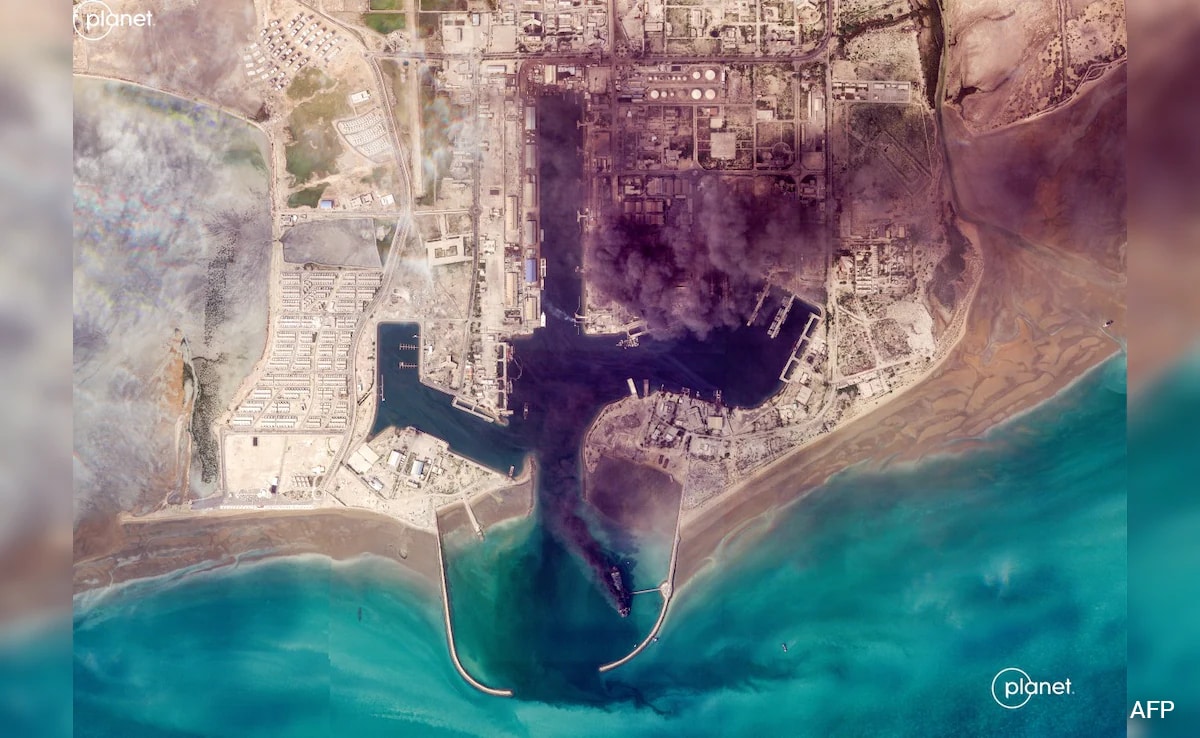
The global oil market operates on a razor-thin margin of logistical redundancy, and nowhere is this fragility more acute than the 21-mile-wide stretch of the Strait of Hormuz. For Asian economies—specifically China, India, Japan, and South Korea—this geographic constraint is not merely a shipping route; it is a single point of failure in their national industrial stacks. While traditional analysis focuses on the immediate price spike of Brent crude, the true risk lies in the Duration of Disruption and the Elasticity of Alternative Logistics. If the Strait closes, the shift from a price crisis to a physical volume crisis occurs in less than 72 hours, triggering a cascade of refinery failures across the Asia-Pacific region.
The Mechanics of the Hormuz Bottleneck
The Strait of Hormuz handles approximately 20 to 21 million barrels of oil per day (bpd), representing roughly 20% of global liquid petroleum consumption. For the "Asian Big Four," the dependence is asymmetric compared to the rest of the world.
- Japan and South Korea: Import nearly 80% of their total crude requirements through this single waterway.
- India: Sources approximately 60% of its imports from the Persian Gulf.
- China: While diversified via Russian pipelines and Central Asian overland routes, still relies on the Strait for over 40% of its seaborne crude.
The physical constraints of the Strait involve a two-mile-wide outbound lane and a two-mile-wide inbound lane, separated by a two-mile buffer zone. This narrowness means that a "closure" does not require a full naval blockade; the mere escalation of insurance premiums to "war risk" levels or the deployment of drifting sea mines effectively halts commercial traffic.
The Cost Function of Maritime Disruption
When the Strait is compromised, the economic impact follows a non-linear trajectory defined by three primary variables: The War Risk Premium, Freight Rerouting Lag, and Inventory Depletion Rates.
1. Insurance and the Instantaneous Price Floor
The moment a kinetic event occurs in the Strait, Protection and Indemnity (P&I) clubs and hull underwriters recalibrate risk. In previous periods of tension, war risk premiums have jumped from 0.02% to over 0.5% of a vessel's value within 24 hours. For a Very Large Crude Carrier (VLCC) valued at $100 million, this adds $500,000 to a single voyage cost before a single drop of oil has even moved. This cost is passed directly to the Asian refiner, compressing margins and forcing an immediate hike in domestic fuel prices.
2. The Logistics of the Long Way Around
If the Strait is impassable, the only alternative for Persian Gulf crude is the East-West Pipeline (Petroline) in Saudi Arabia, which terminates at the Red Sea, or the Abu Dhabi Crude Oil Pipeline, which bypasses the Strait to reach the Gulf of Oman. However, the aggregate capacity of these bypasses is less than 6.5 million bpd—leaving a deficit of 14 million bpd that simply cannot reach the market.
Asian buyers are then forced to compete for Atlantic Basin crudes (West African, North Sea, or US Gulf Coast). The transit time from the US Gulf Coast to Ningbo, China, is roughly 45 to 50 days via the Cape of Good Hope, compared to 15 to 20 days from Ras Tanura. This 30-day "logistics gap" creates a physical vacuum in supply chains that Strategic Petroleum Reserves (SPR) must fill.
Structural Vulnerabilities in Asian Downstream Assets
The crisis is not just about the availability of oil, but the Molecular Compatibility of the oil that remains. Asian refineries, particularly those in India and South Korea, are "complex" facilities optimized for the medium-to-heavy sour crudes produced in the Persian Gulf.
- Refining Complexity: A refinery calibrated for Kuwaiti Export Crude cannot switch to light, sweet US Permian Basin oil without significant efficiency losses or physical damage to distillation units over time.
- The Yield Problem: Shifting to alternative grades changes the output ratio of gasoline, diesel, and jet fuel. A sudden shift to lighter crudes would likely result in an oversupply of naphtha and a critical shortage of ultra-low sulfur diesel (ULSD), which powers the industrial and transport sectors of emerging Asia.
The Strategic Petroleum Reserve (SPR) Fallacy
Governments often point to their SPRs as a total safeguard. However, the utility of an SPR is governed by the Maximum Drawdown Rate, not just the total volume.
- China: Estimated to hold over 90 days of net imports.
- Japan: Holds roughly 100+ days of domestic consumption.
- India: Maintains a significantly smaller cushion, roughly 9 to 12 days of net imports in its underground salt caverns, with additional storage in refinery tanks.
The bottleneck is the physical infrastructure required to move oil from salt caverns to refineries. Most SPR systems are designed to supplement supply, not replace it entirely. A total Hormuz closure would exhaust India’s strategic stocks in weeks, while the logistical friction of moving Japan’s reserves to its coastal refineries would create localized "dry zones" where industry grinds to a halt despite the existence of national stocks.
Quantifying the Macroeconomic Feedback Loop
The relationship between crude prices and Asian GDP is roughly inverse and highly sensitive. For every $10 increase in the price of a barrel of oil, India’s GDP growth typically slows by 0.2% to 0.3%, and its current account deficit widens by nearly $10 billion.
In a closure scenario, the "fear index" drives prices toward a speculative ceiling. Using a standard supply-demand elasticity model, where global supply drops by 15%, oil prices would theoretically need to rise by 50% to 100% to force enough demand destruction to balance the market. For an economy like Vietnam or Thailand, this triggers immediate hyper-inflation in transport and electricity costs, as these nations lack the fiscal headers to subsidize fuel at such extremes.
The Infrastructure of Escalation: Tech and Surveillance
The risk is further complicated by the democratization of anti-access/area-denial (A2/AD) technology. The proliferation of low-cost loitering munitions (drones) and anti-ship cruise missiles (ASCMs) has shifted the power balance.
- Asymmetric Warfare: A $20,000 drone can effectively "close" the Strait if it strikes a VLCC, as no commercial captain will enter a zone where the hull's integrity cannot be guaranteed.
- Detection vs. Neutralization: While Asian navies (particularly China and India) have increased their presence in the Indian Ocean, their ability to provide "point defense" for hundreds of tankers simultaneously is mathematically impossible. The escort-to-tanker ratio is too low to sustain flow during active hostilities.
The Pivot to Overland and Arctic Alternatives
Recognizing the Hormuz trap, Asian powers are accelerating three specific strategic hedges, each with its own set of limitations.
1. The Russia-China Energy Bridge
China has maximized its intake of ESPO (East Siberia-Pacific Ocean) blend. This pipeline bypasses all maritime chokepoints. However, the capacity of the Power of Siberia and ESPO lines is finite. They currently satisfy only a fraction of China's total demand, making them a "survival floor" rather than a total replacement for Persian Gulf volumes.
2. The International North-South Transport Corridor (INSTC)
India is investing in the INSTC to link its ports with Iran and Russia. While primarily a trade route for finished goods, the corridor represents an attempt to build a strategic land-bridge that avoids the Hormuz/Malacca chokepoint.
3. The Northern Sea Route (NSR)
Melting Arctic ice has opened a seasonal window for Russian Arctic oil (Arco) to reach China and Japan in 30 days, avoiding the Suez Canal and the Strait of Hormuz. While technologically feasible for ice-class tankers, the NSR currently accounts for less than 1% of Asian crude imports, making it a "long-tail" hedge rather than a current solution.
The Strategy of Forced Displacement
The only viable response to a Hormuz closure is Demand Destruction by Design. Governments must prepare for an immediate 20% to 30% reduction in industrial and commercial fuel consumption to preserve SPRs for essential services.
- Tactical Action 1: Rapid activation of bilateral "Swap Agreements" between Asian powers and Gulf producers (UAE, Kuwait) for priority offtake from bypass pipelines.
- Tactical Action 2: Immediate implementation of tiered fuel rationing for heavy industry, prioritizing agricultural transport and medical logistics.
- Tactical Action 3: Strategic reallocation of LNG (Liquefied Natural Gas) to the power grid to offset crude oil burning for electricity, which is still prevalent in parts of South and Southeast Asia.
The Asian oil supply risk is not a "black swan" event; it is a "grey rhino"—a highly probable, high-impact threat that is currently being managed with tools that assume the Strait will always remain open. The reality is that the physical infrastructure of Asian energy security is built on a geographical anomaly that can be severed by a single kinetic event.
Would you like me to model the specific impact of a 30-day Hormuz closure on the current account deficits of the G7 vs. the Asian Big Four?