The 1,300-Pound Paperweight Fallacy
The headlines are screaming again. A 1,300-pound satellite is plummeting toward Earth. NASA is "warning" the public. The subtext is always the same: look up, stay indoors, and wait for the sky to fall. It’s a masterclass in manufactured anxiety designed to harvest clicks from people who don’t understand the brutal, unforgiving physics of our atmosphere.
Here is the reality that the fear-mongers ignore: a 1,300-pound satellite isn't a weapon. It’s a snack for the thermosphere.
When a decommissioned piece of hardware hits the upper atmosphere at 17,000 miles per hour, it isn't "falling." It is being vaporized. The kinetic energy involved is staggering. We are talking about a transition from a solid state to a collection of ionized gas and microscopic dust in a matter of seconds. Most of that 1,300 pounds will never touch the dirt. It will become a streak of light that lasts shorter than a TikTok video.
The Mathematical Impossibility of Your Concern
Every time a satellite de-orbits, the "risk to public safety" gets cited. Usually, you’ll see a number like a 1 in 2,500 chance of someone, somewhere, getting hit.
Let's dismantle that "lazy consensus."
That statistic is a global aggregate. It doesn't mean you have a 1 in 2,500 chance of a solar panel crashing through your roof. It means that across 8 billion people and 197 million square miles of surface area, the probability is mathematically non-zero. You are significantly more likely to be struck by lightning while winning the powerball than to have this NASA junk ruin your Tuesday.
- 70% of the Earth is water.
- 90% of the landmass is uninhabited.
- Atmospheric friction destroys 99% of the mass.
I’ve spent years watching the aerospace sector treat these re-entries like religious omens. It’s nonsense. We are tracking a speck of dust in a hurricane and pretending it’s a category five storm.
Why NASA "Warns" You (Hint: It's Not For Your Safety)
Why does NASA issue these alerts? Is it out of a deep-seated desire to protect the citizen of a small village in the Pacific? No. It’s a liability shield.
If NASA didn't report a de-orbiting satellite, and a three-inch piece of charred aluminum happened to bounce off a fishing boat, they’d be in court for a decade. By "warning" you, they are checking a box in a legal department. The media then takes that legal compliance and turns it into a blockbuster catastrophe.
They don't want you to know how little of that 1,300 pounds actually matters.
- Titanium housings? Maybe some survive.
- Solar panels? Toasted in the mesosphere.
- Batteries? Usually cooked by the time they hit the stratosphere.
What’s left? A piece of space trash roughly the size of a toaster, falling at a fraction of its orbital velocity, likely into the deep ocean.
Stop Asking "When?" and Start Asking "Why?"
People ask, "When will it fall?" as if it’s a scheduled bus. It’s not. The atmosphere is a chaotic fluid. Solar activity can swell the air and drag a satellite down weeks early, or it can stay aloft through sheer stubbornness.
The real question isn't the timing. It's why we still treat these 14-year-old relics like they are high-tech marvels. They are obsolete sensors. They are the VHS tapes of the low-Earth orbit. We should be celebrating their destruction, not fearing it. Every time one of these old pieces of junk burns up, we are clearing the "traffic lanes" for the next generation of satellite constellations that actually provide value.
The Reality of the "Debris Field"
When the media says "1,300-pound satellite," your brain pictures a massive, intact metal monolith landing on a school bus.
It’s a lie.
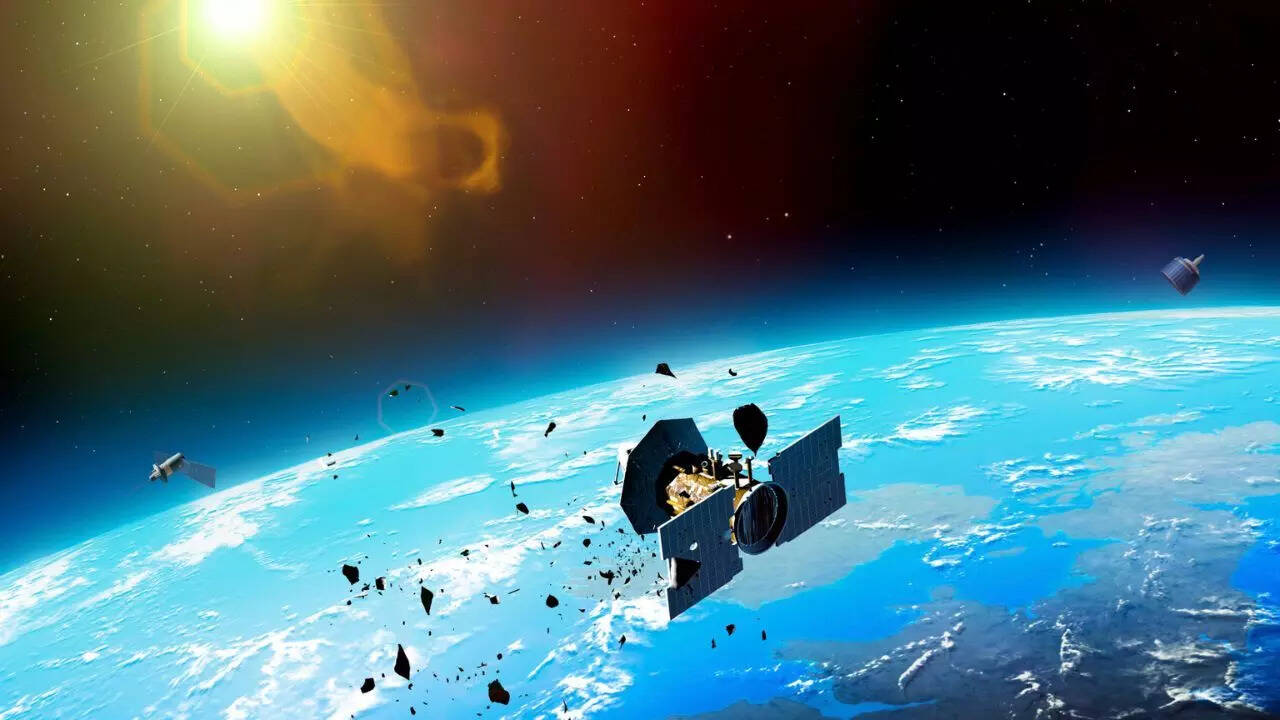
The moment that satellite enters the atmosphere, it isn't one object. It’s a fragmenting, melting, disintegrating cloud. By the time it reaches the 50-mile mark, it is a shower of sparks. The "debris field" isn't a targeted strike; it's a thousand-mile-long smear across the ocean.
Imagine a scenario where you drop a grain of sand into a swimming pool. Does the grain of sand "warn" the ants on the other side? That’s the scale of this event compared to the Earth’s surface.
- A piece of satellite debris has never killed a human.
- A 1,300-pound object is tiny compared to the tons of cosmic dust that hit us daily.
- The atmosphere is a better disposal system than any landfill we have on the ground.
Your False Sense of Fragility
We live in a world obsessed with safety protocols and "precautionary measures." NASA is leaning into that obsession. It’s a symbiotic relationship between an agency that wants to look responsible and a media that wants you to feel scared.
Stop checking the sky. Stop worrying about "March 10." If you want something to worry about, check your tire pressure or your cholesterol. Those things actually have a statistical probability of ending you.
This 1,300-pound satellite is a ghost story. It’s a beautiful, fiery exit for a machine that outlived its usefulness. Let it burn in peace.
The sky isn't falling. It's just doing its job.