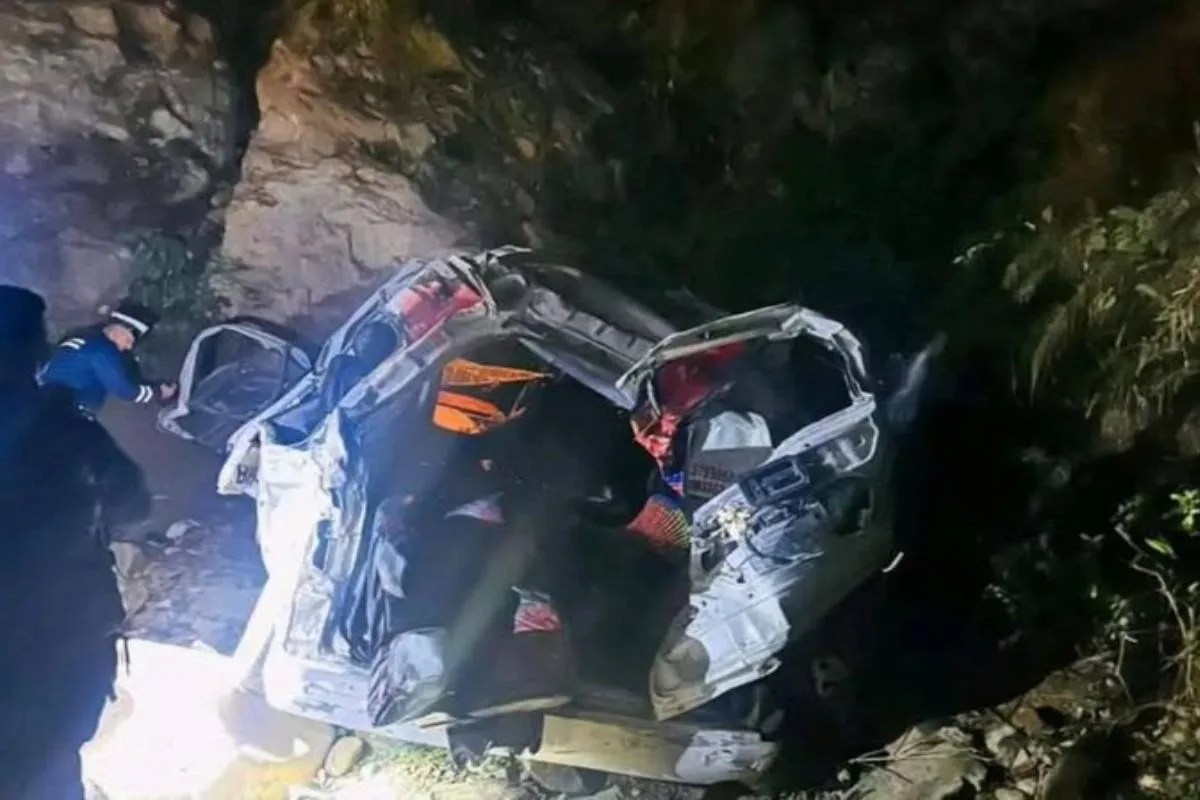
The standard media script for a Himalayan tragedy is as predictable as the monsoon. A bus carrying Indian pilgrims skids off a rain-slicked mountain road. Seven people die. A dozen more are mangled. The headlines scream about "tragic accidents" and "unfortunate twists of fate."
They are lying to you.
When a bus plunges into a ravine in Nepal, it isn’t an act of God. It isn’t a "mishap." It is the logical conclusion of a broken transit architecture that prizes cheap tickets over human lives. We continue to frame these events as isolated tragedies when they are, in fact, the expected output of the current system. If you build a machine designed to fail, you don't get to act surprised when it breaks.
The Myth of the Dangerous Road
The lazy consensus blames the geography. Journalists love to describe "treacherous terrain" and "deadly curves." This narrative lets everyone off the hook. You can’t sue a mountain. You can’t hold a cliff accountable for gravity.
The reality? The roads aren't the primary killers. The obsession with "adventure tourism" and "budget pilgrimage" is. I have spent years navigating the Prithvi Highway and the winding tracks toward Muktinath. The infrastructure is undeniably difficult, but physics doesn't change at the border. The problem is a lethal combination of mechanical neglect and systemic fatigue that no one wants to talk about because it ruins the "spiritual" vibe of the journey.
The Mathematics of Death
Let’s look at the numbers. Most of these buses are second- or third-hand vehicles that have been pushed far beyond their engineering limits. In the West, a bus might see a structural overhaul every few years. In the Himalayas, "maintenance" often consists of a new coat of paint and a prayer.
$$F = ma$$
Force equals mass times acceleration. When you overload a bus with 20% more passengers than its chassis was designed to hold, you aren't just being "efficient." You are fundamentally altering the vehicle’s center of gravity. On a flat highway, you might get away with it. On a 15-degree incline with a sheer drop to the left, you are flirting with a kinetic disaster. The moment that bus hits a hairpin turn, the centrifugal force overcomes the traction of worn-down tires.
It isn't an accident. It's a physics equation solving itself.
The Pilgrim Industrial Complex
We need to stop romanticizing the "perilous journey" of the devotee. There is a dark economy behind these Indian pilgrim tours. Travel operators in Gorakhpur and Kathmandu compete on one metric: price.
To keep costs low, they cut corners that kill:
- Driver Fatigue: Drivers are often pushed to pull 16-hour shifts on roads that require 100% cognitive load every second.
- The "Jugaad" Mechanic: Repairs are done with wire and hope rather than certified parts.
- Overloading: Every extra body on a stool in the aisle is pure profit for the operator and a direct threat to the braking system.
I’ve seen operators bribe inspectors to overlook bald tires. I’ve seen drivers downing "energy drinks" that are little more than sugar and caffeine to mask the fact that their reaction times are bordering on clinical impairment. When that bus goes over the edge, the operator disappears, the insurance is found to be fraudulent, and the families are left with a body bag and a "deepest condolences" tweet from a politician.
The Infrastructure Excuse is a Lie
People ask: "Why doesn't the government just fix the roads?"
This question assumes that better asphalt solves the problem. It doesn't. In many cases, better roads lead to higher speeds, which leads to more lethal crashes because the culture of driving hasn't evolved with the pavement.
The real fix isn't just more concrete. It’s a brutal, unforgiving enforcement of transit laws.
- Mandatory Tachographs: If a driver has been behind the wheel for more than eight hours, the bus stays parked. Period.
- Weight Sensors: If the bus is over capacity, it doesn't pass the checkpoint.
- Criminal Liability: If a bus falls into a ravine due to mechanical failure, the owner of the fleet should face manslaughter charges, not just a fine.
Why Your "Safe" Tour Isn't Safe
You think booking a "Luxury Coach" protects you? Think again. The branding changes; the underlying rot stays the same. The "luxury" refers to the seat cushions, not the brake pads.
I’ve sat in boardrooms where "risk management" is treated as a line item to be minimized. The industry knows the death rate. They’ve factored it in. It’s cheaper to pay out a few meager settlements than it is to modernize an entire fleet. This is the cold, hard truth of Himalayan travel: your life is worth less than the cost of a set of Michelin tires to most of these operators.
Dismantling the Victim Narrative
We often hear that these pilgrims "died doing what they loved" or "attained moksha" on the way to a holy site. This is a coping mechanism designed to stifle outrage.
There is nothing holy about dying in a pile of twisted metal because a tie-rod snapped. There is no spiritual merit in a death caused by a transport department that looks the other way for a few thousand rupees. We must stop sanctifying negligence.
If we want to stop the carnage, we have to stop accepting "bad luck" as an explanation. We have to start demanding that the transport cartels in Kathmandu and Delhi be treated like the criminal enterprises they often resemble.
The Actionable Truth
If you are planning a trip or sending your parents on a yatra, stop looking at the itinerary. Look at the logistics.
- Demand Maintenance Logs: If they can’t show you when the brakes were last serviced, walk away.
- Check the Driver Count: Any mountain trip over six hours requires two drivers. If there’s only one guy in the seat, you are in a moving coffin.
- Audit the Route: If the "shortcut" involves a dirt track not meant for heavy vehicles, the operator is gambling with your life to save thirty minutes of fuel.
The next time you see a headline about seven more Indians dead in a Nepal ravine, don't offer a prayer. Offer your anger. Demand to know the name of the company owner. Demand to see the inspection report of that specific vehicle.
Stop calling these tragedies accidents. Start calling them what they are: corporate homicide by way of neglect.
The mountain didn't kill those people. The system did.
Check the registration number of the next bus you board. If it looks like it belongs in a scrapyard, it probably does. Get off.


